
The New Children´s Hospital in Geneve
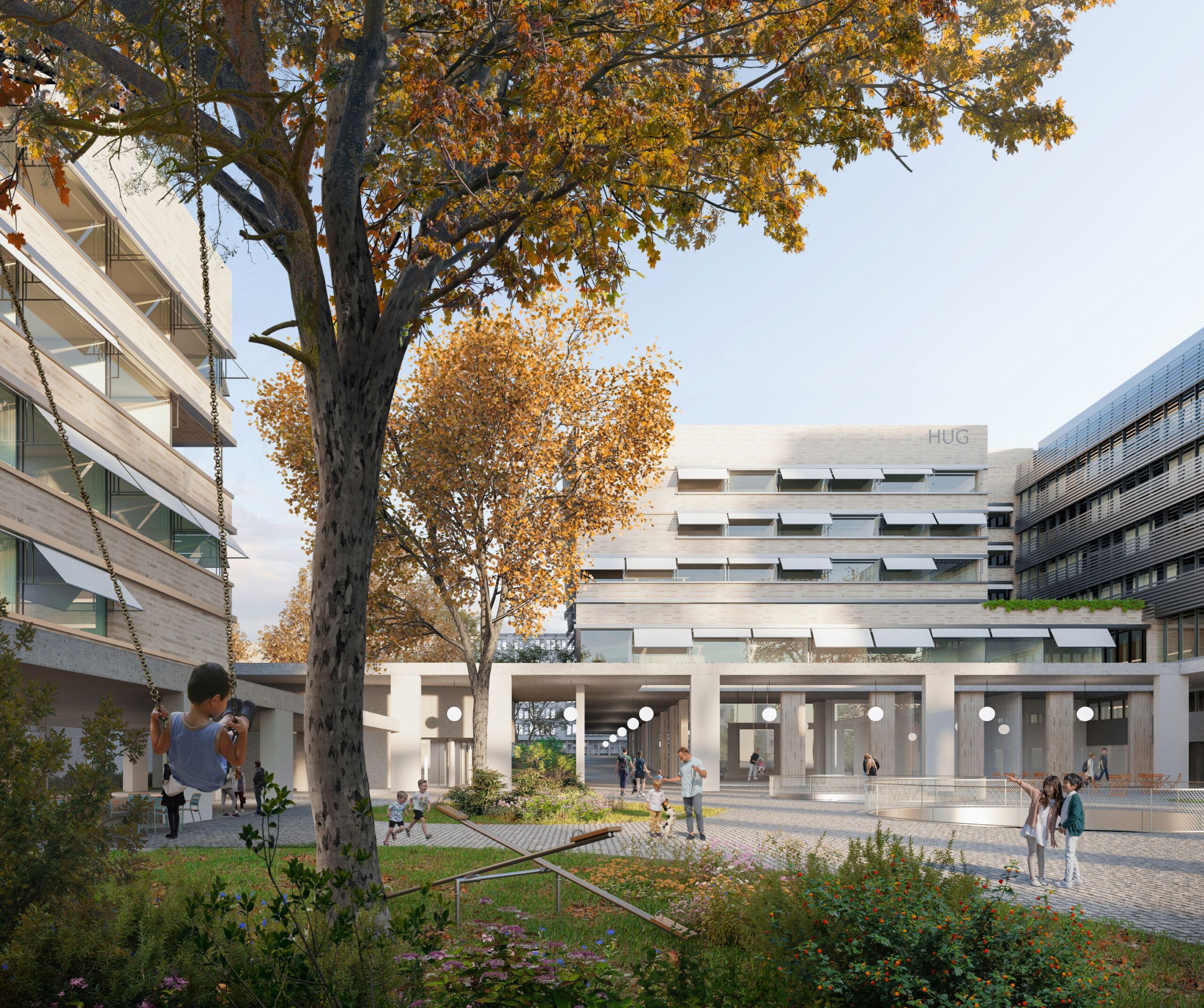
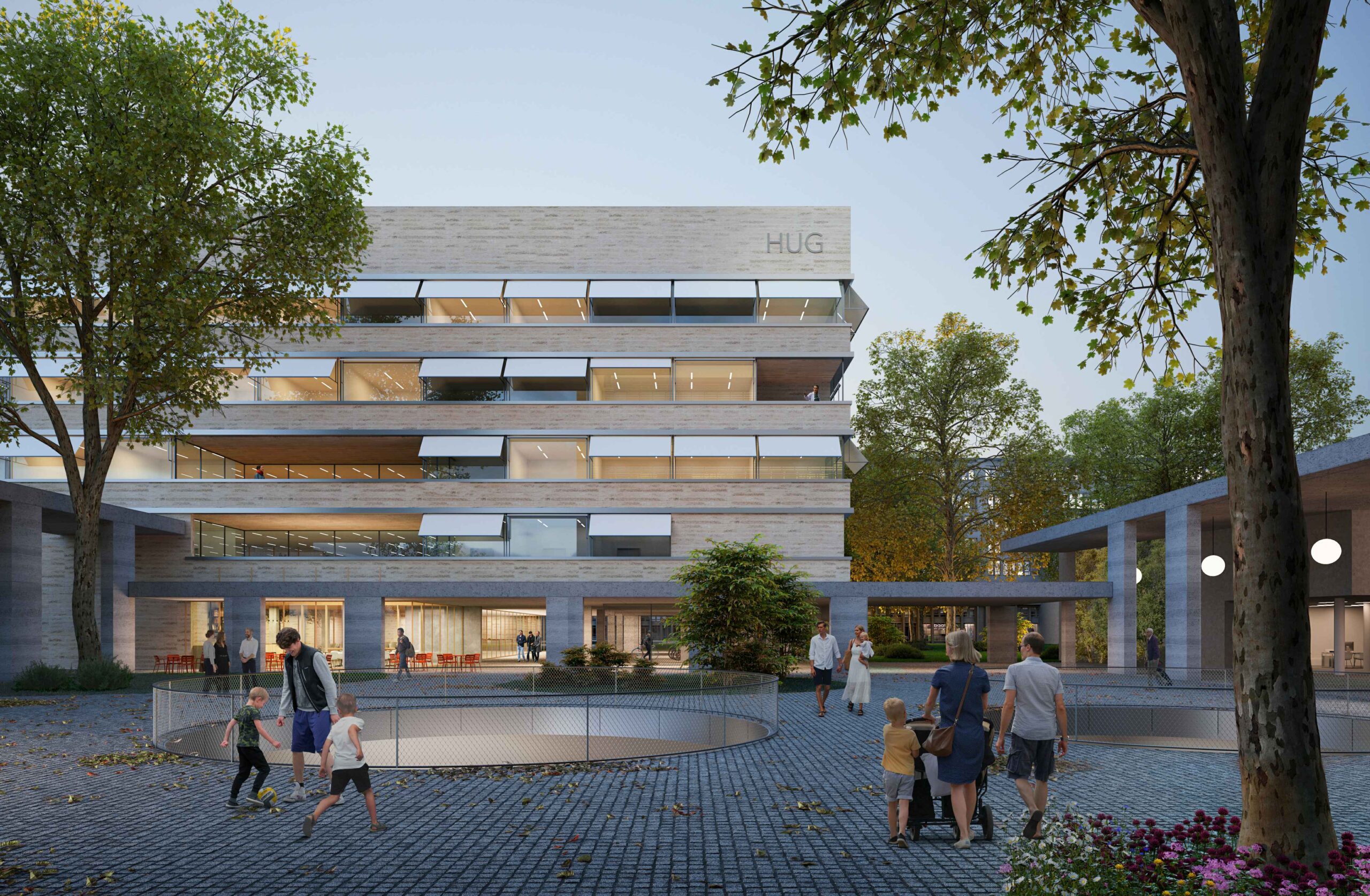
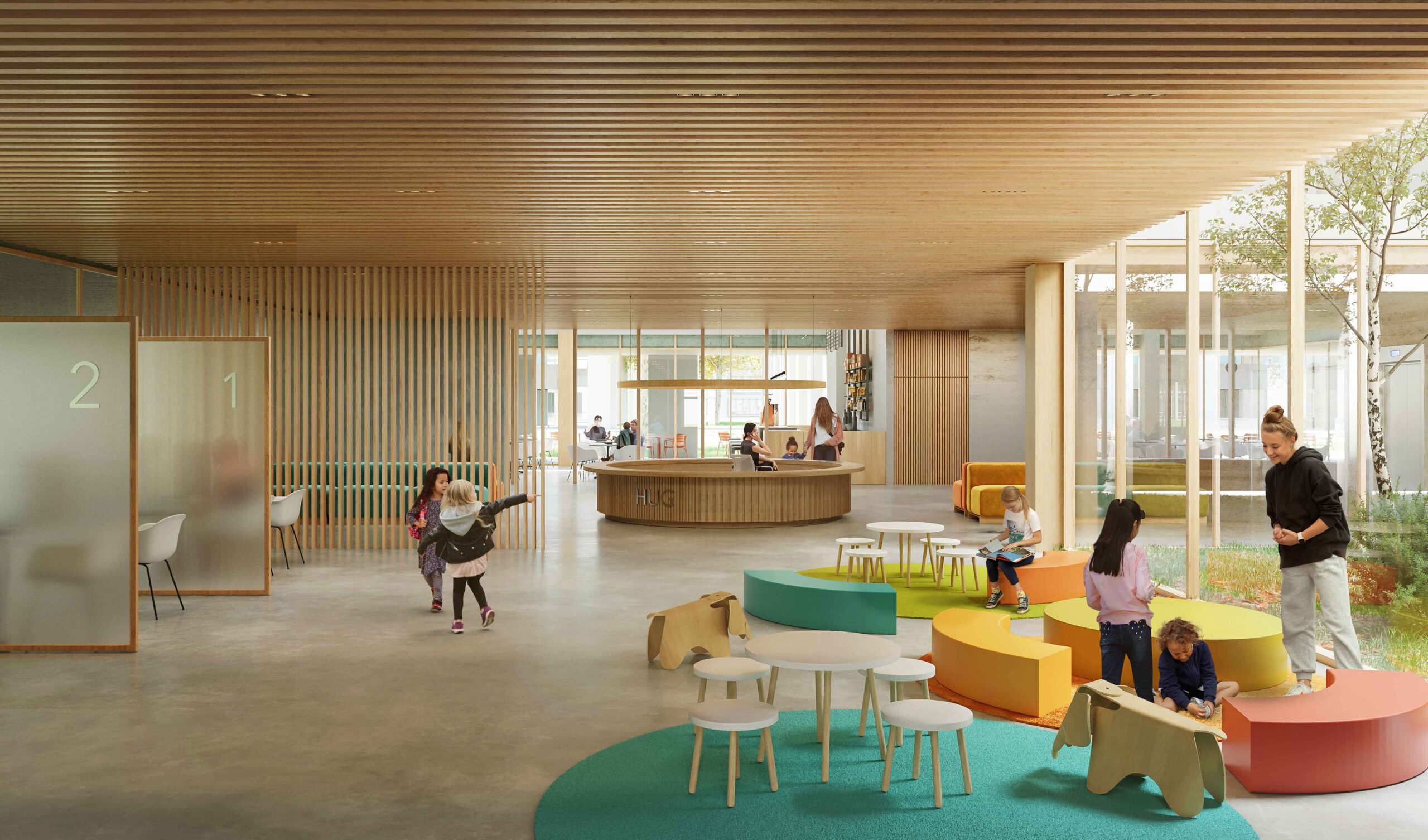
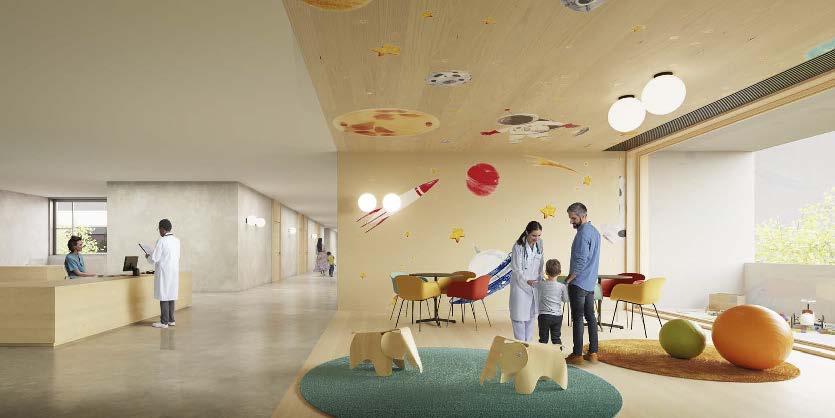
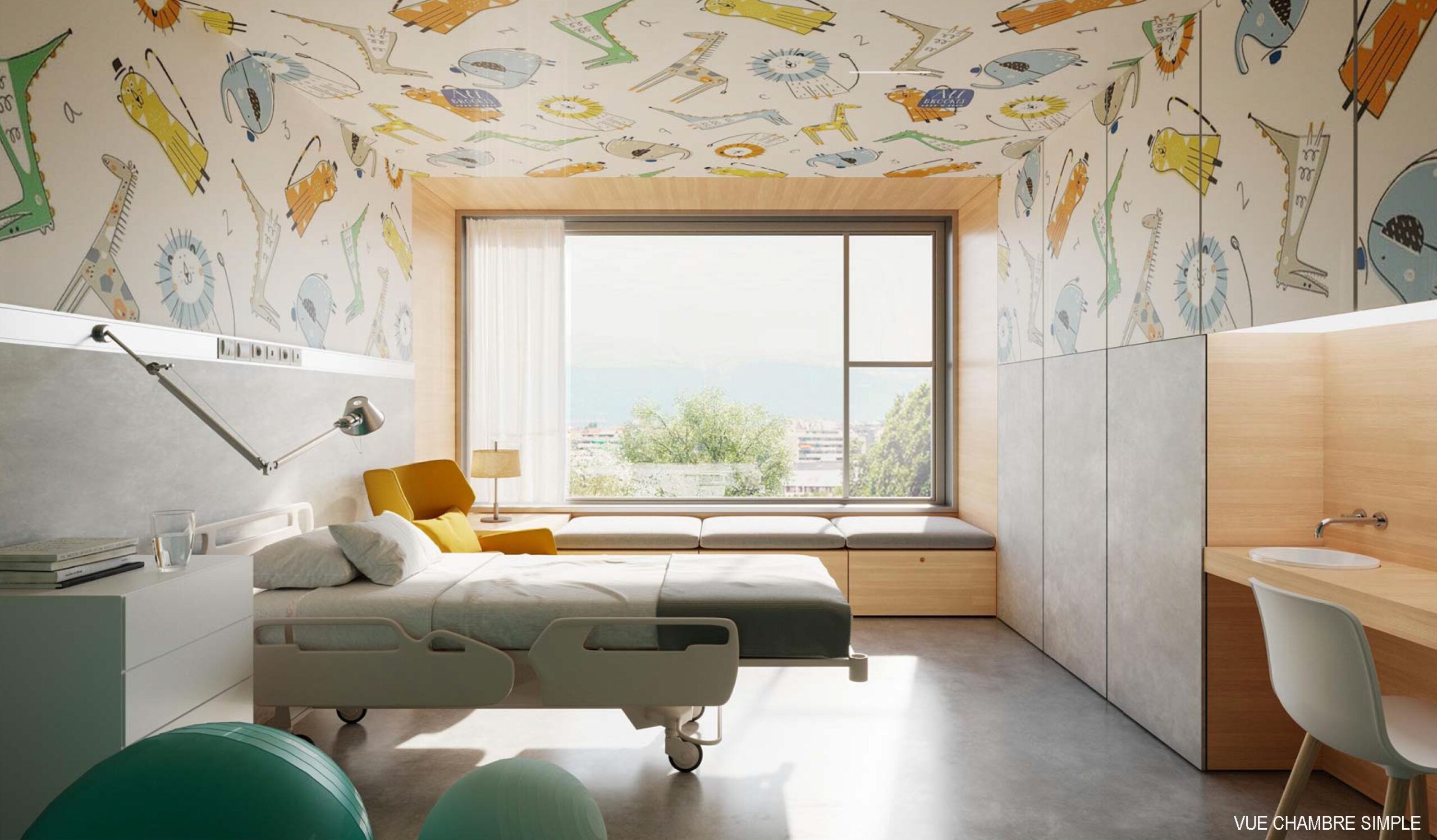
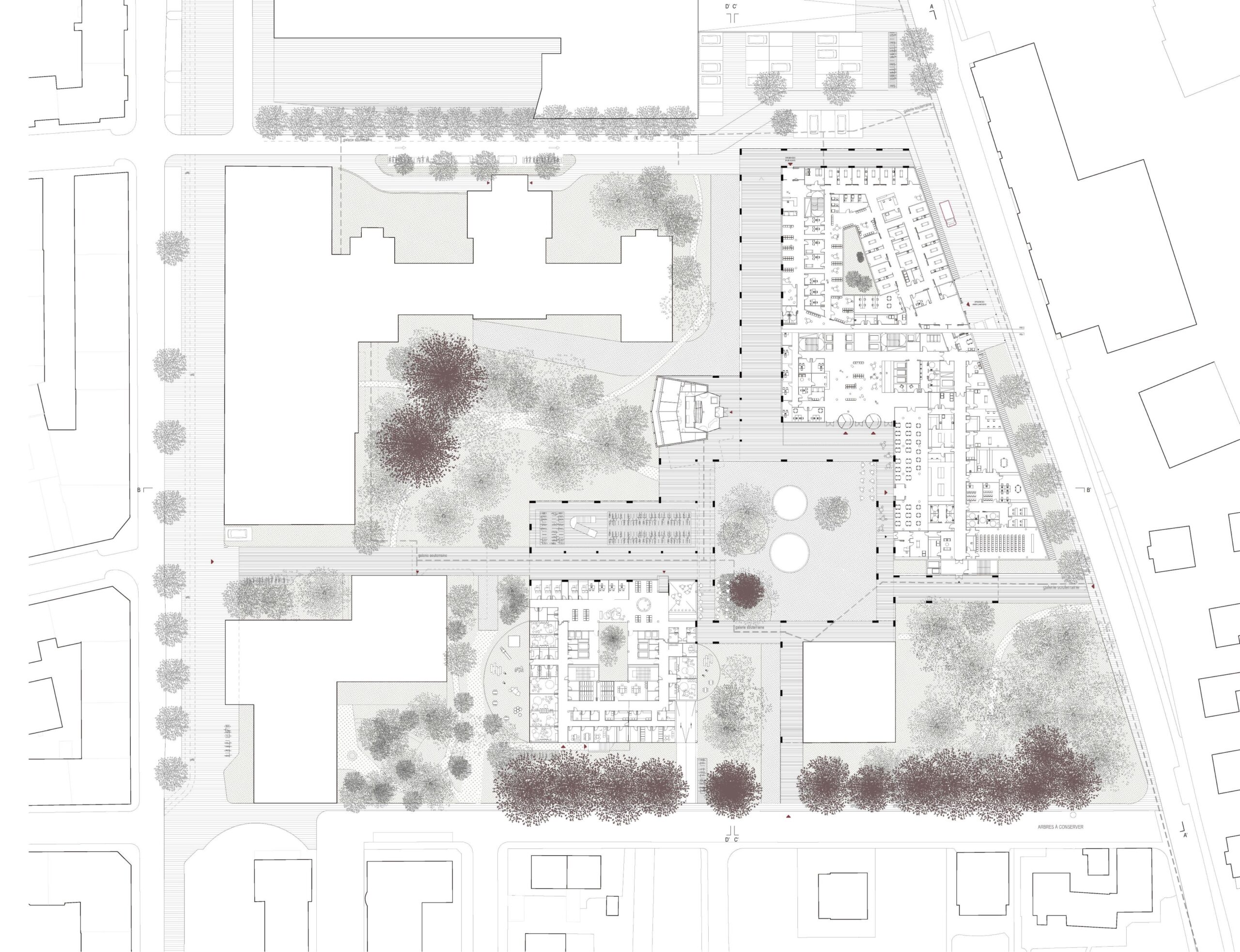
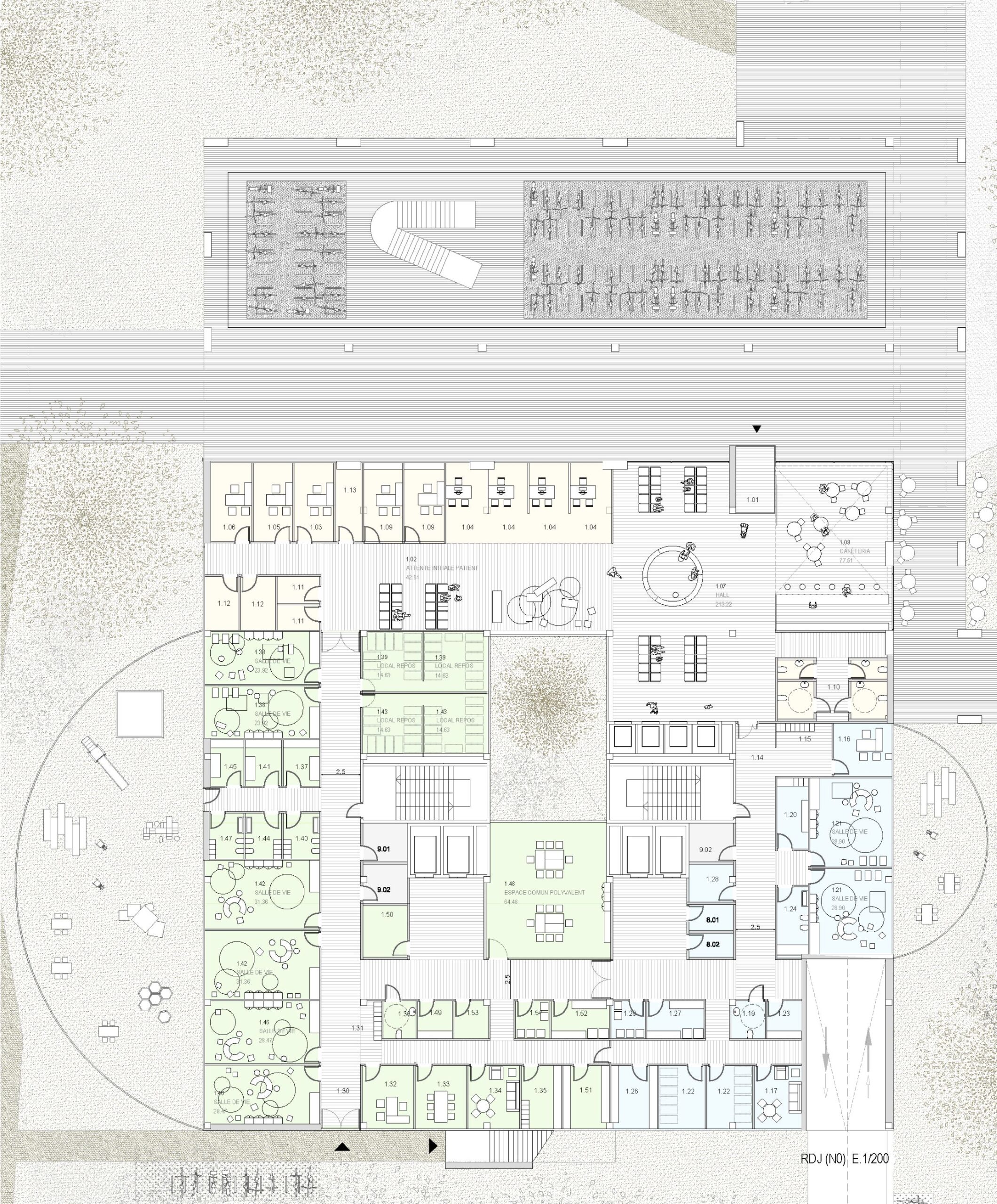
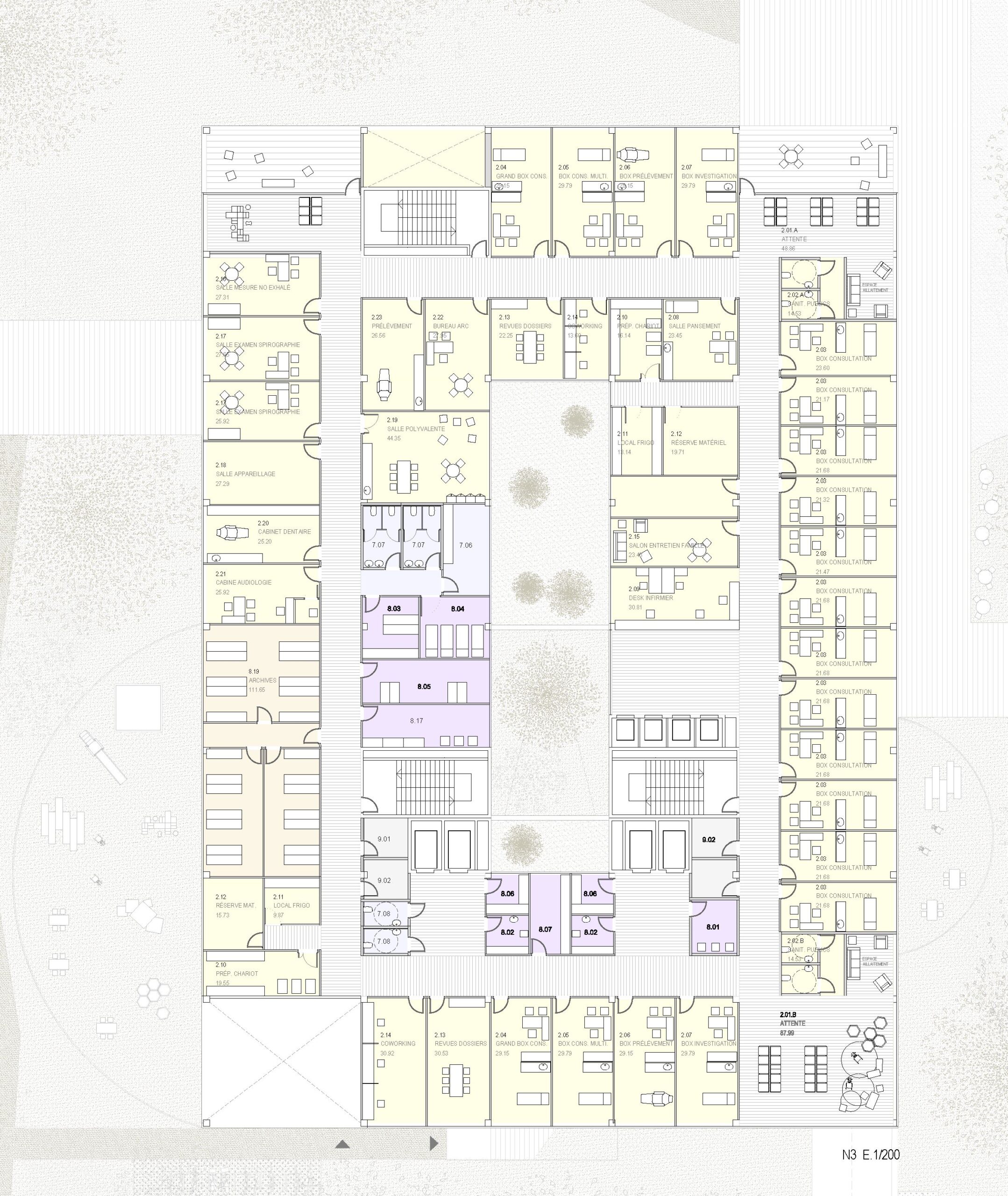
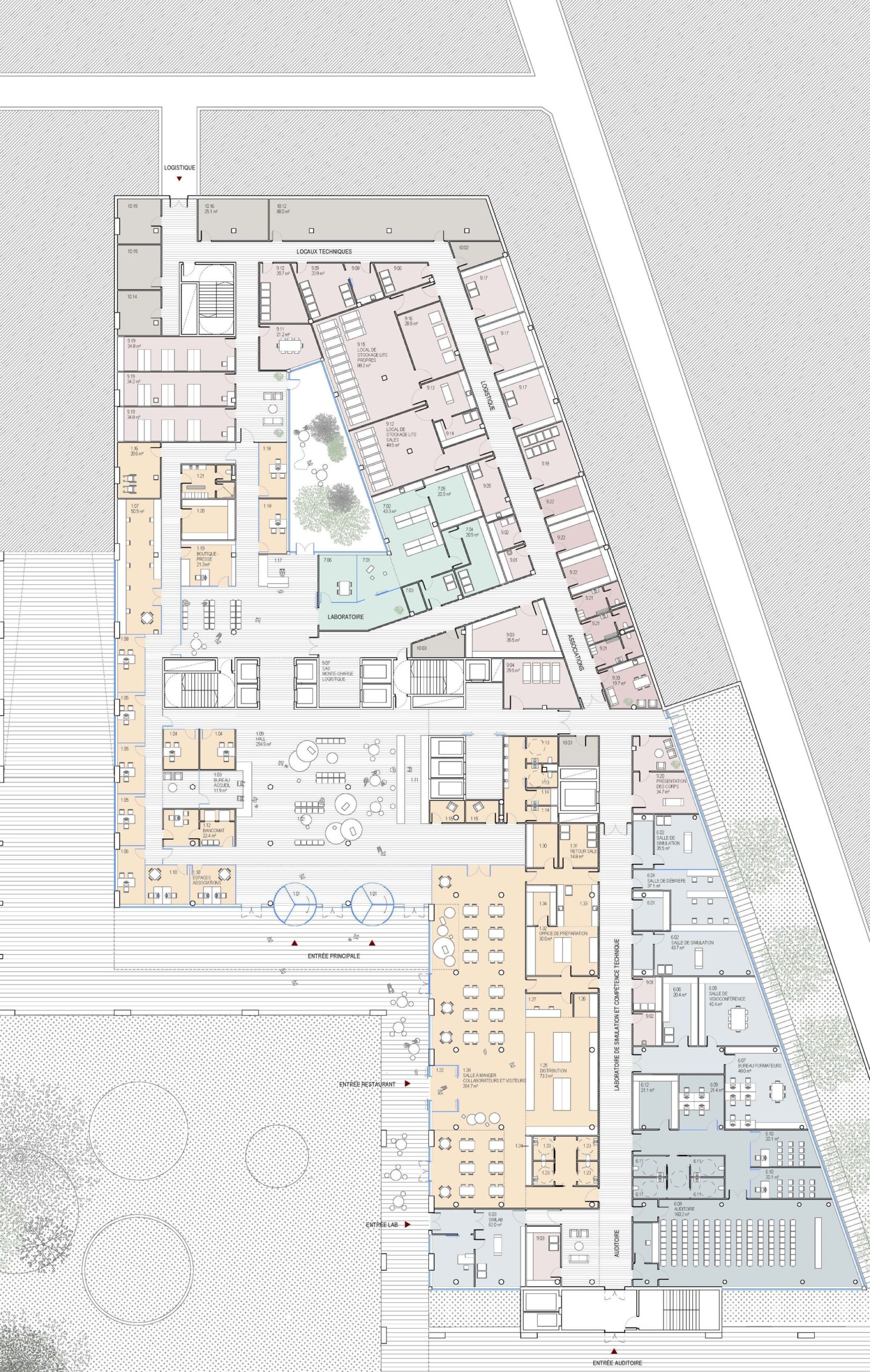
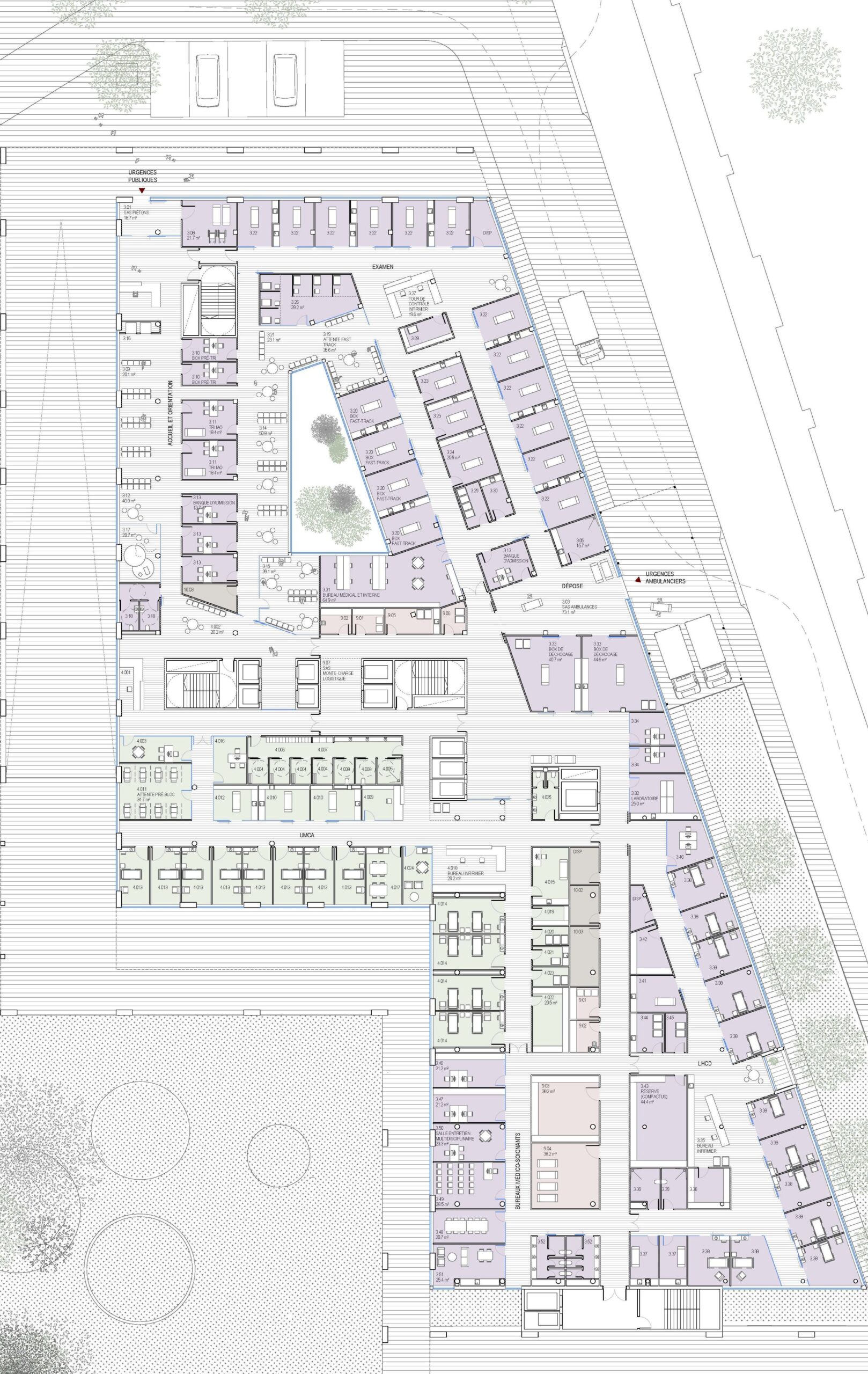
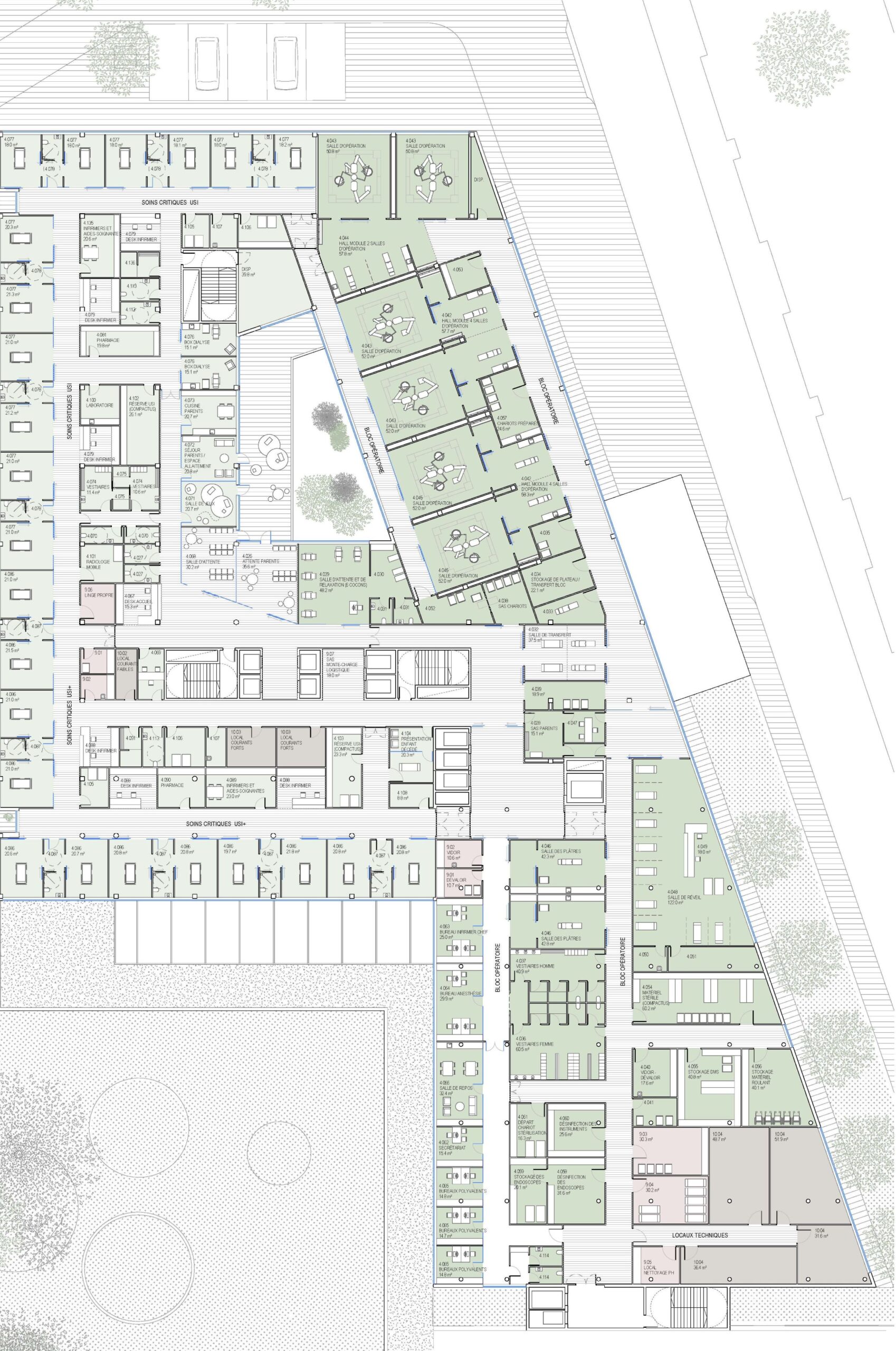
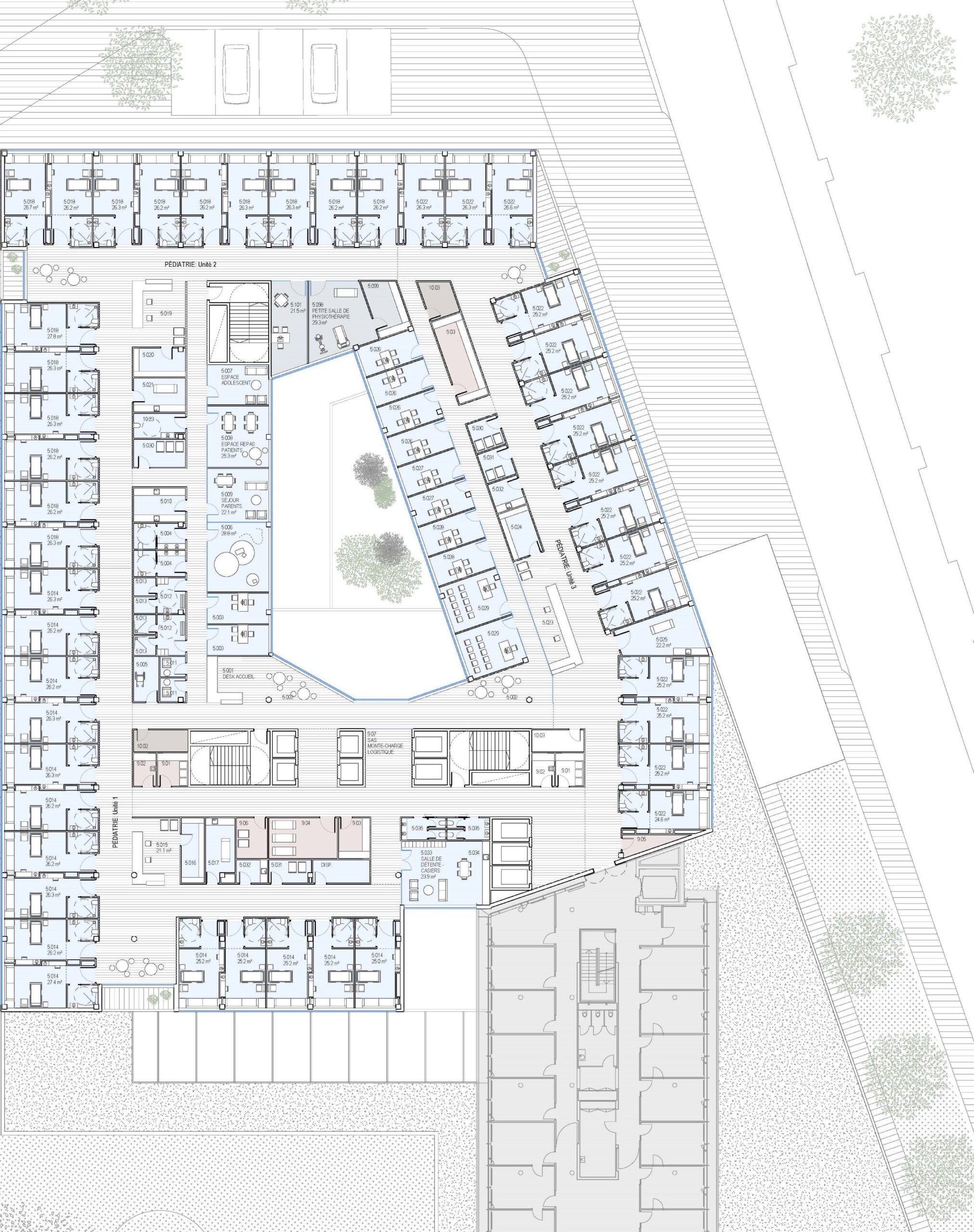
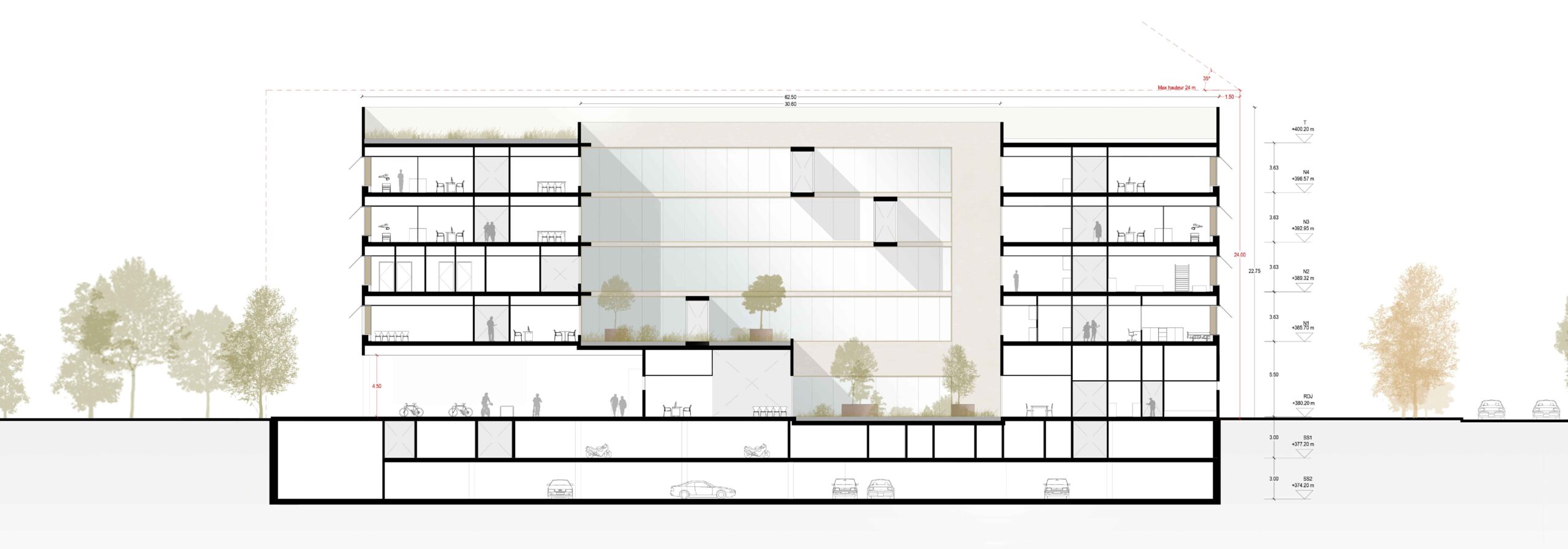
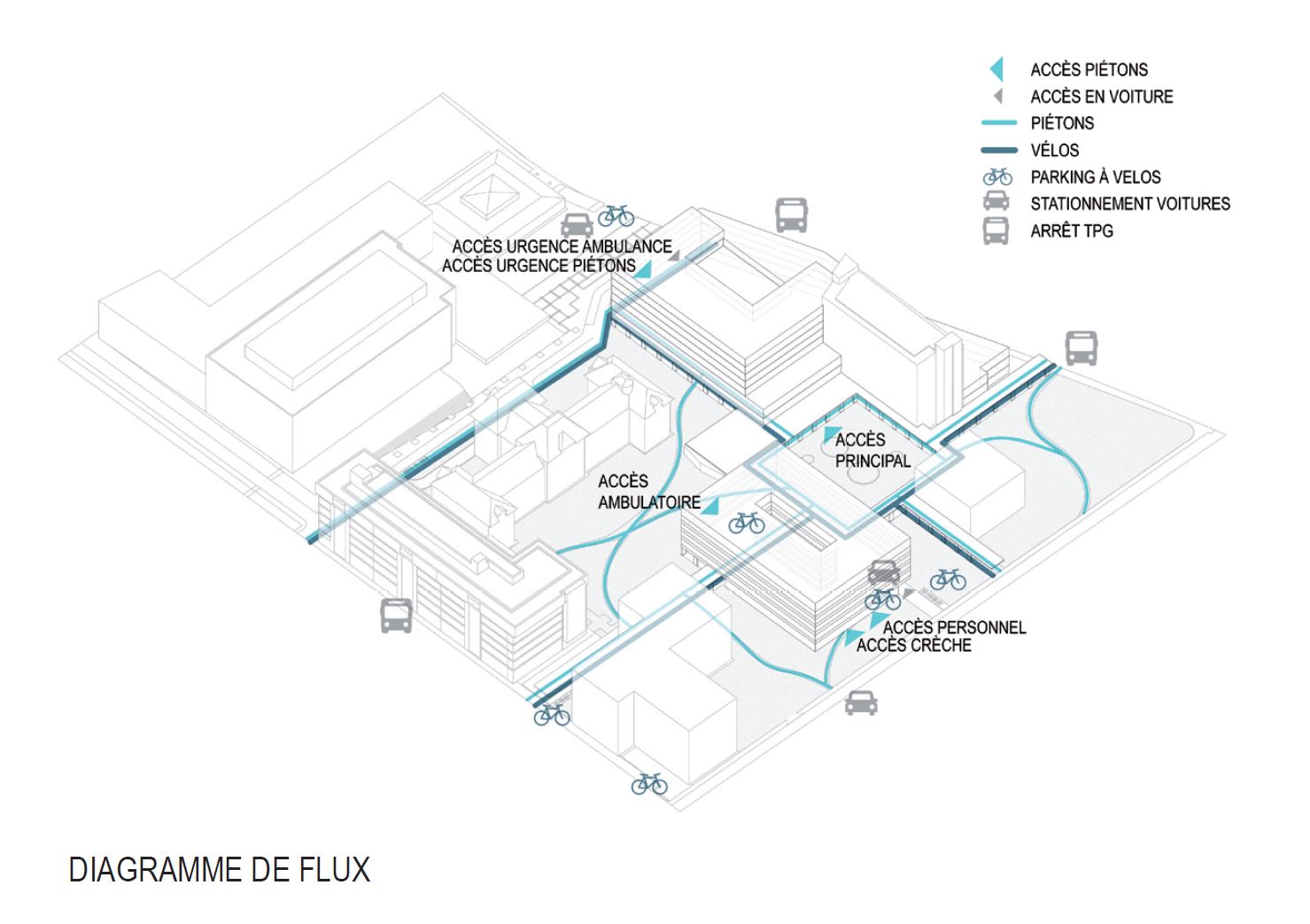
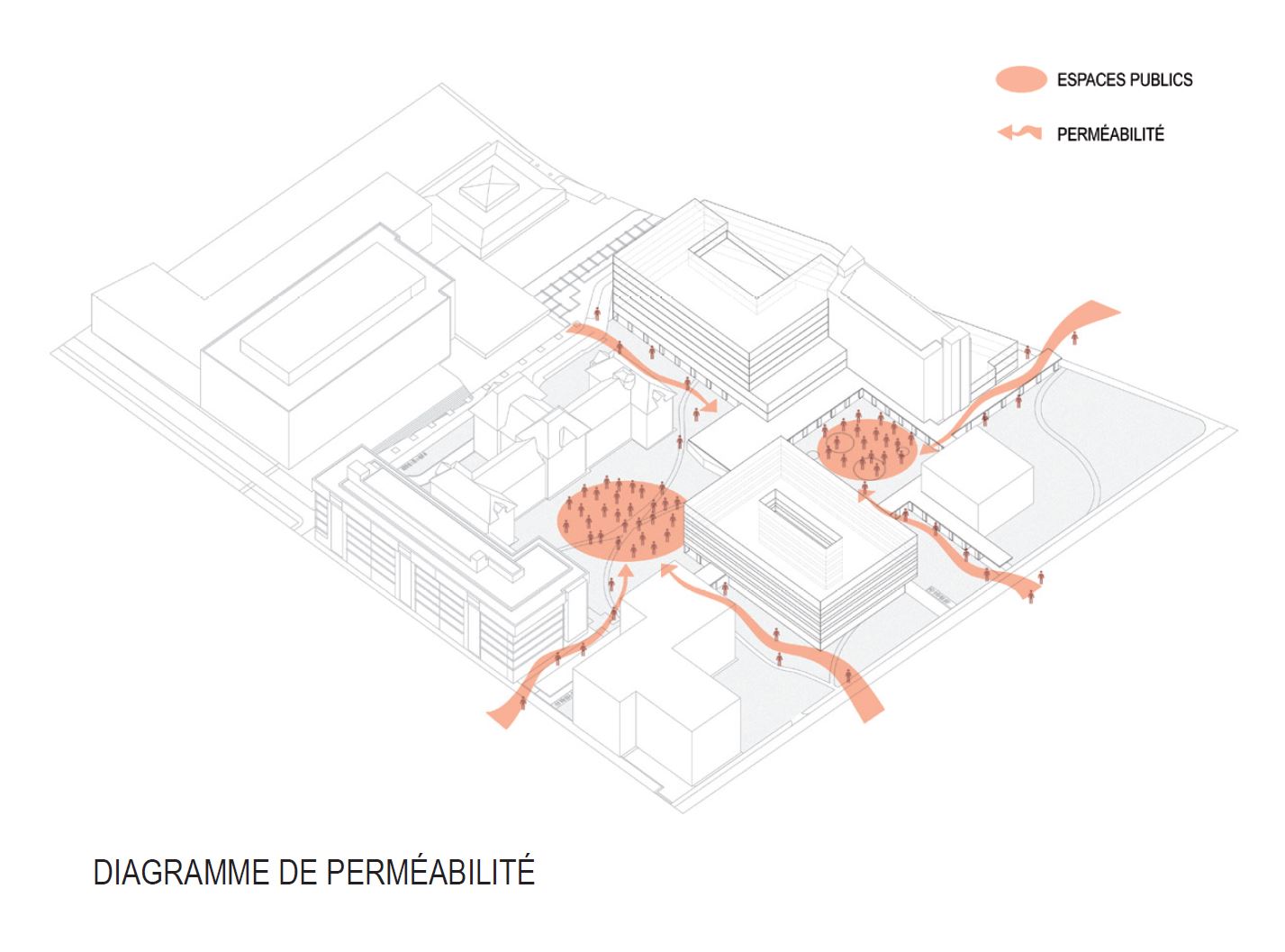
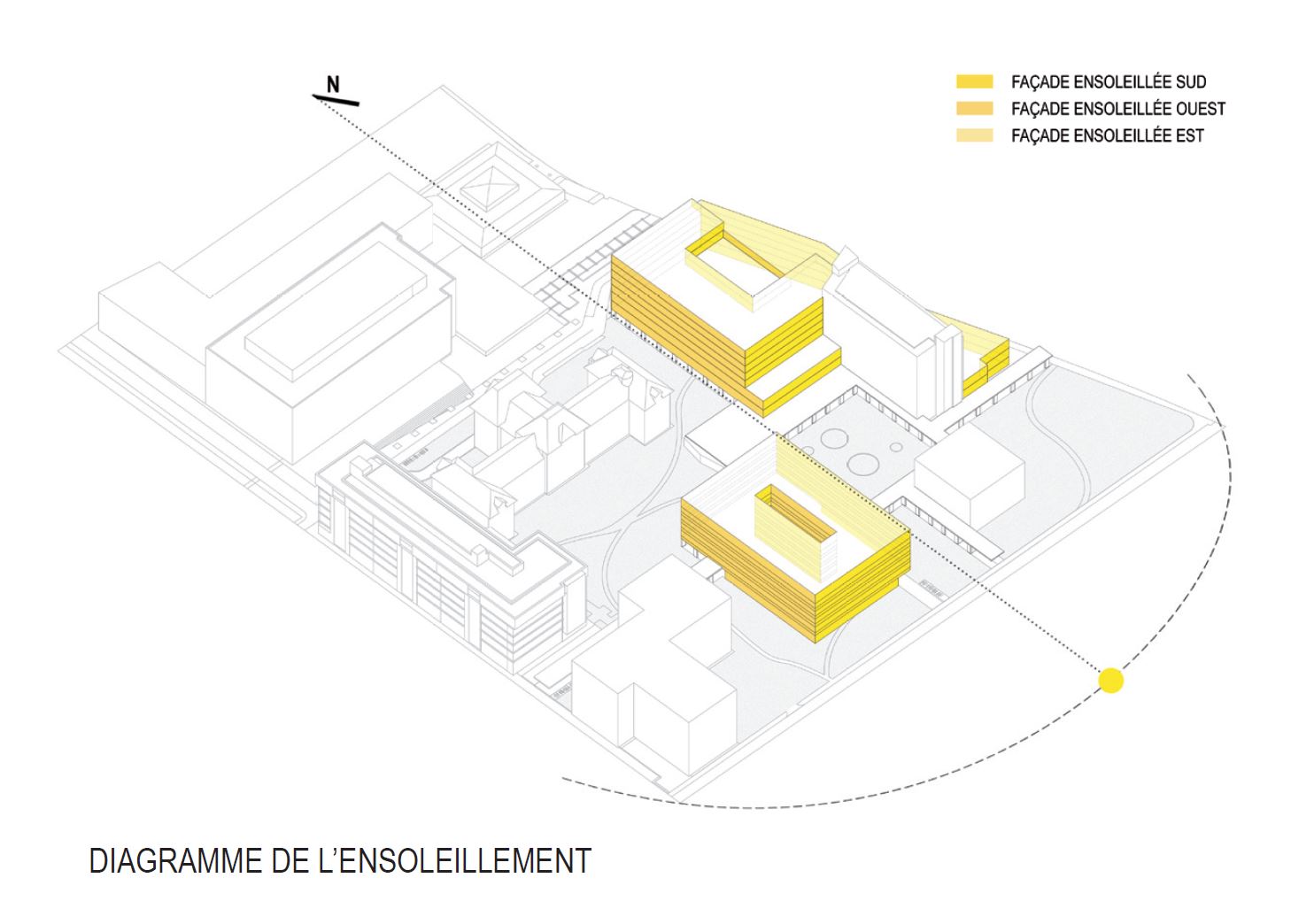
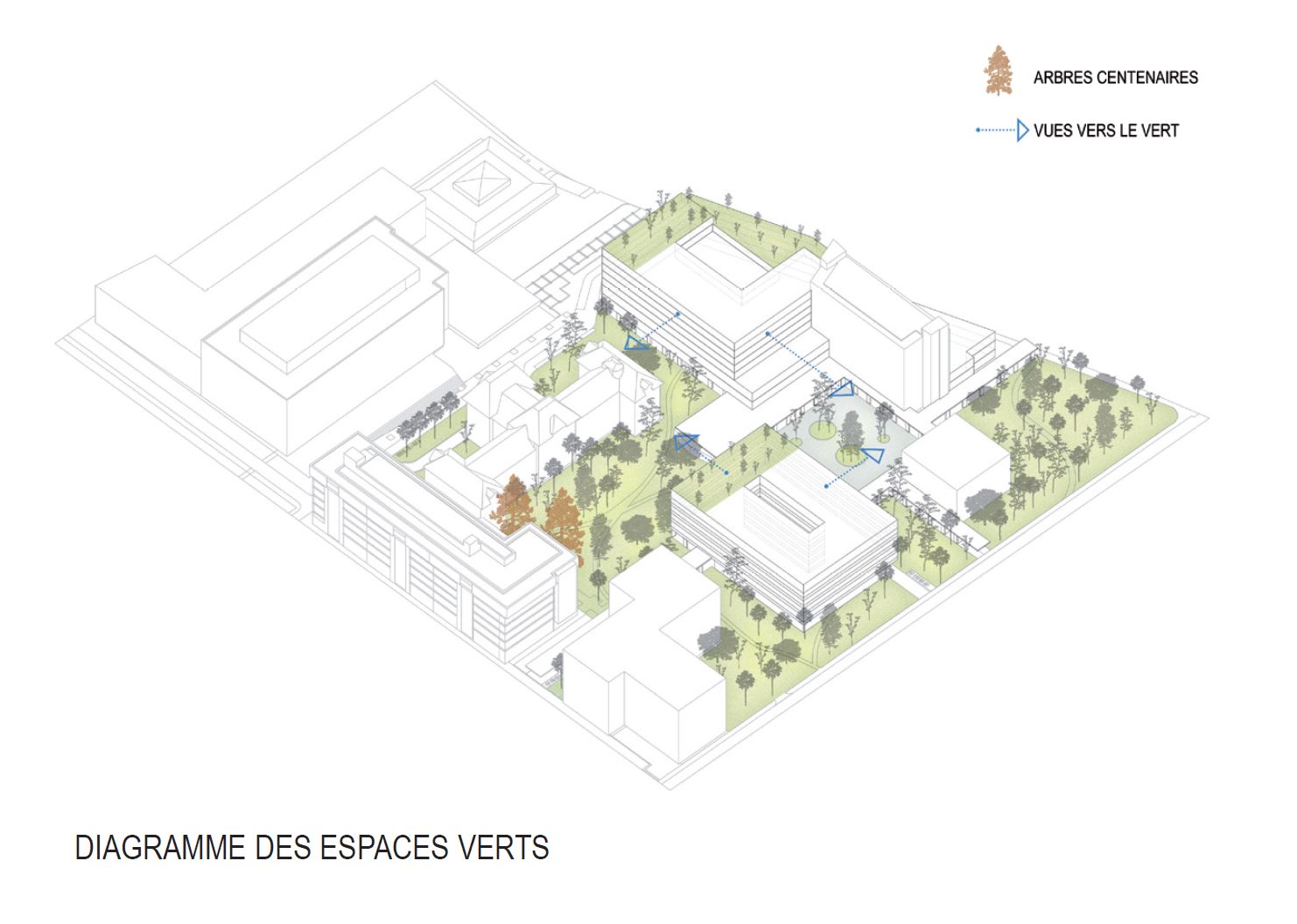
The project is conceived as a coherent urban composition structured around two large volumes, housing the outpatient clinic and the children’s hospital. Alongside a smaller building planned for future development. These elements are connected by a system of porches that define a mineral, square public space, creating a clear and legible urban center at a human scale. This external circulation network extends toward the site’s soft mobility paths, providing sheltered connections between the different buildings and their entrances. The contrast between this structured architectural system and the surrounding wooded park landscape establishes a strong relationship between built form and nature, although the complexity and hybrid character of the porch system rather weaken the overall clarity of the proposal. Architecturally, the two main buildings are organized around luminous central cores that bring clarity and hierarchy to the internal layout. The ground floor features generous, light-filled entrance spaces that connect directly to vertical circulation, while upper levels incorporate meeting areas and reception spaces positioned near natural light and often linked to loggias, offering moments of relief within circulation paths. The use of natural materials, particularly wood, creates a warm and welcoming atmosphere, while the façade design composed of mineral bands and elongated windows responds effectively to technical constraints and allowing for long-term flexibility. Despite these qualities, the project shows weaknesses in its functional organization, especially in circulation flows, undersized clinical spaces, and insufficient public areas, which ultimately limit its effectiveness in addressing the complex demands of hospital operations.
 Share
Share
 Tweet
Tweet
 Pin it