
A New Hospital Campus in Mannheim
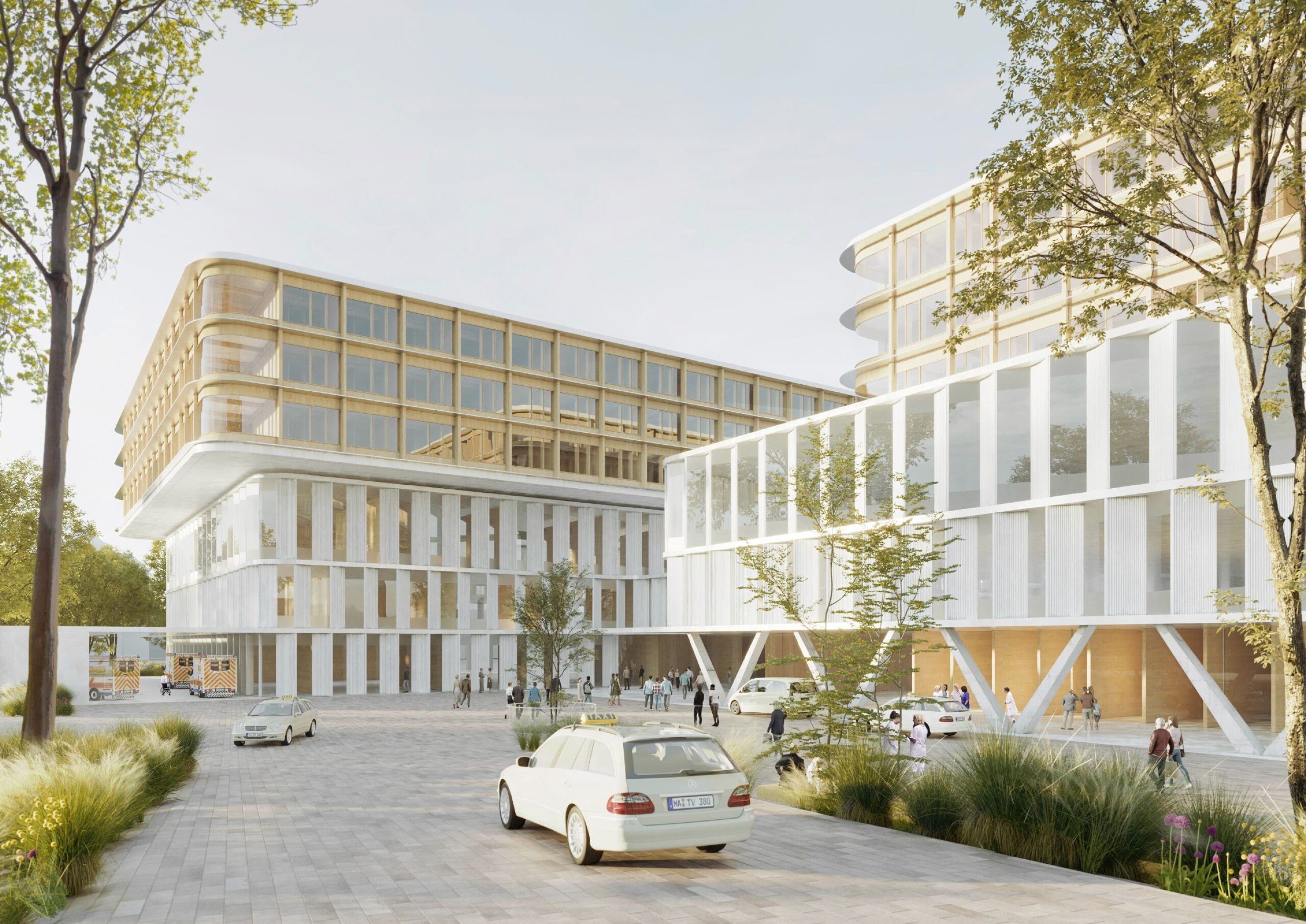
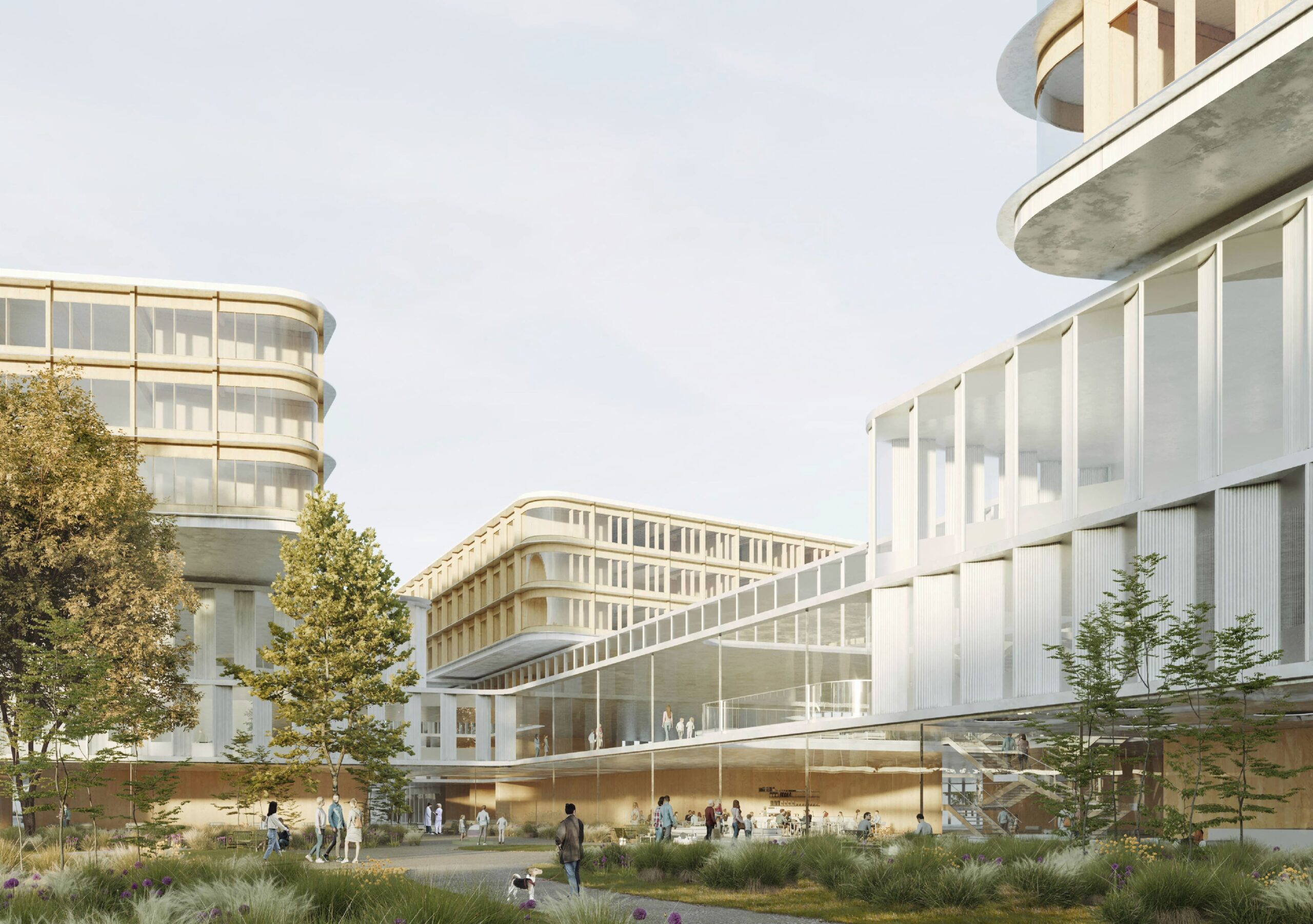
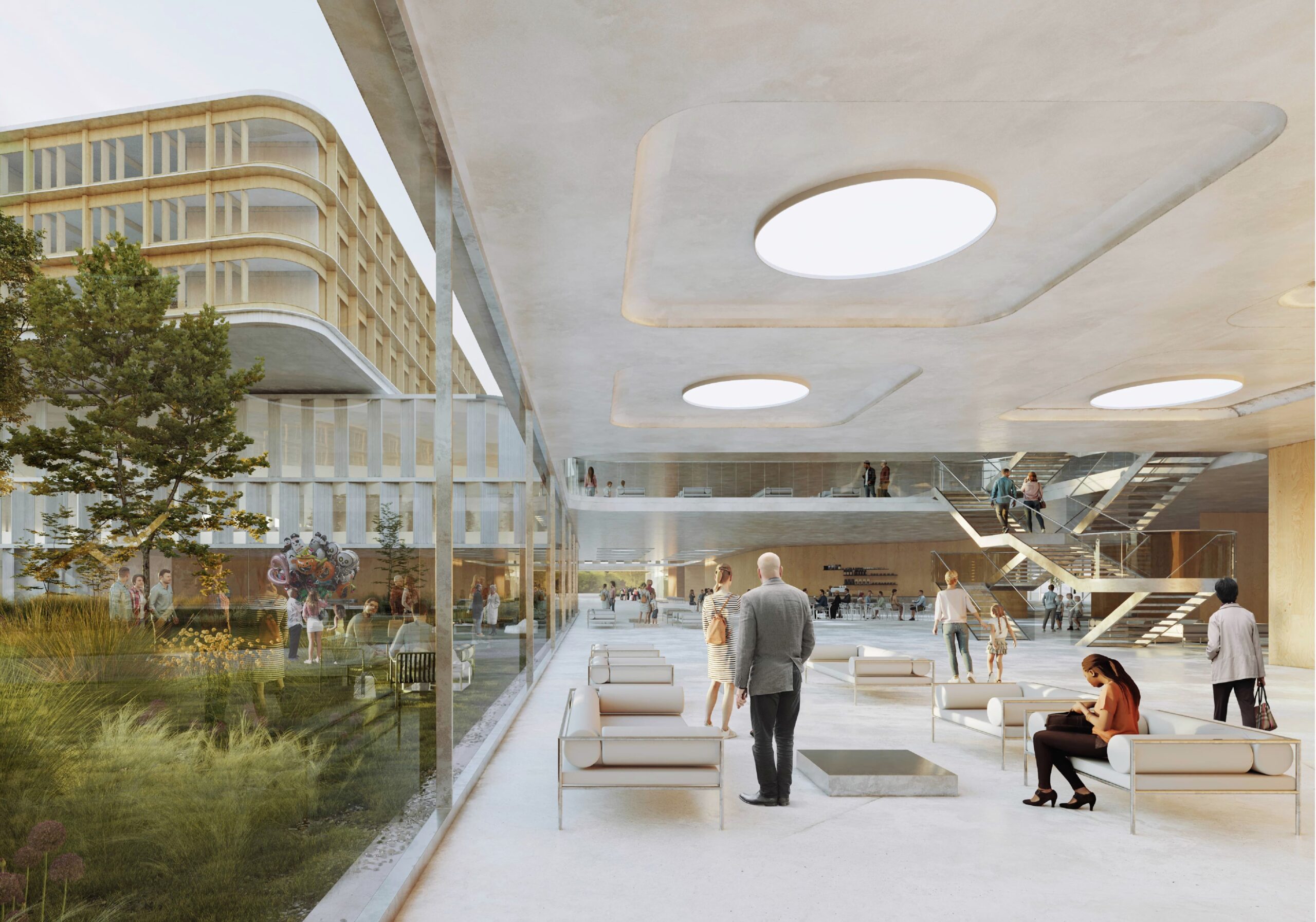
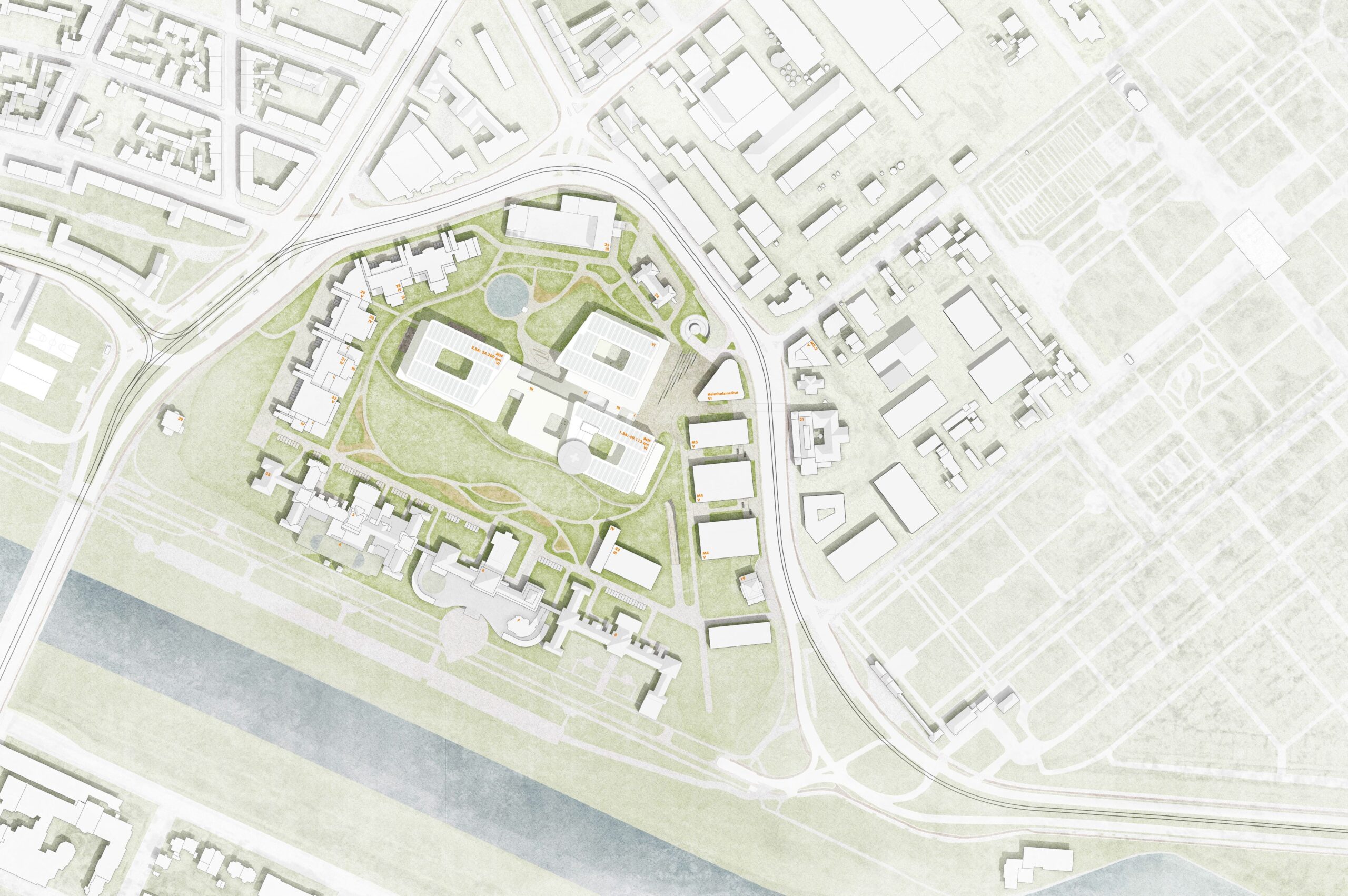
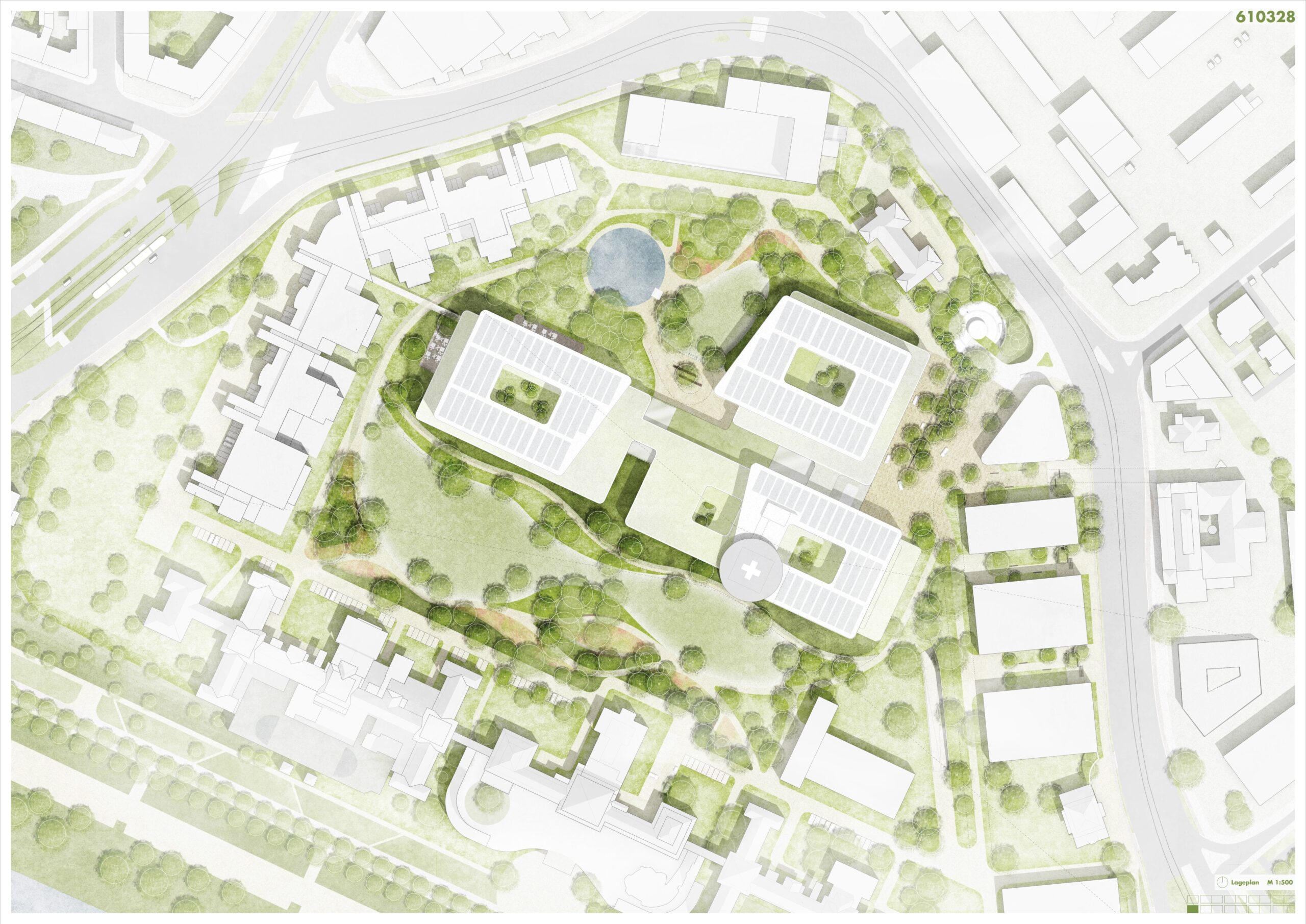
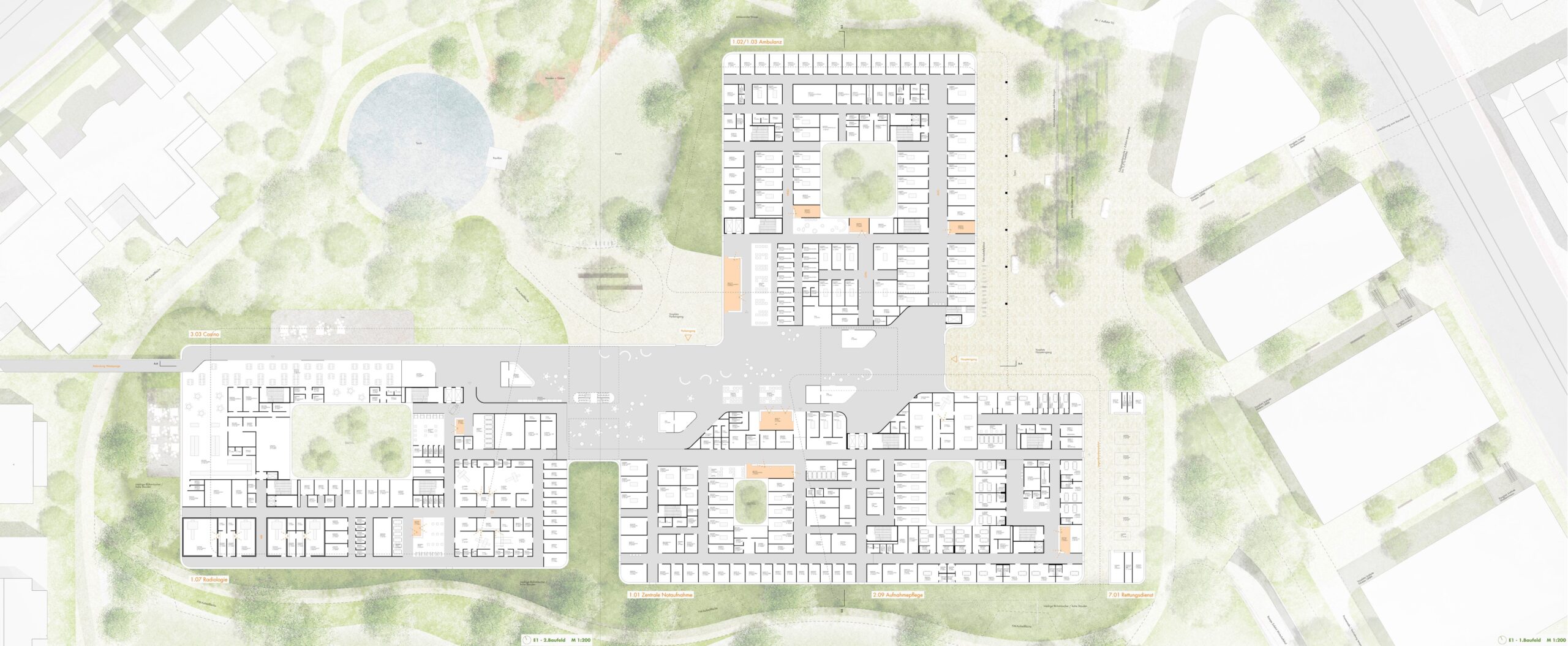
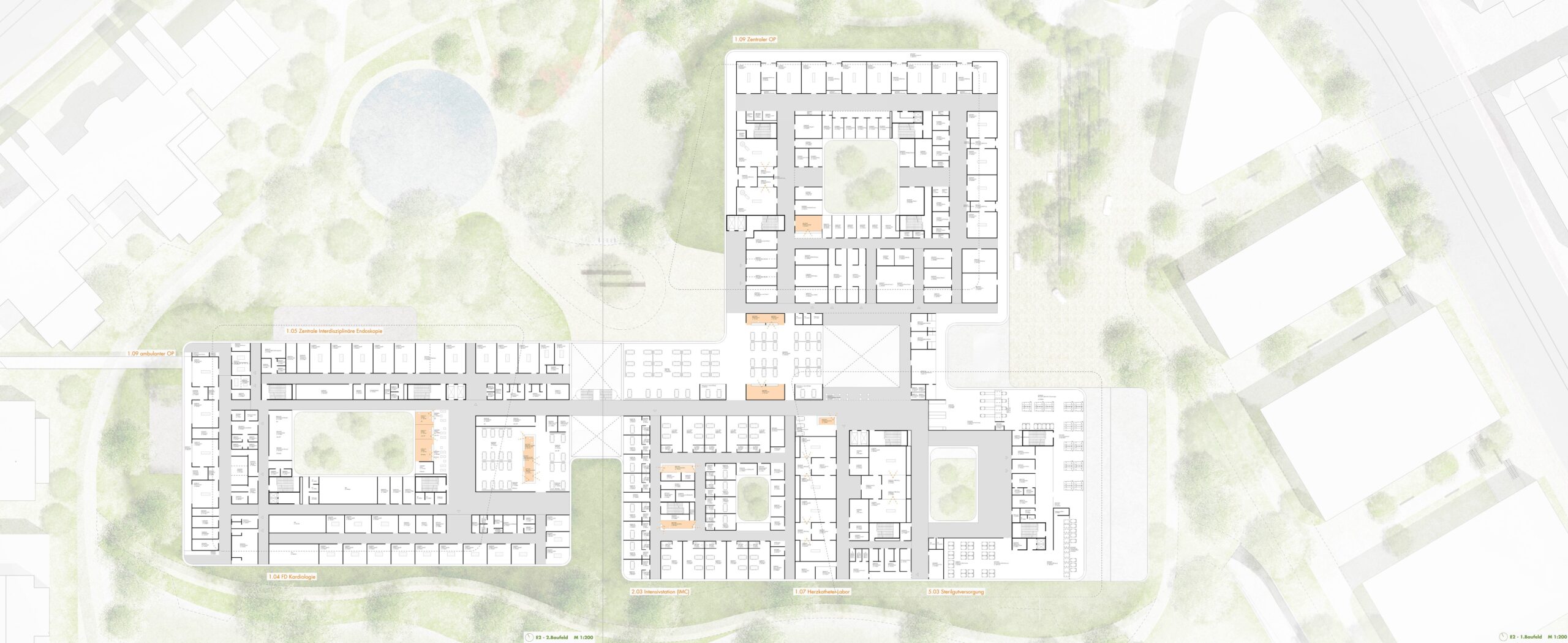
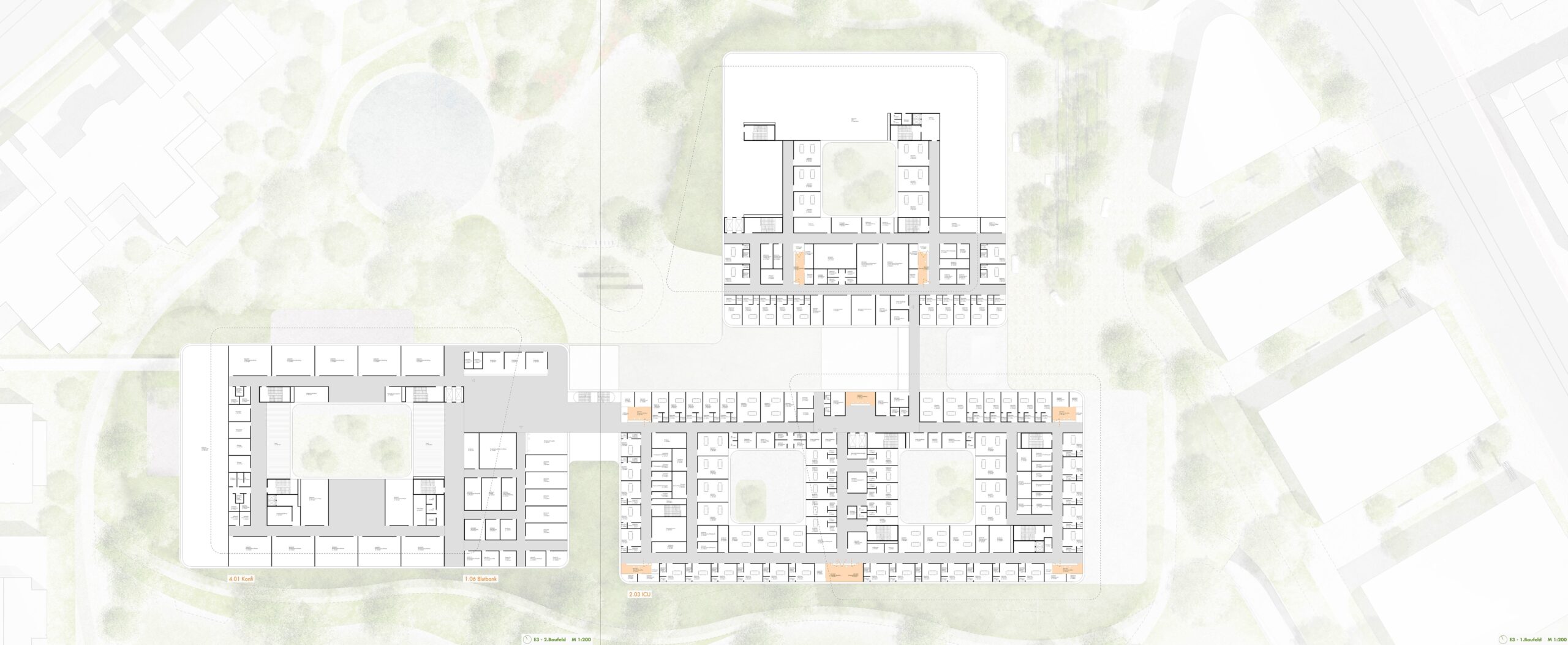
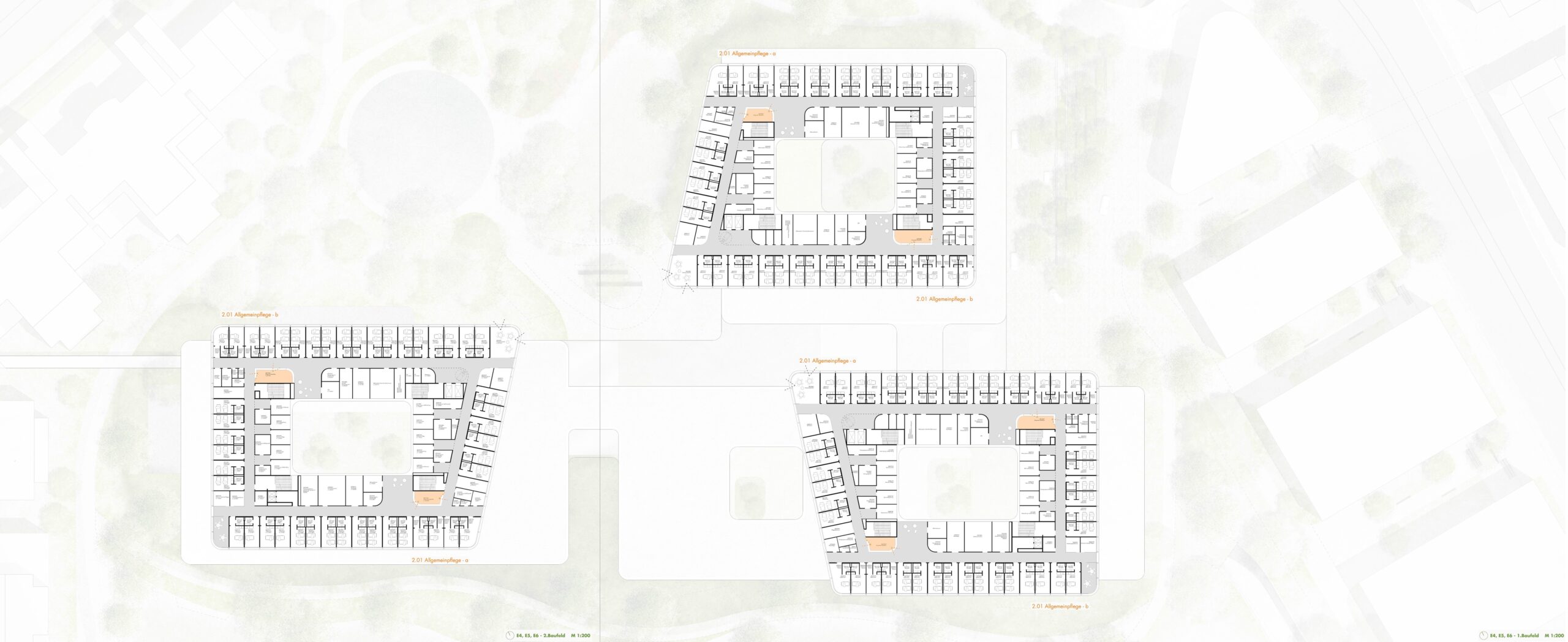
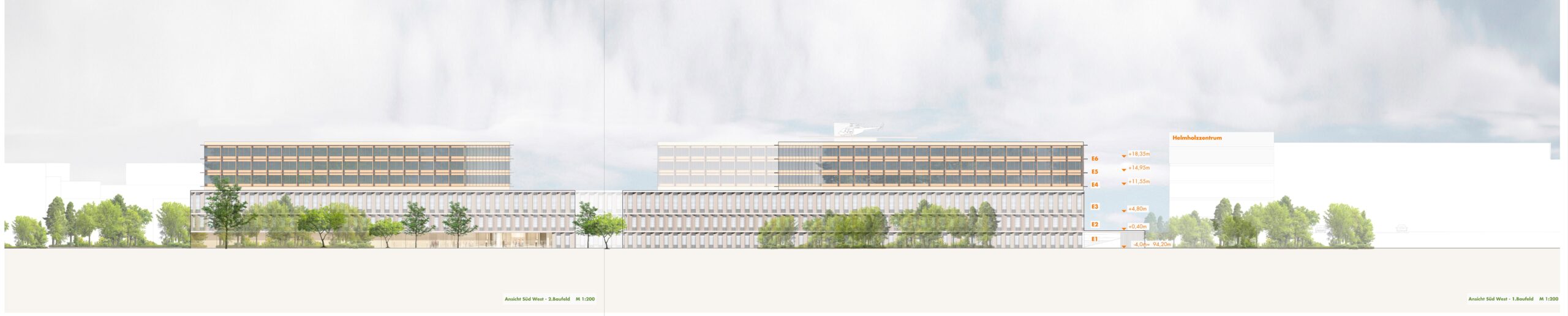
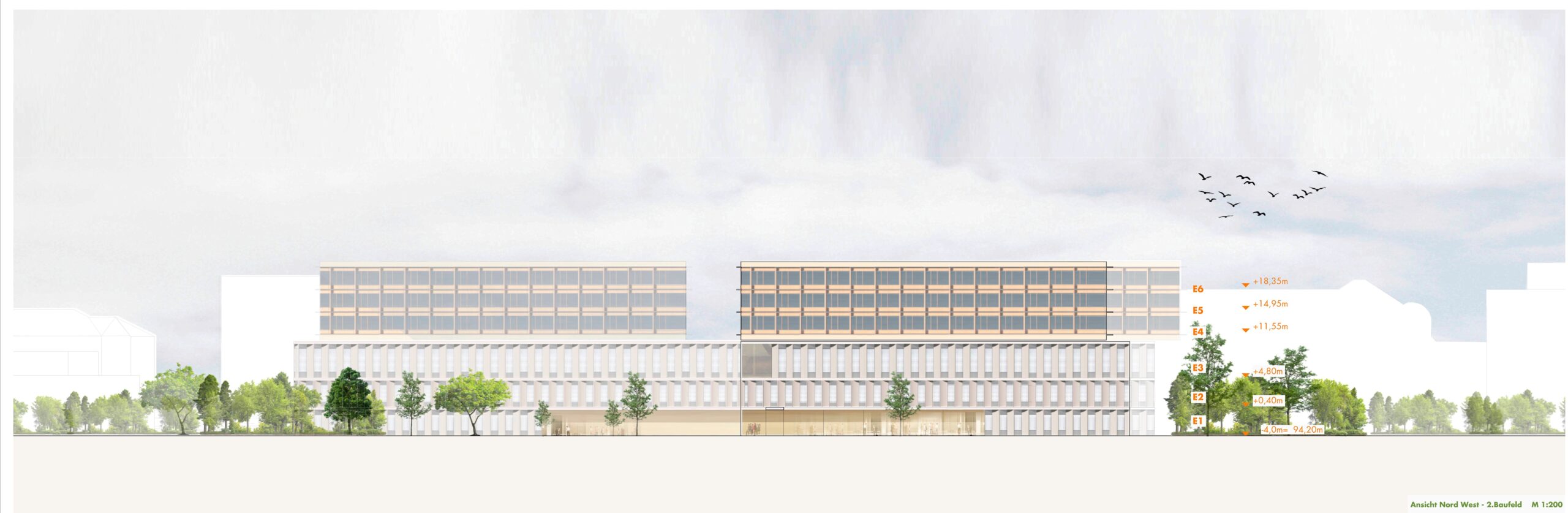
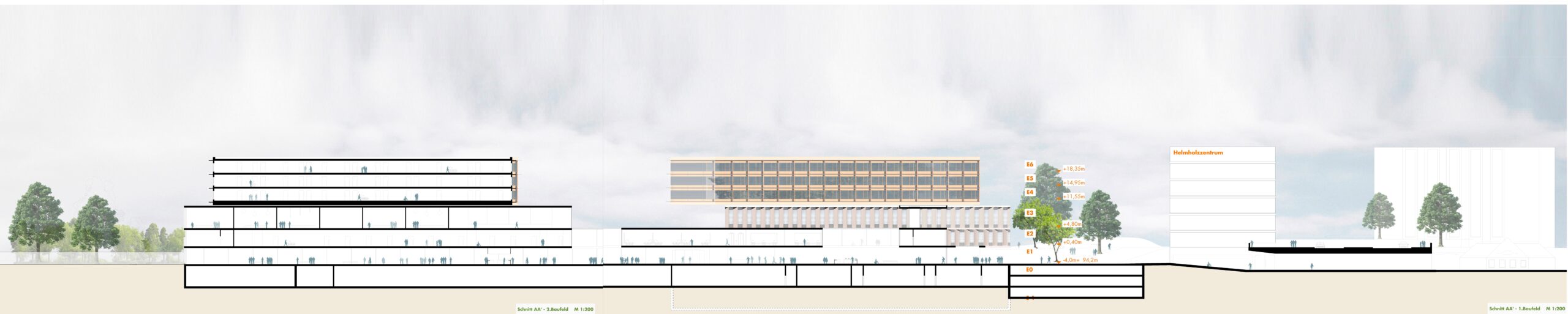
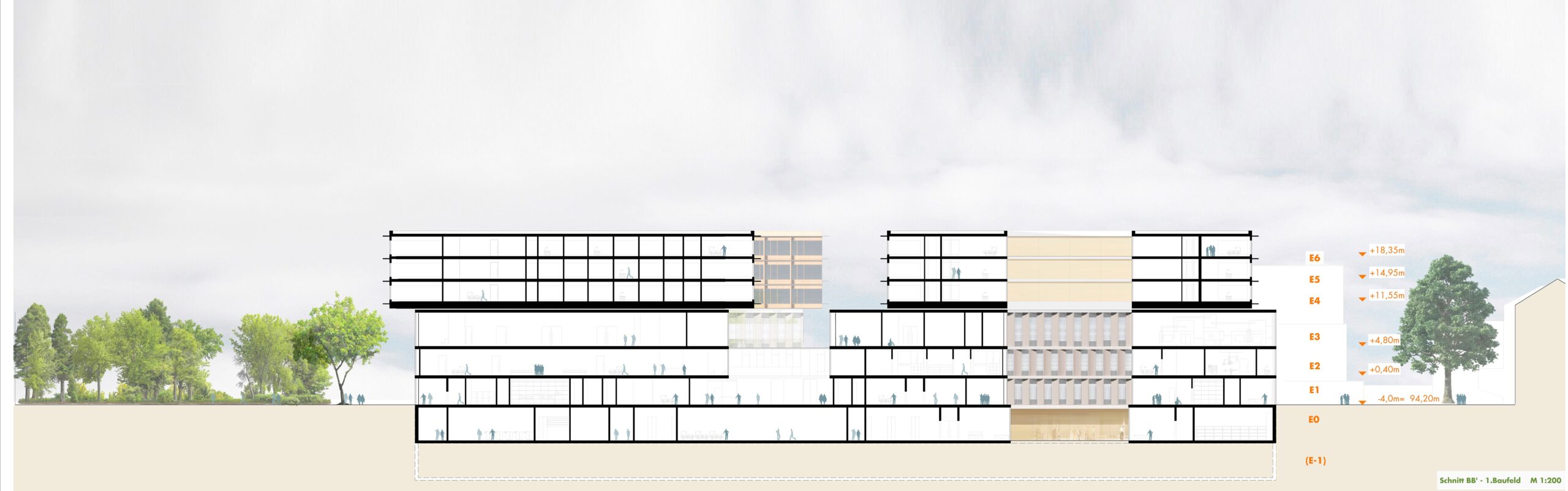
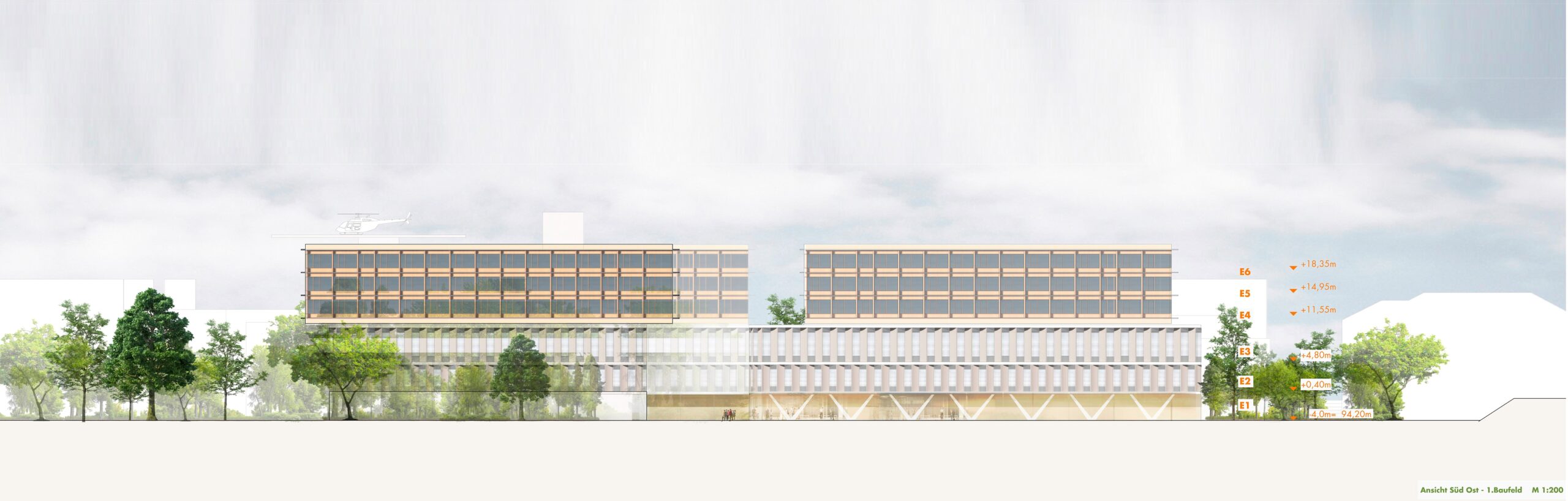
Is conceived as an integrated part of the existing city structure and landscape. The project reinterprets the hospital campus as a “cell structure,” where the surrounding buildings form a protective membrane and the new development becomes the central nucleus. Instead of creating an elevated platform disconnected from the environment, the design establishes the park level as the main circulation and meeting space, ensuring clear orientation and accessible connections throughout the site. Public transport stops, pedestrian pathways, bicycle routes, and barrier-free ramps strengthen the relationship between the hospital and the surrounding urban fabric, while the extensive green areas create a calm and healing atmosphere for patients, staff, and visitors. The building is organized with a clear functional hierarchy, where medical departments, patient care units, and logistics areas are efficiently distributed across different levels. Large façades and carefully positioned where volumes maximize daylight and views toward the surrounding park landscape, supporting patient well-being and recovery. The lower floors are designed with reinforced concrete structures to accommodate technical and medical requirements, while the upper patient wards introduce timber-concrete hybrid construction to create a warmer and more comfortable atmosphere. Sustainable strategies such as green roofs, photovoltaic elements, rainwater retention, and energy-efficient façades further reinforce the ecological ambition of the project and contribute to a contemporary healthcare architecture focused on long-term adaptability and environmental responsibility.
 Share
Share
 Tweet
Tweet
 Pin it