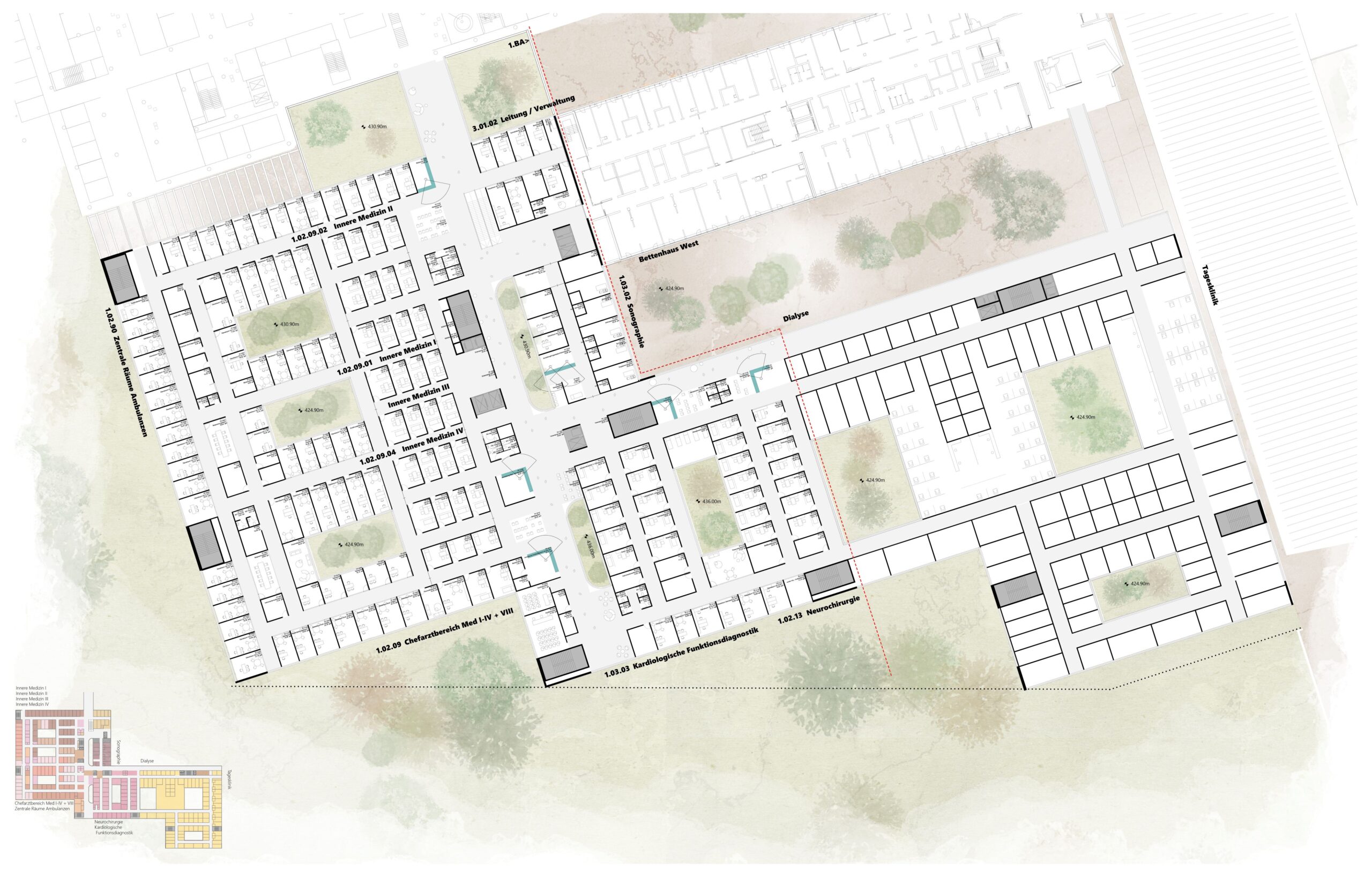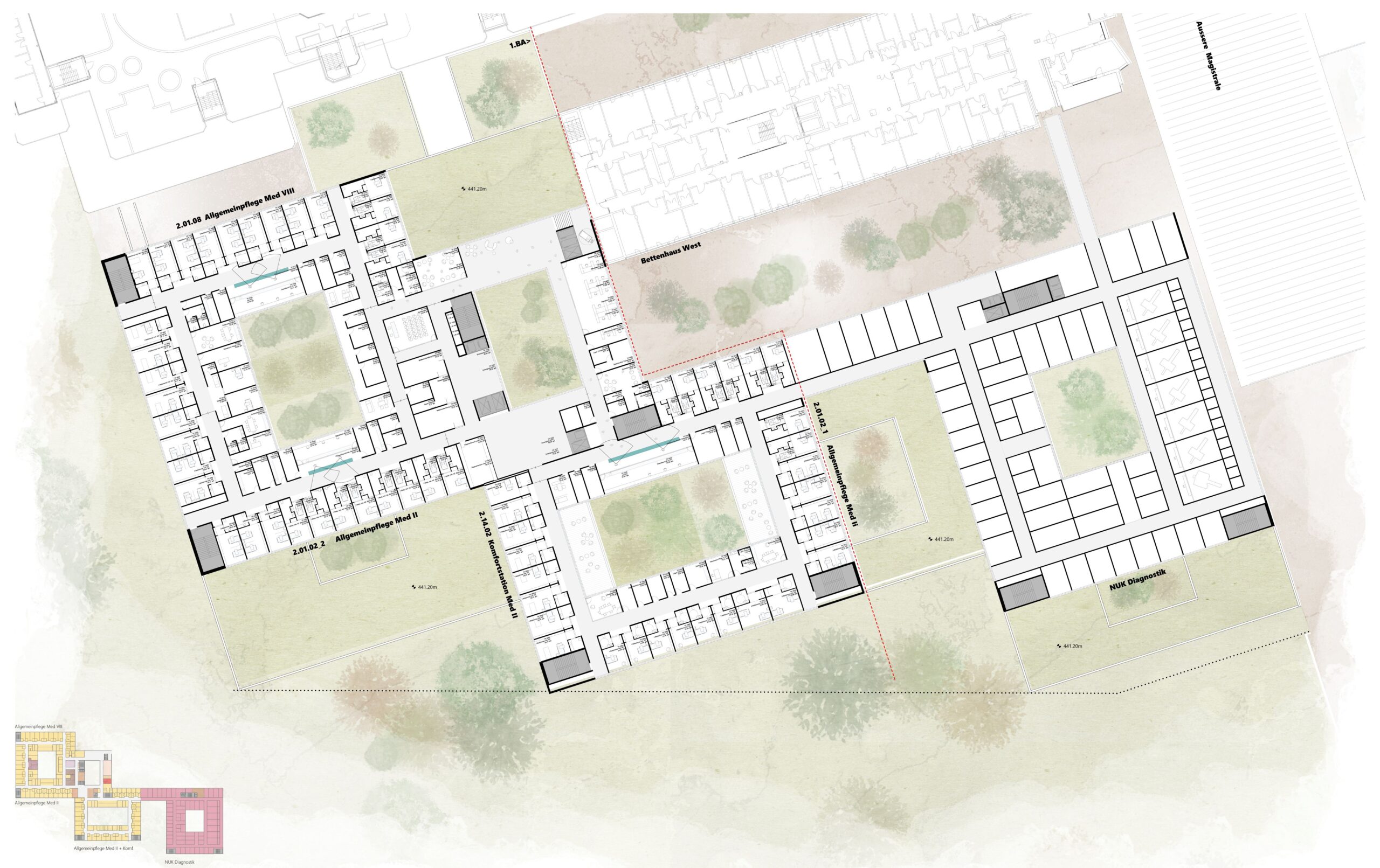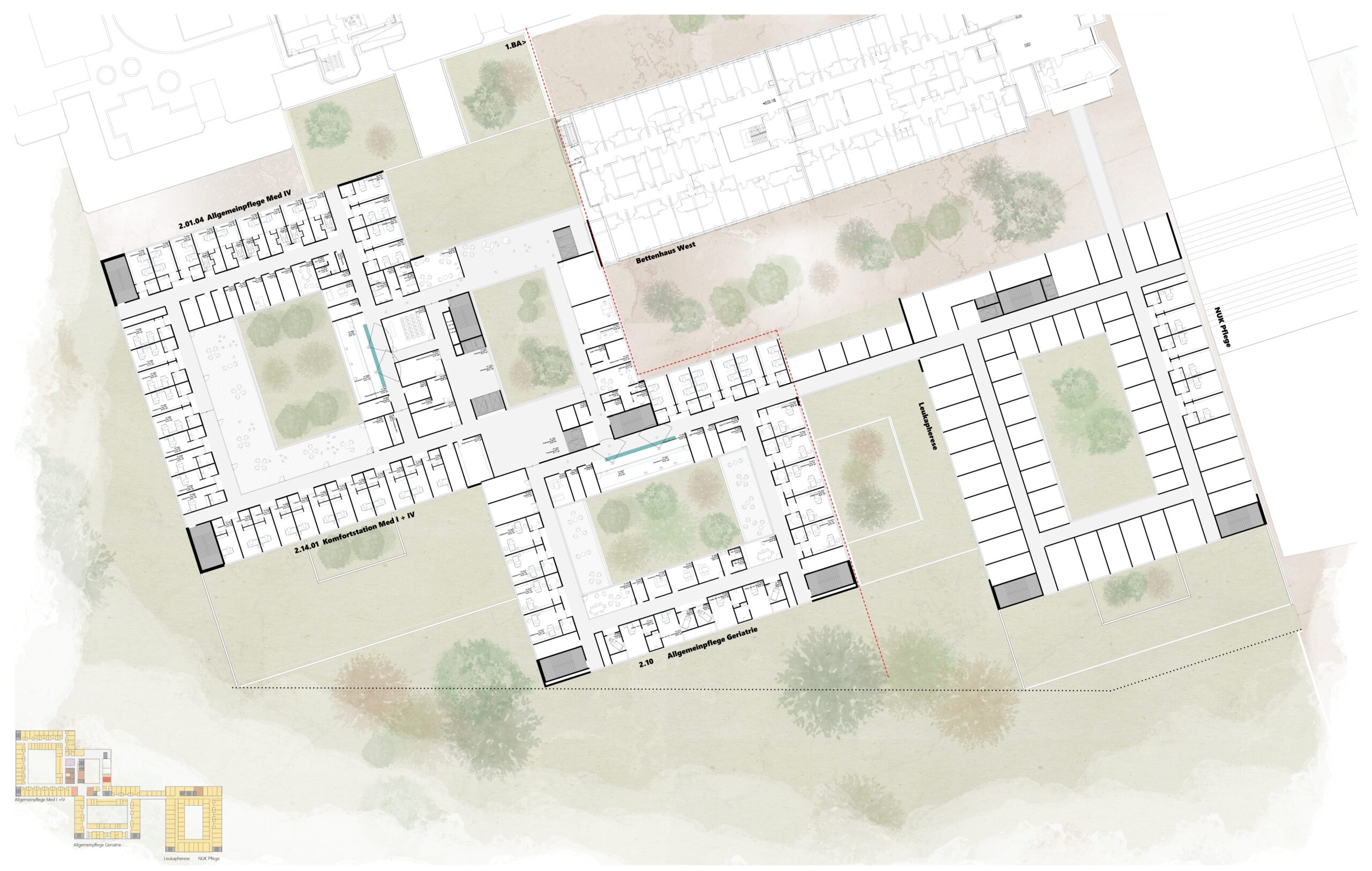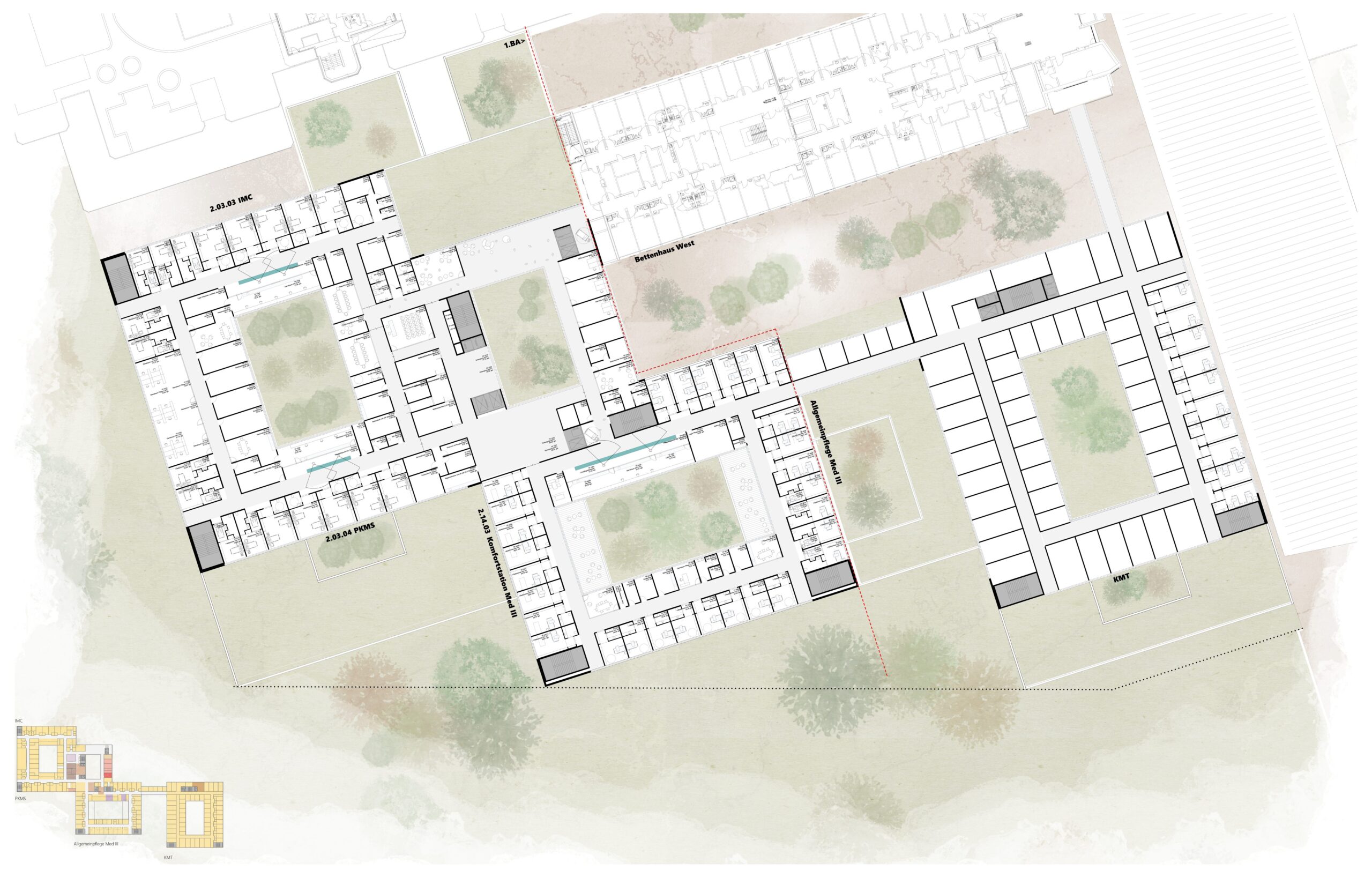

A New Medical Campus in Tübingen
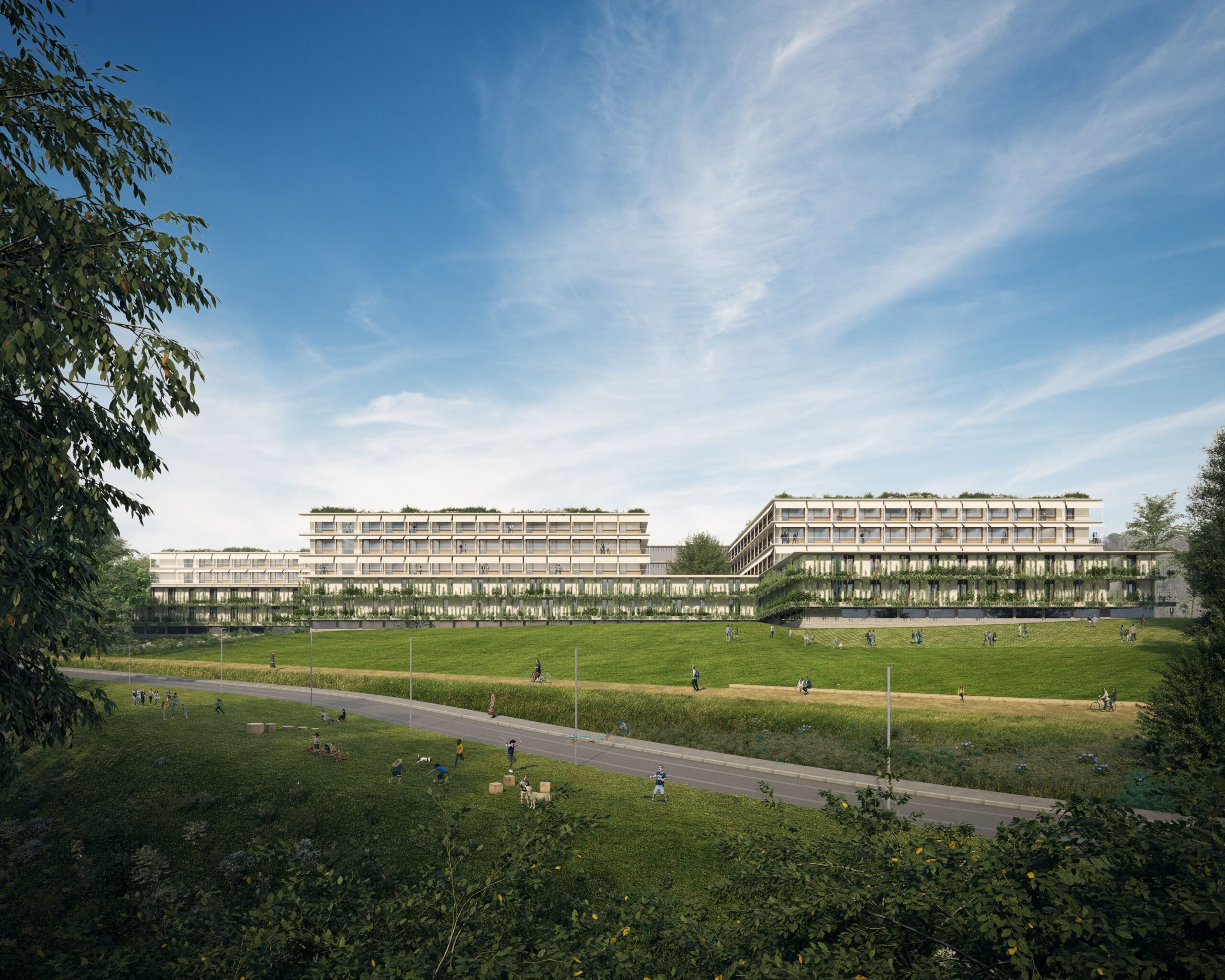
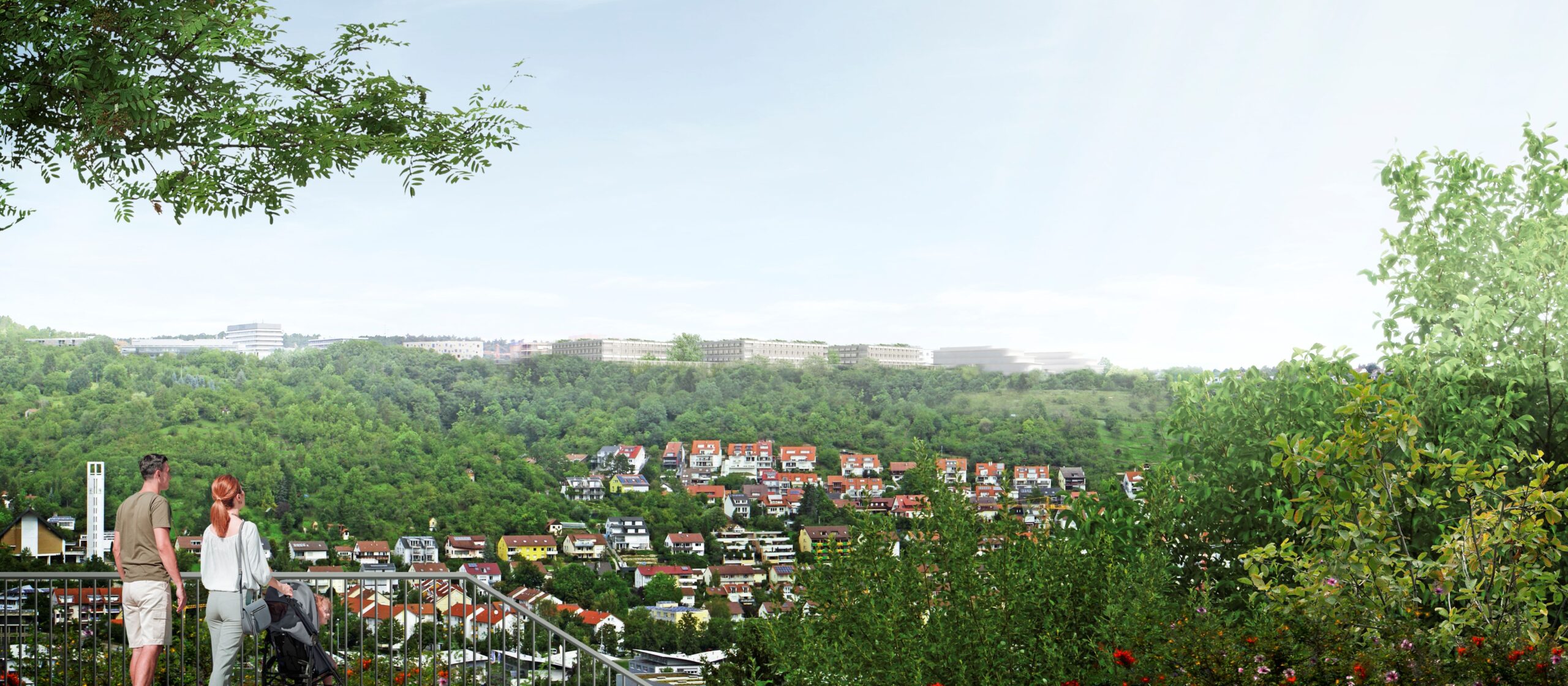
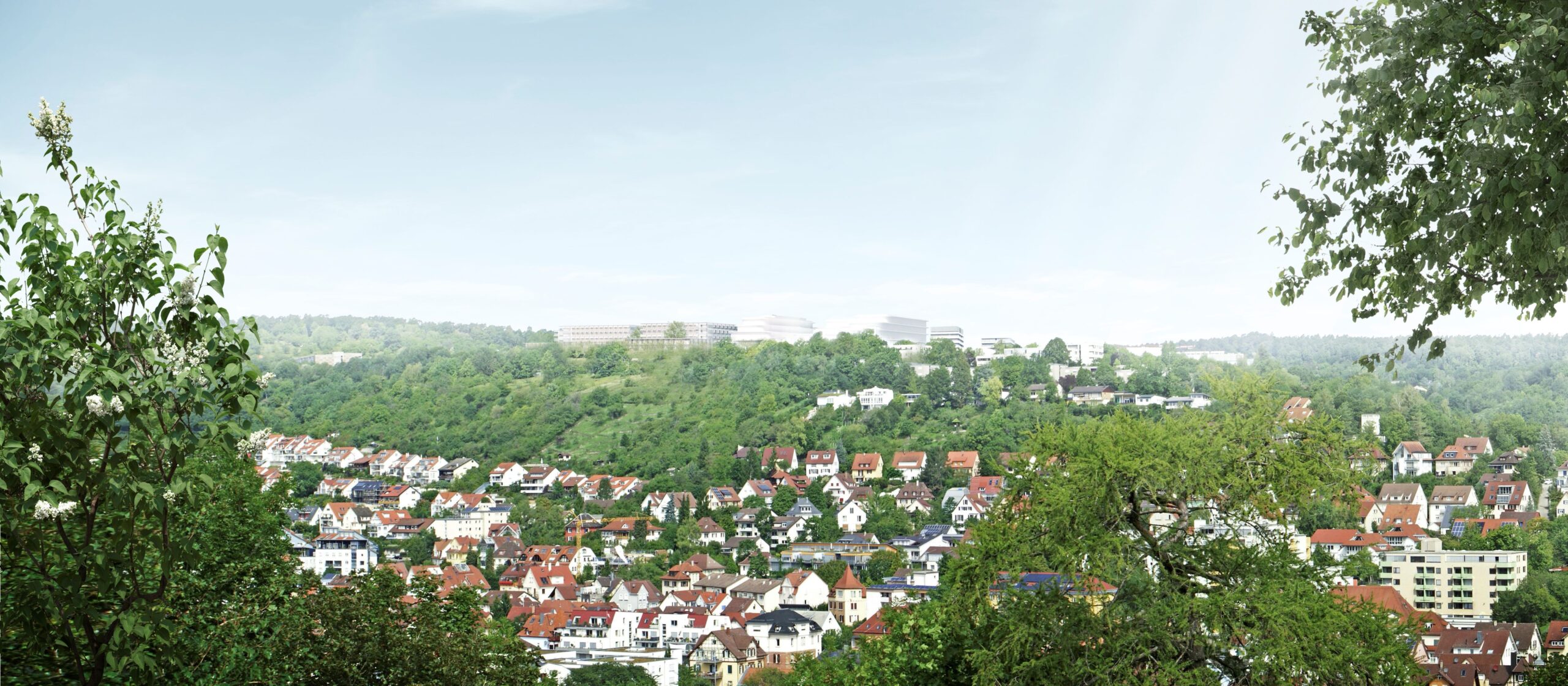
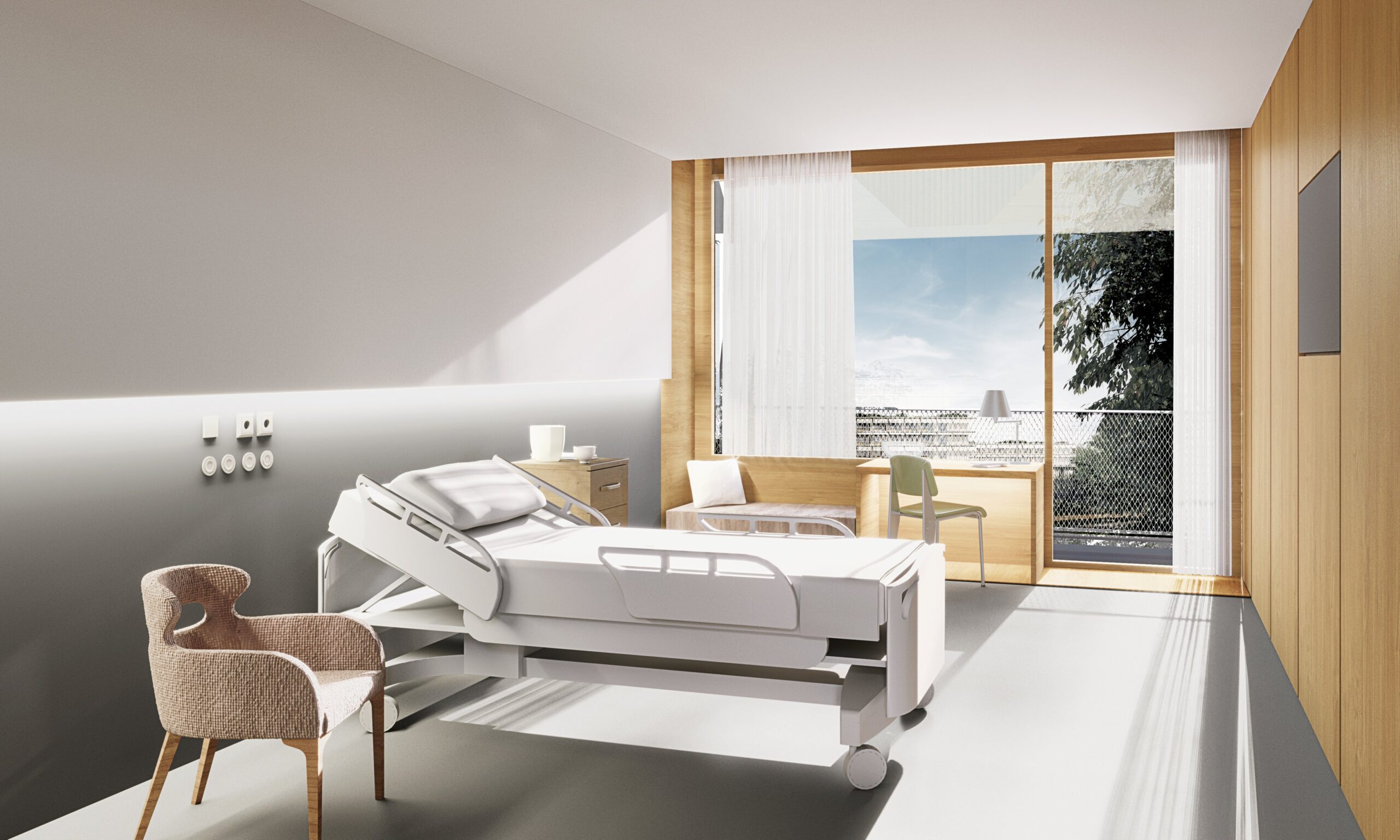
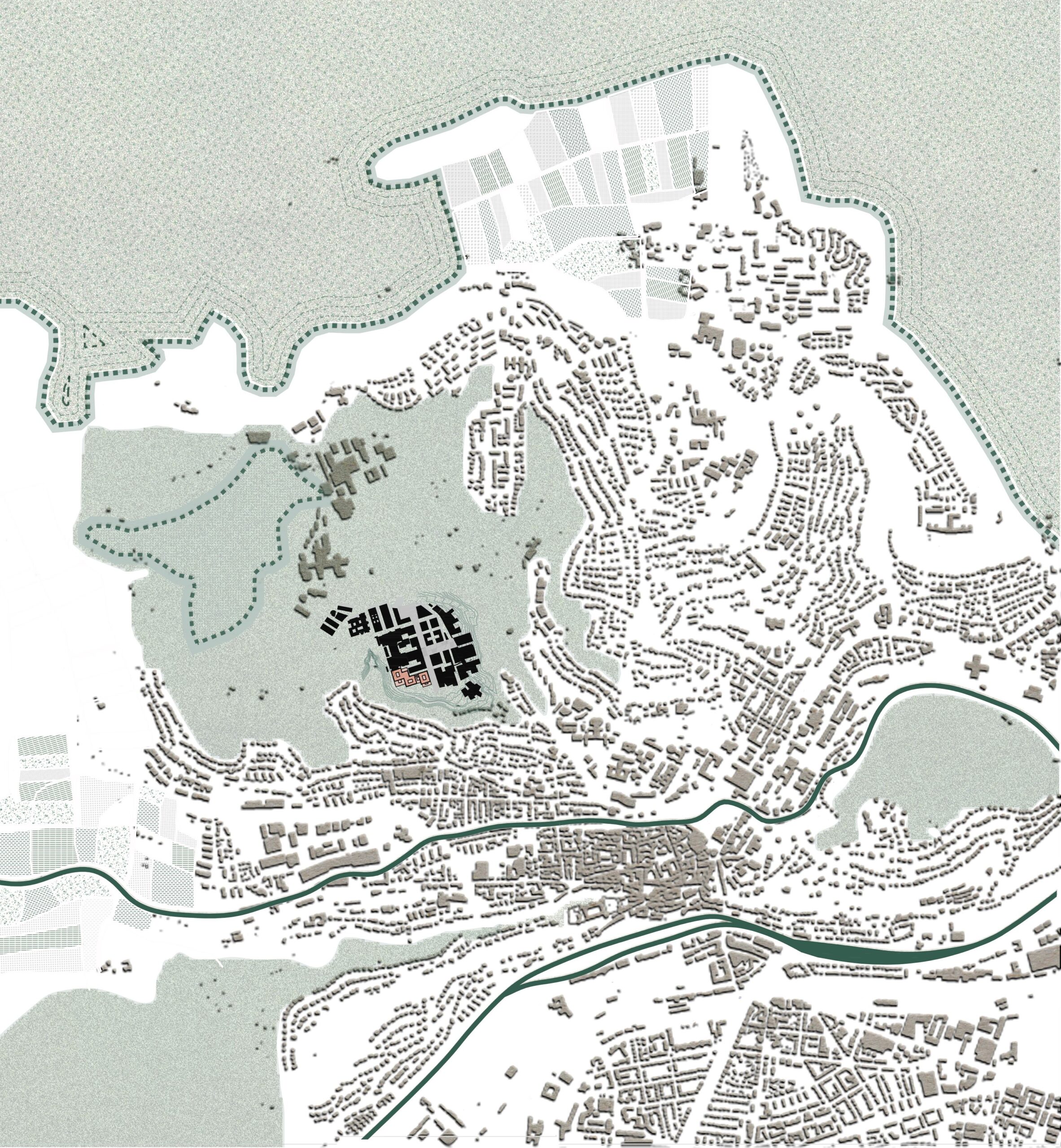
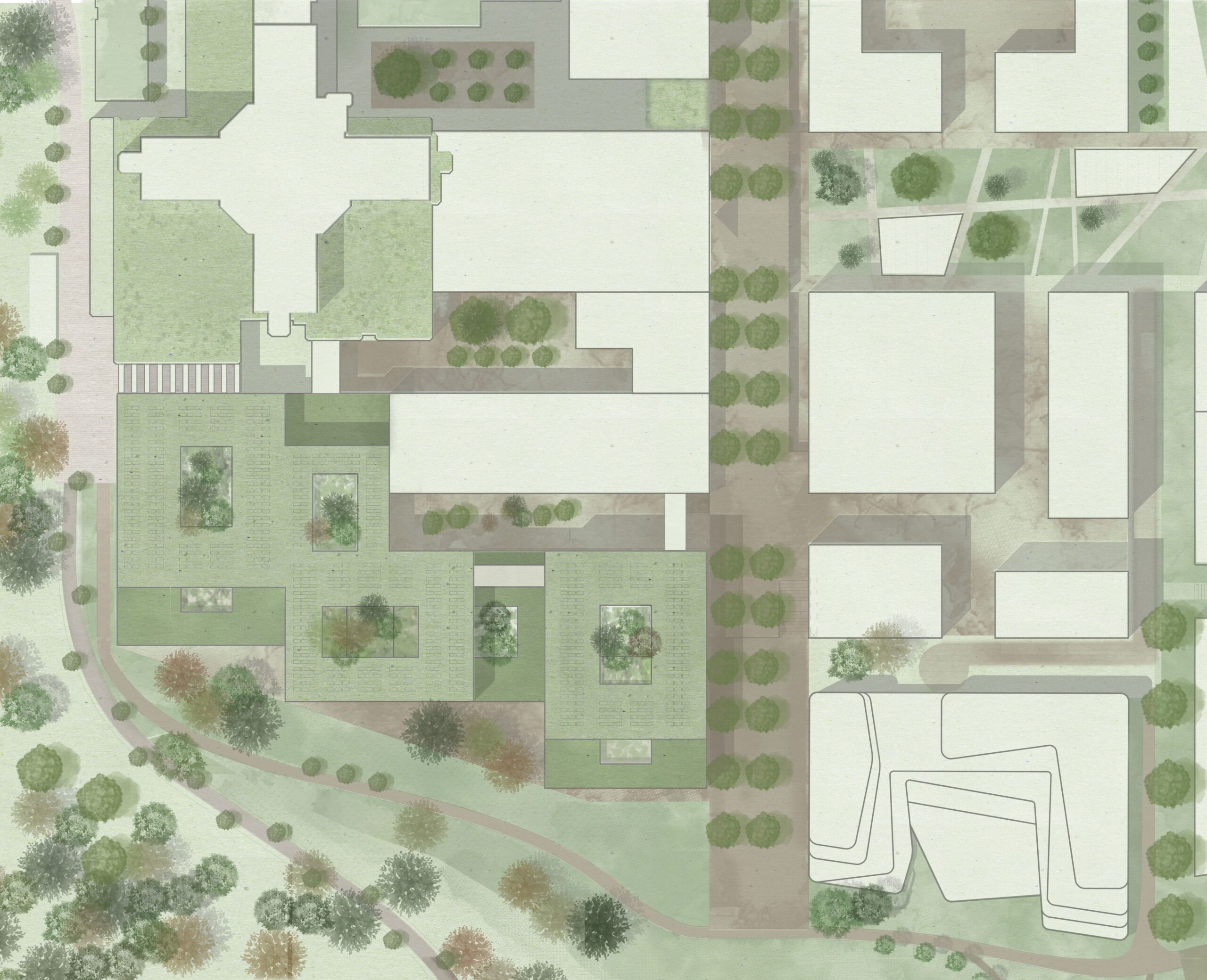
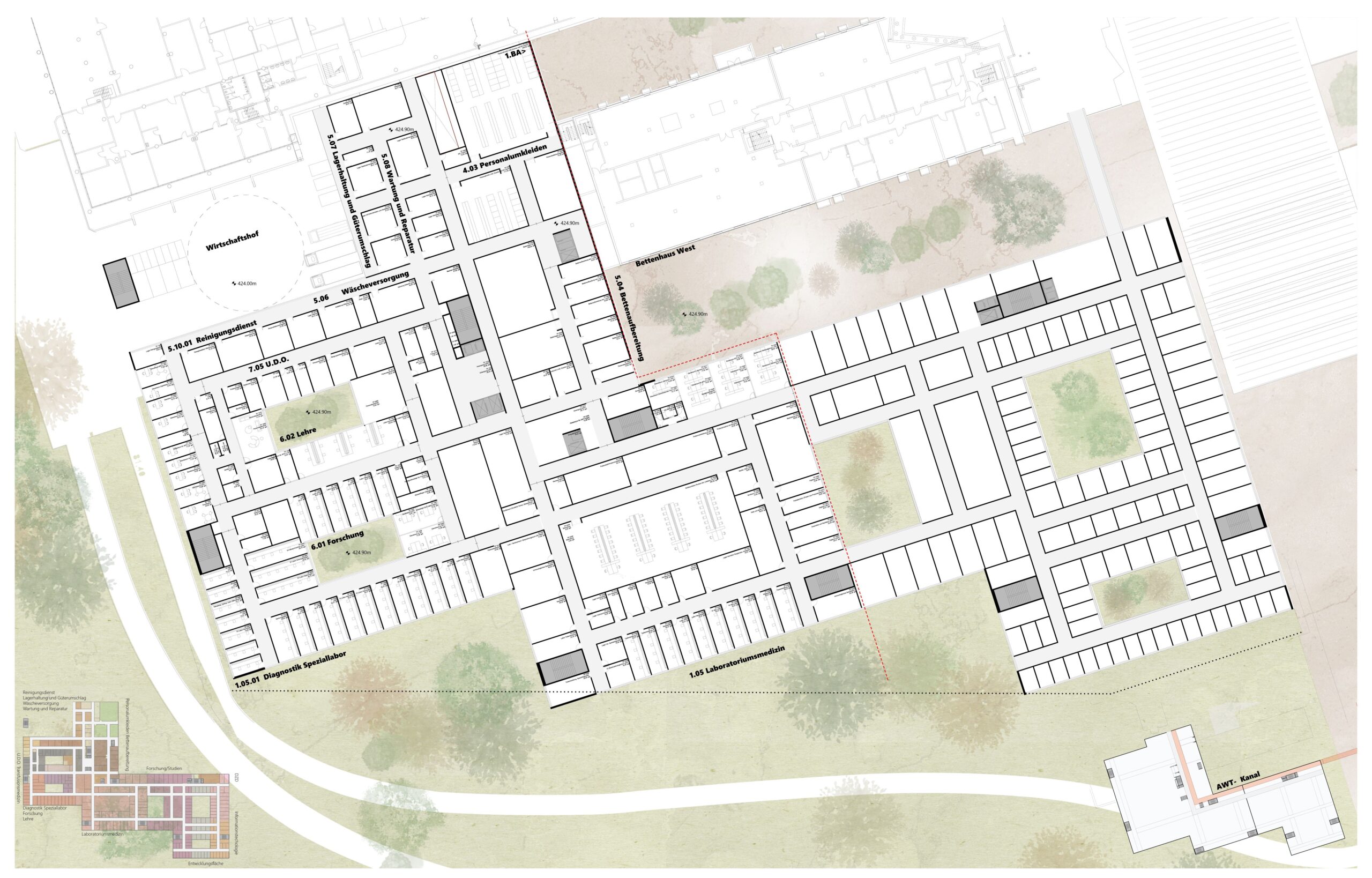
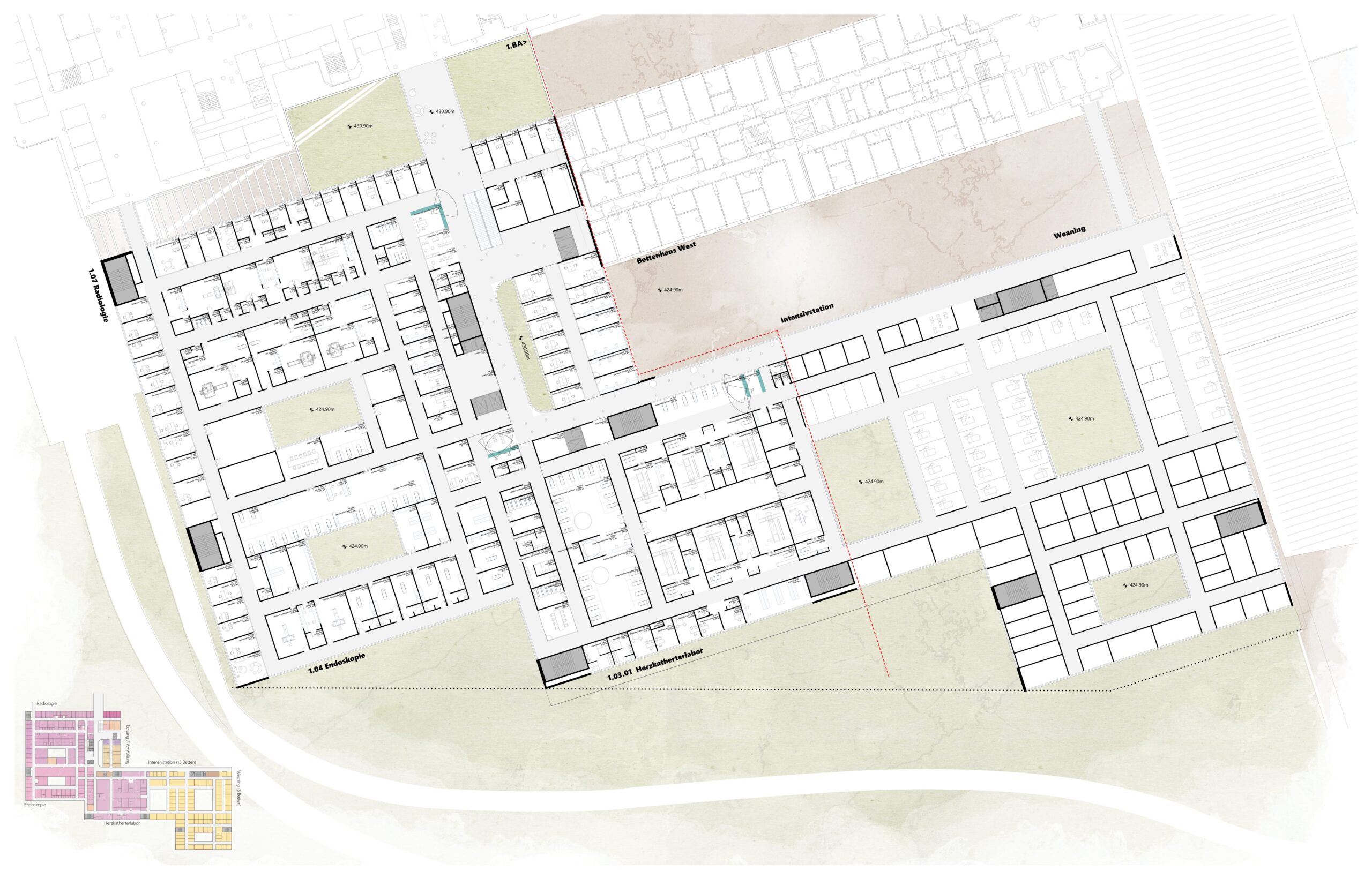
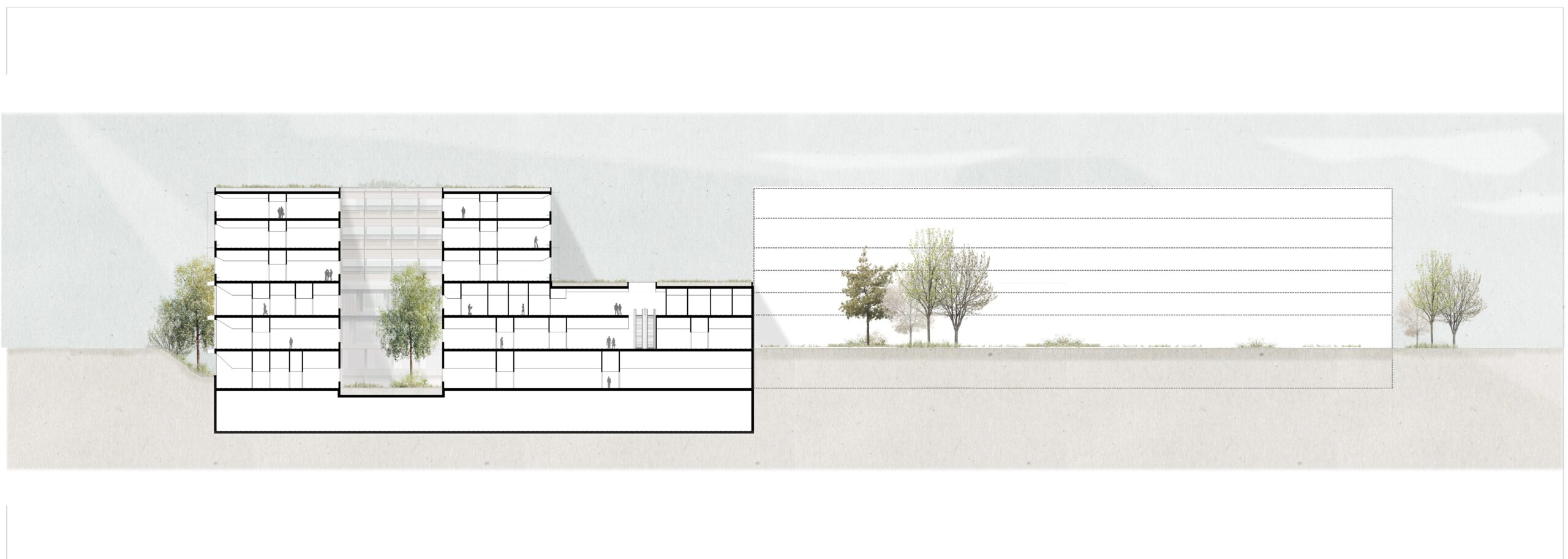
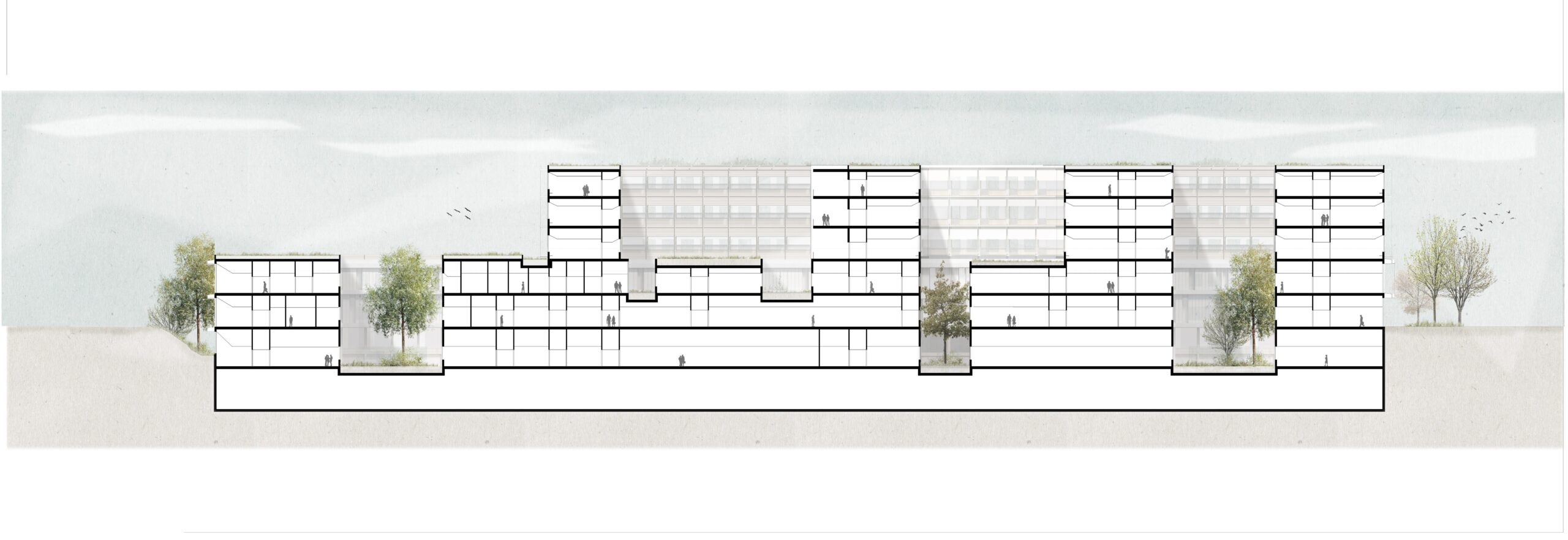
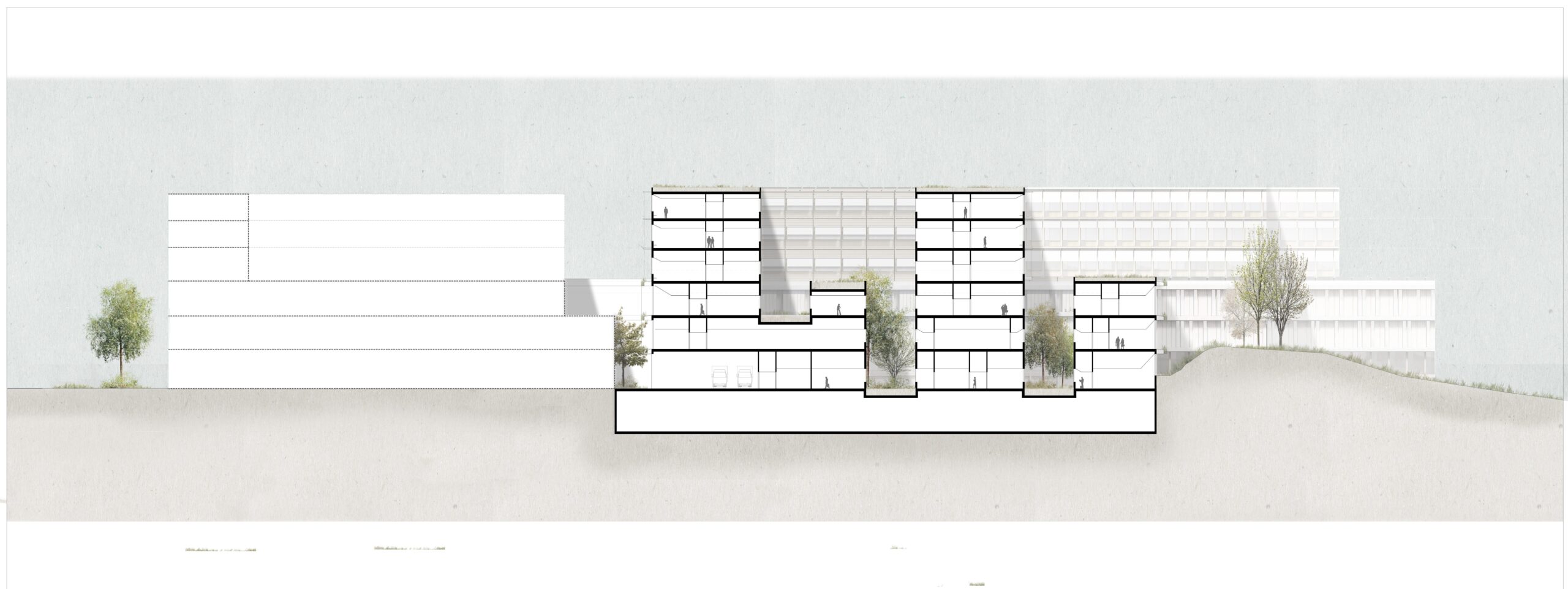
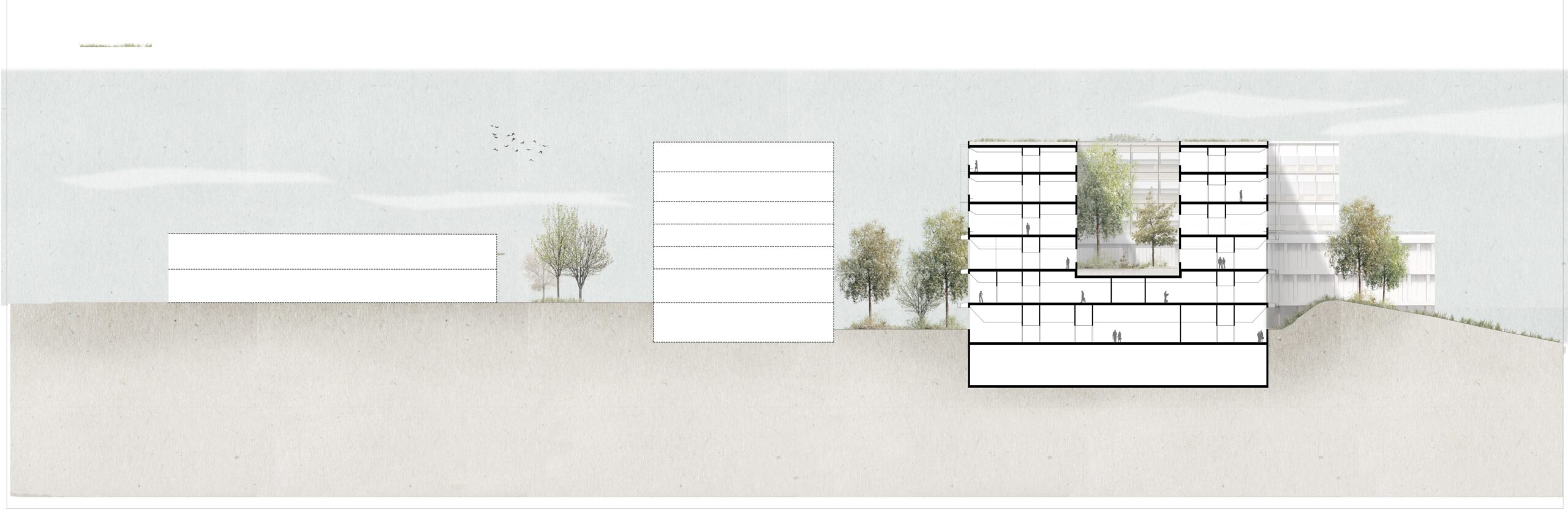
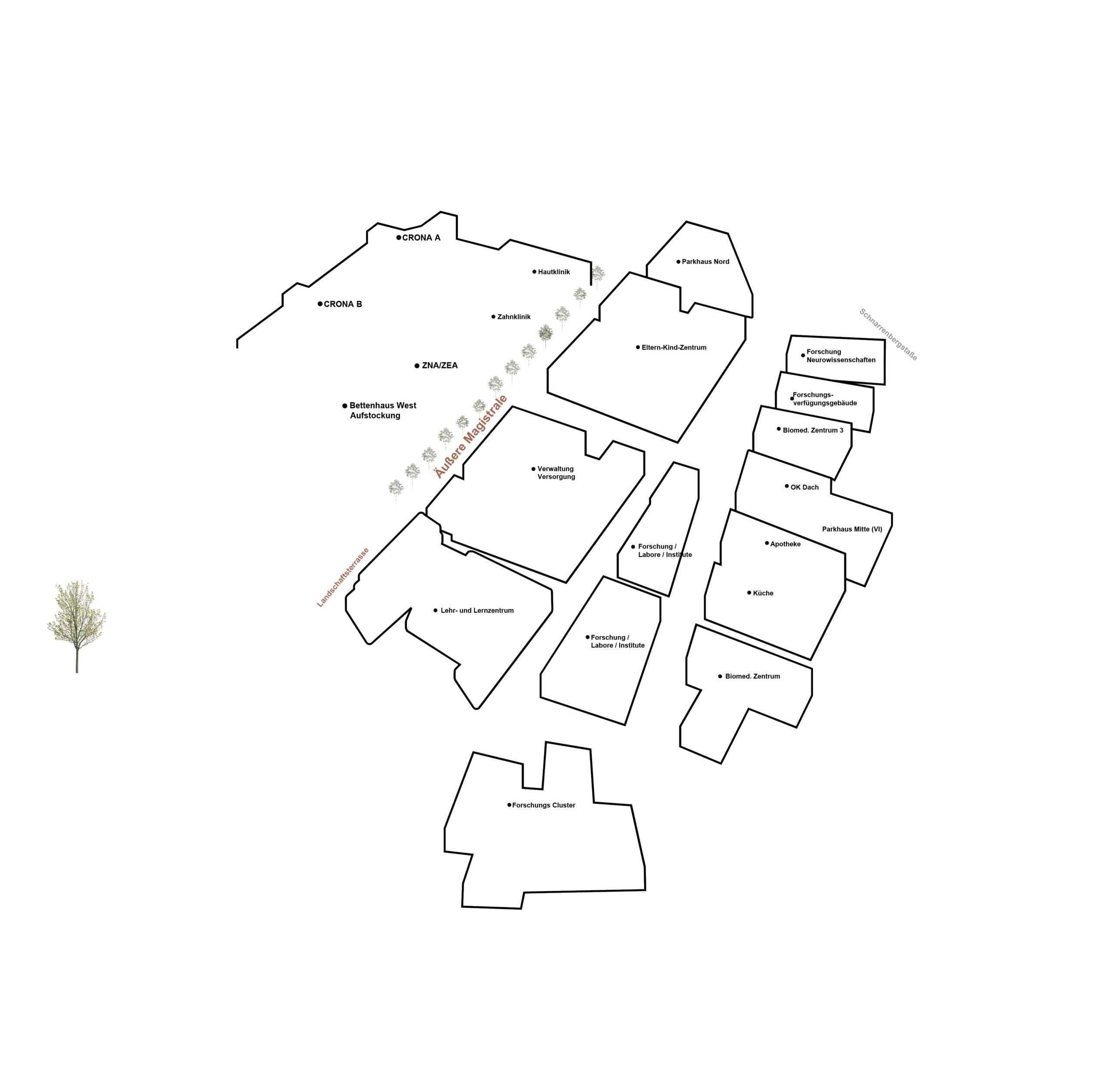
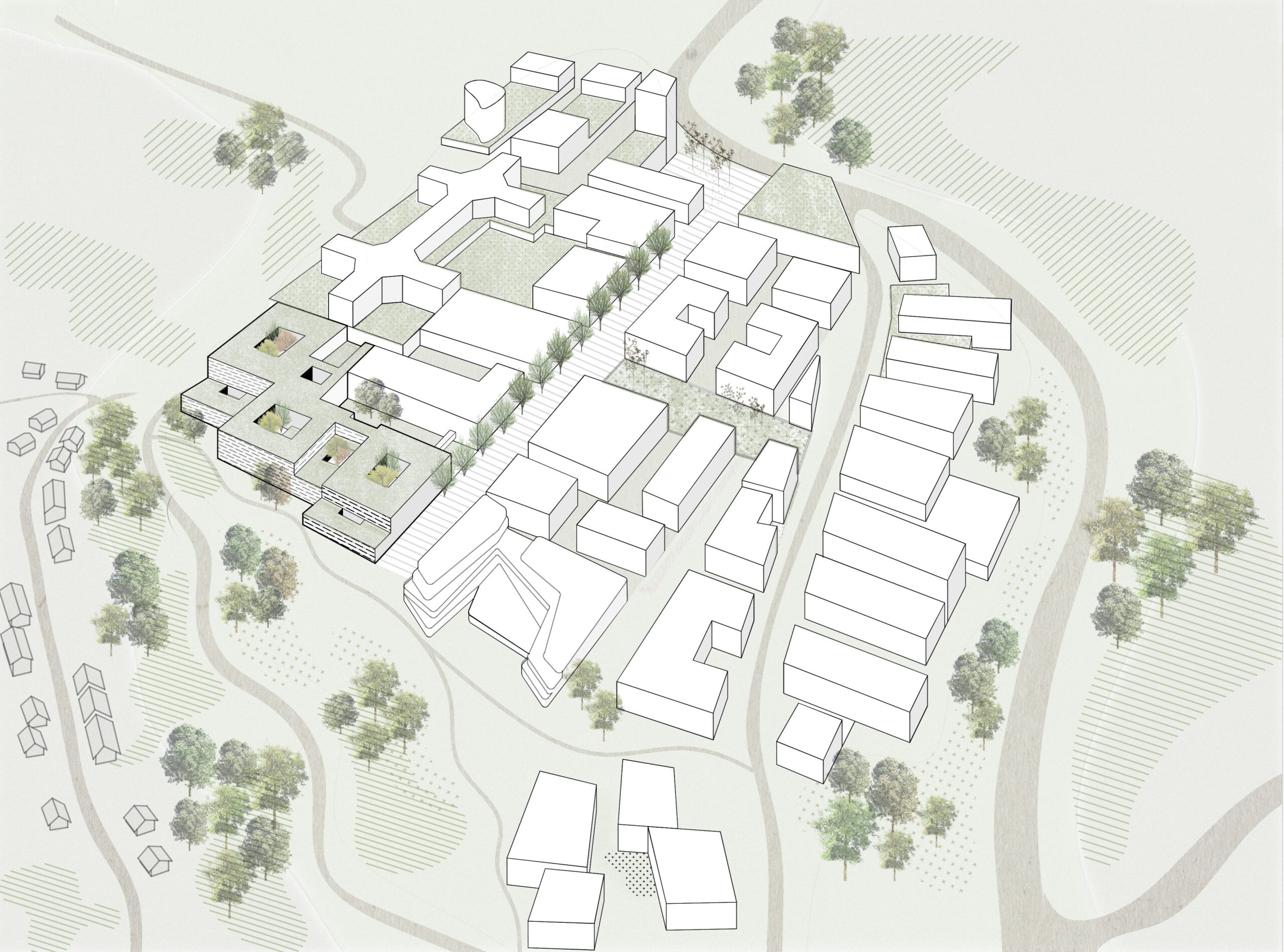
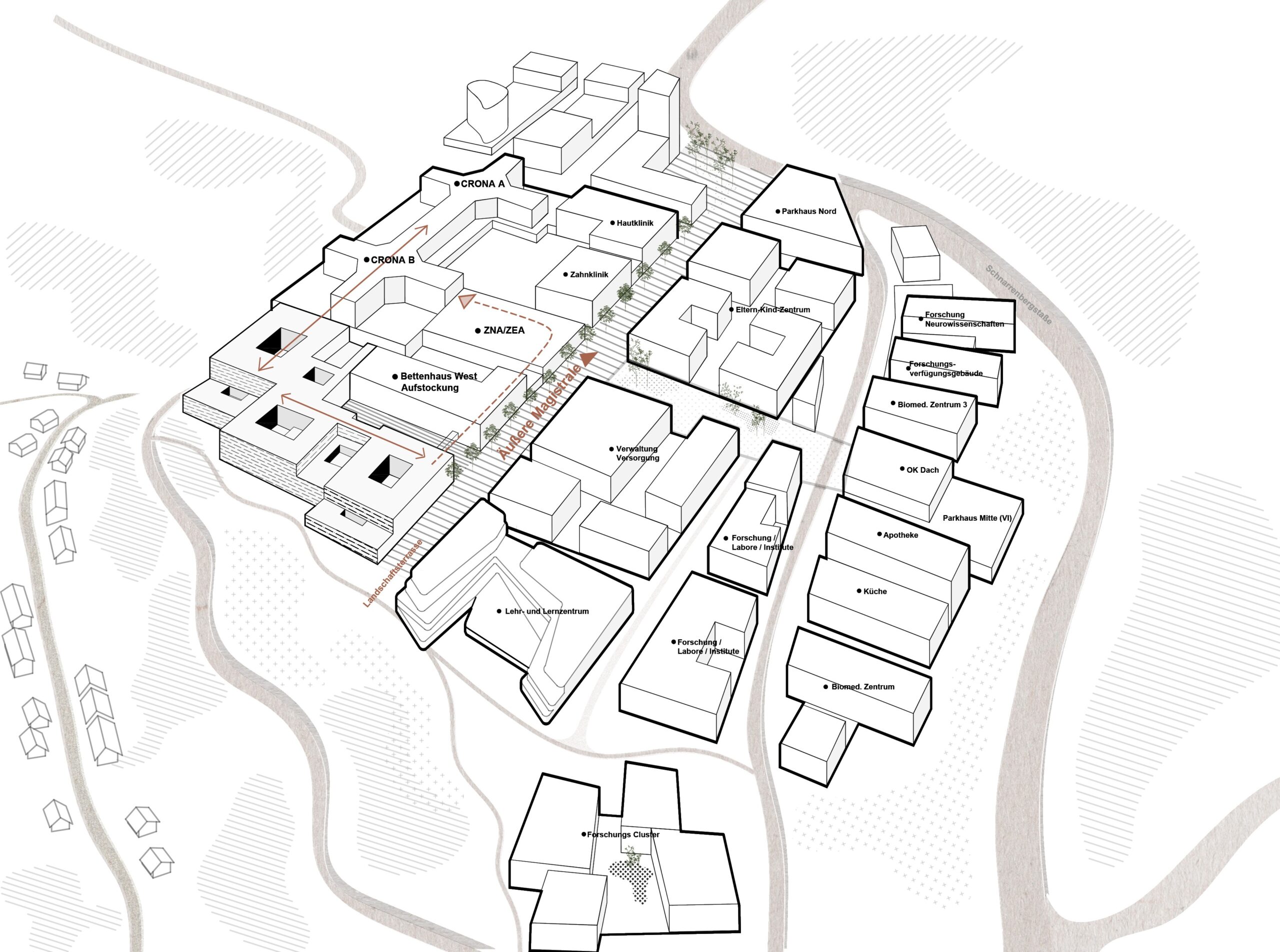
The project is situated within a contemporary urban context that prioritizes connectivity, sustainability, and integration with existing infrastructure. The hospital is conceived as a key civic node, responding to the surrounding city fabric through efficient land use, accessibility, and environmental responsibility. Its urban strategy emphasizes connections to energy networks, transport systems, and public services, while also promoting ecological awareness through features such as green roofs, water retention systems, and locally sourced materials. The design aligns with broader urban goals of reducing environmental impact, enhancing public health, and supporting long-term adaptability within a dense and evolving metropolitan setting. The building reflects a synthesis of technological innovation and human centered design. The structure combines reinforced concrete at lower levels with a hybrid system of steel framing and cross-laminated timber (CLT) in upper floors, balancing structural efficiency with reduced carbon footprint. The architecture is further defined by modular, prefabricated “plug-and-play” systems that streamline construction and allow flexibility over time. Emphasis is placed on interior comfort and performance through natural lighting, air quality control, and smart systems integration. This results in a responsive, adaptable environment where advanced building technologies enhance both operational efficiency and the well-being of patients and staff.
 Share
Share
 Tweet
Tweet
 Pin it