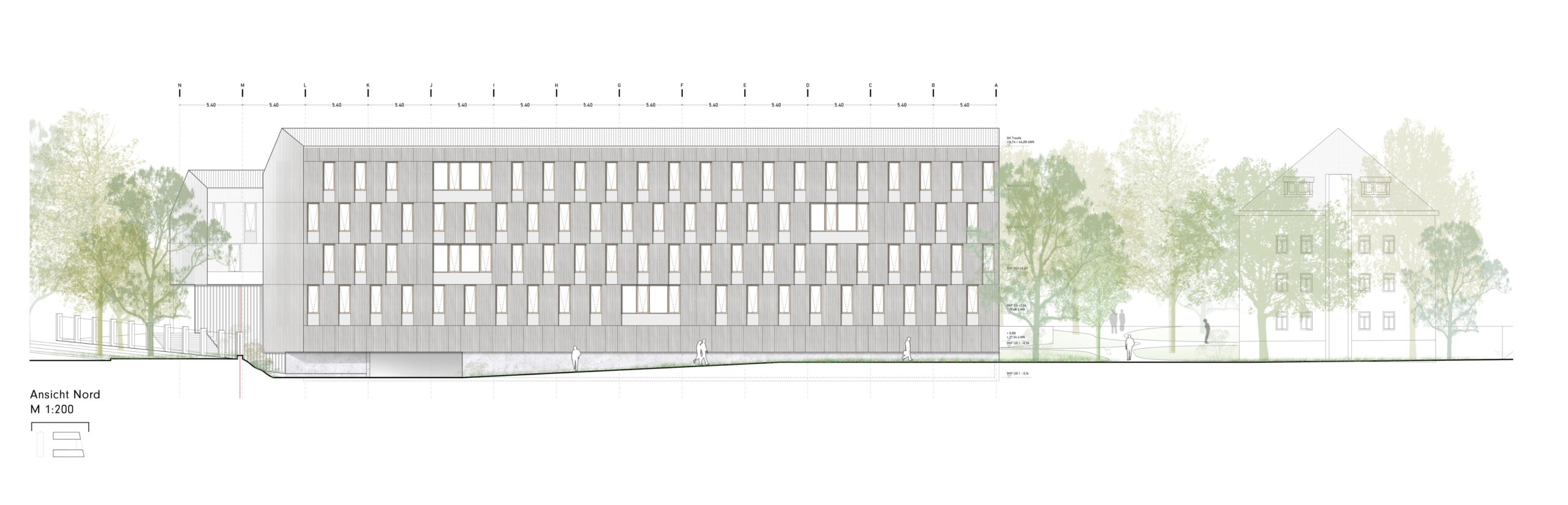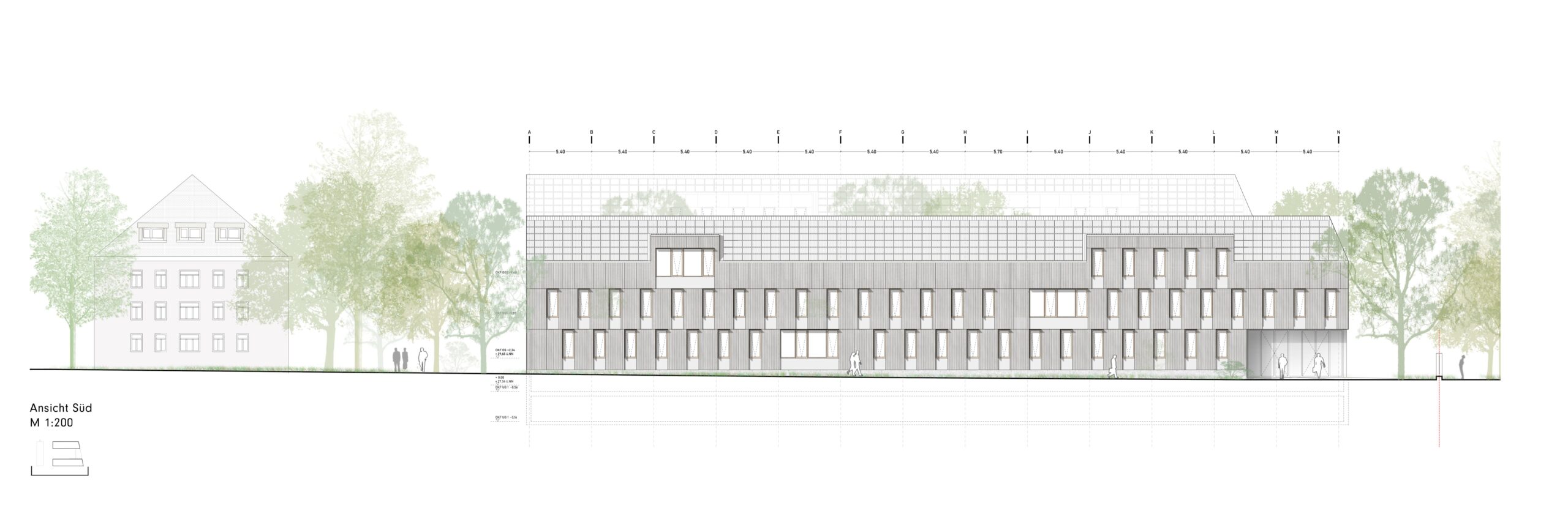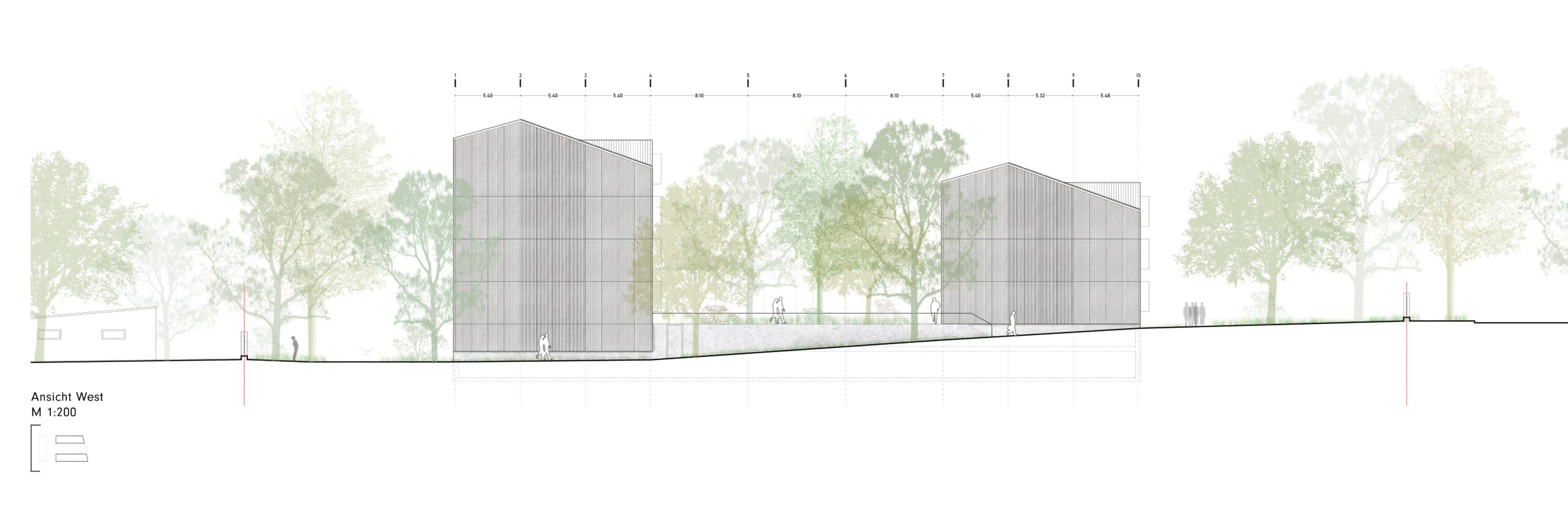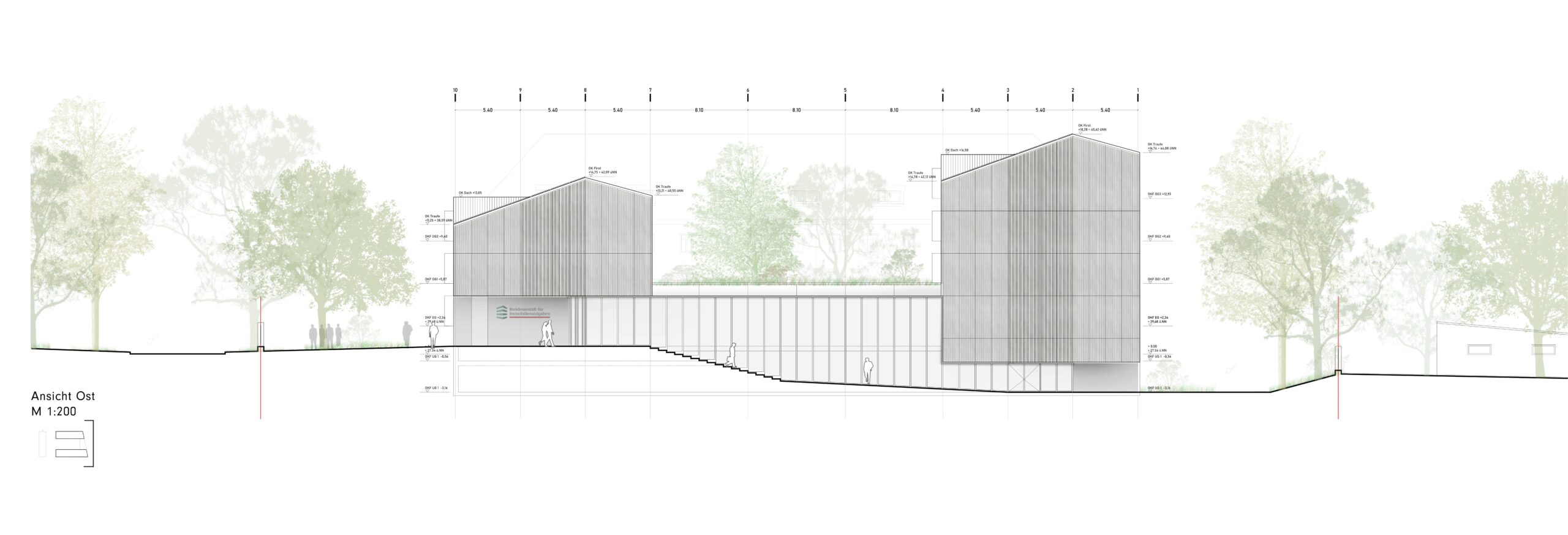

The Office Building BImA Directorate in Rostock
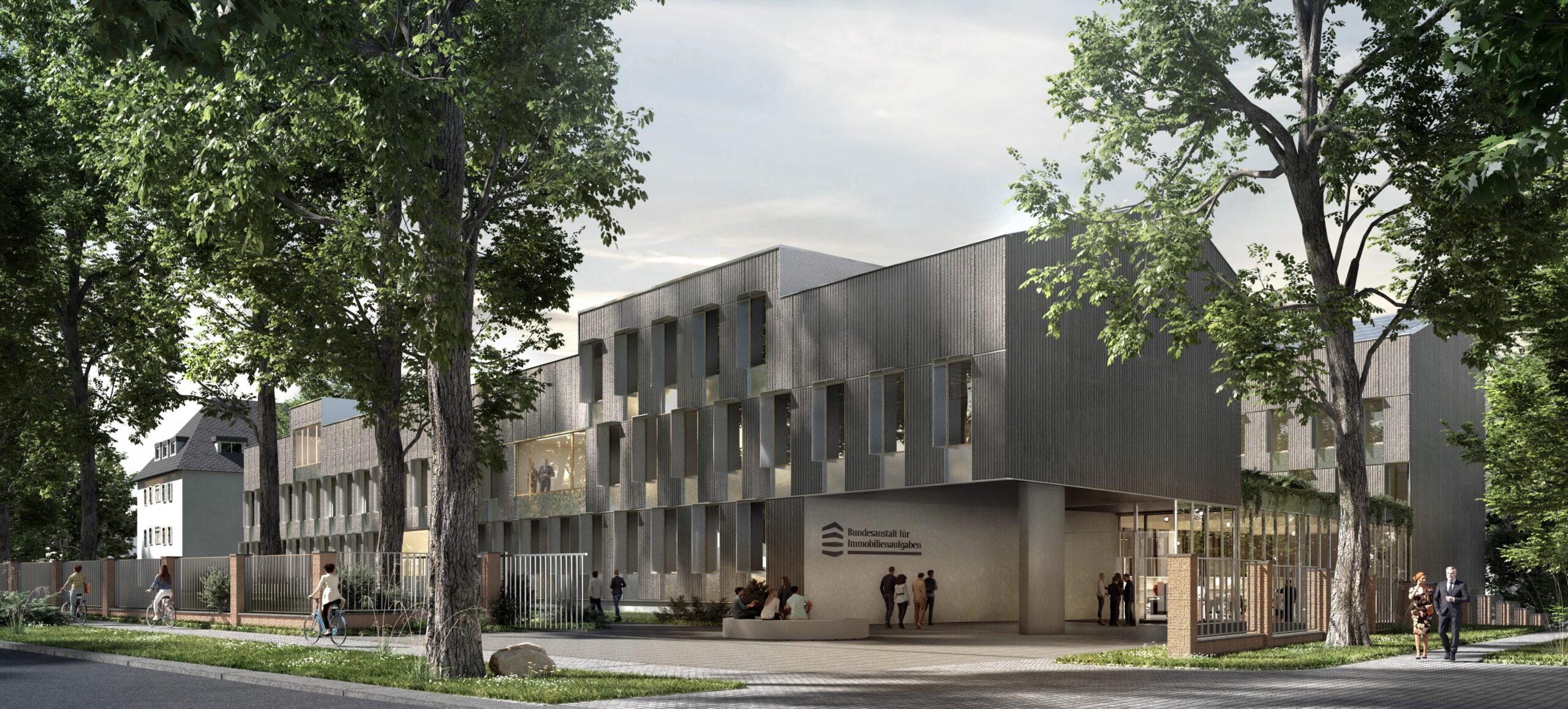
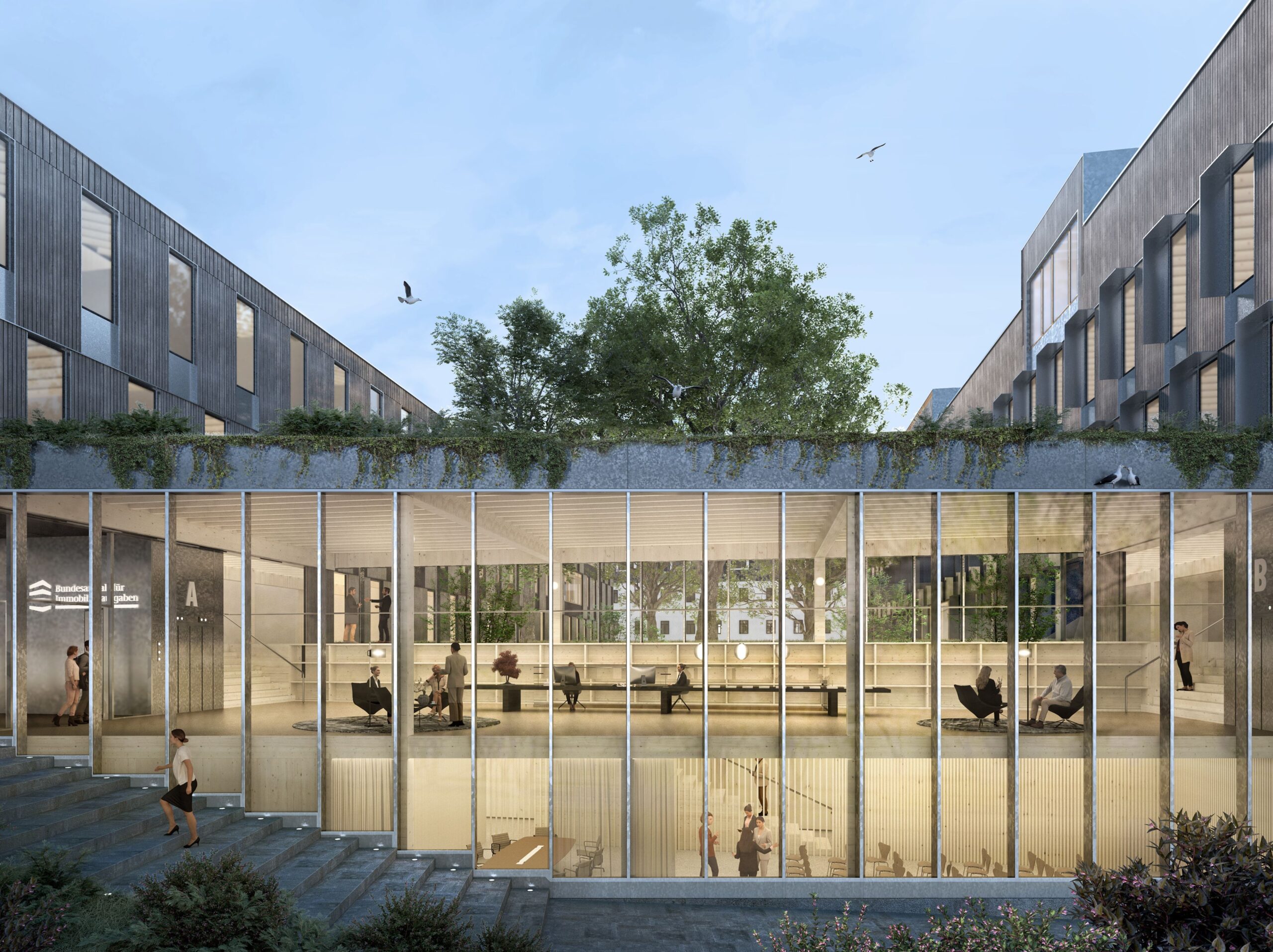
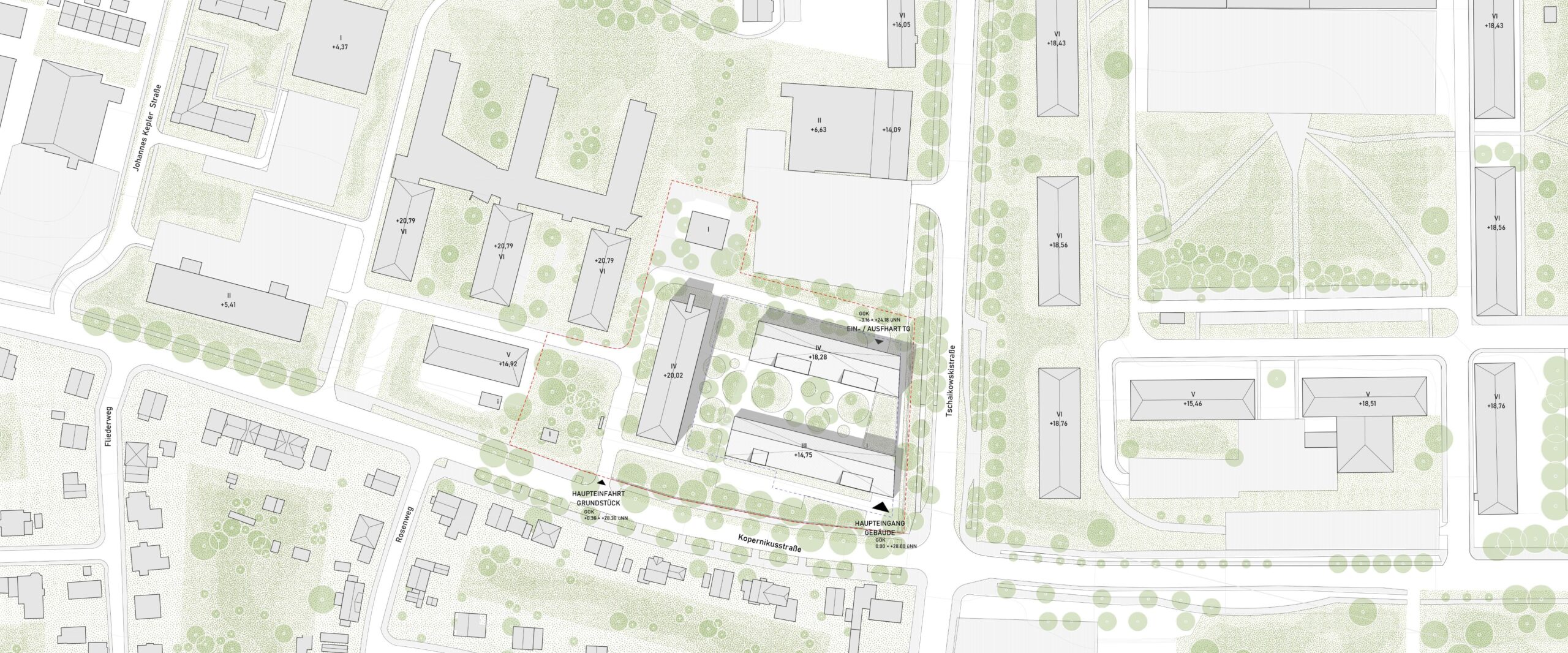
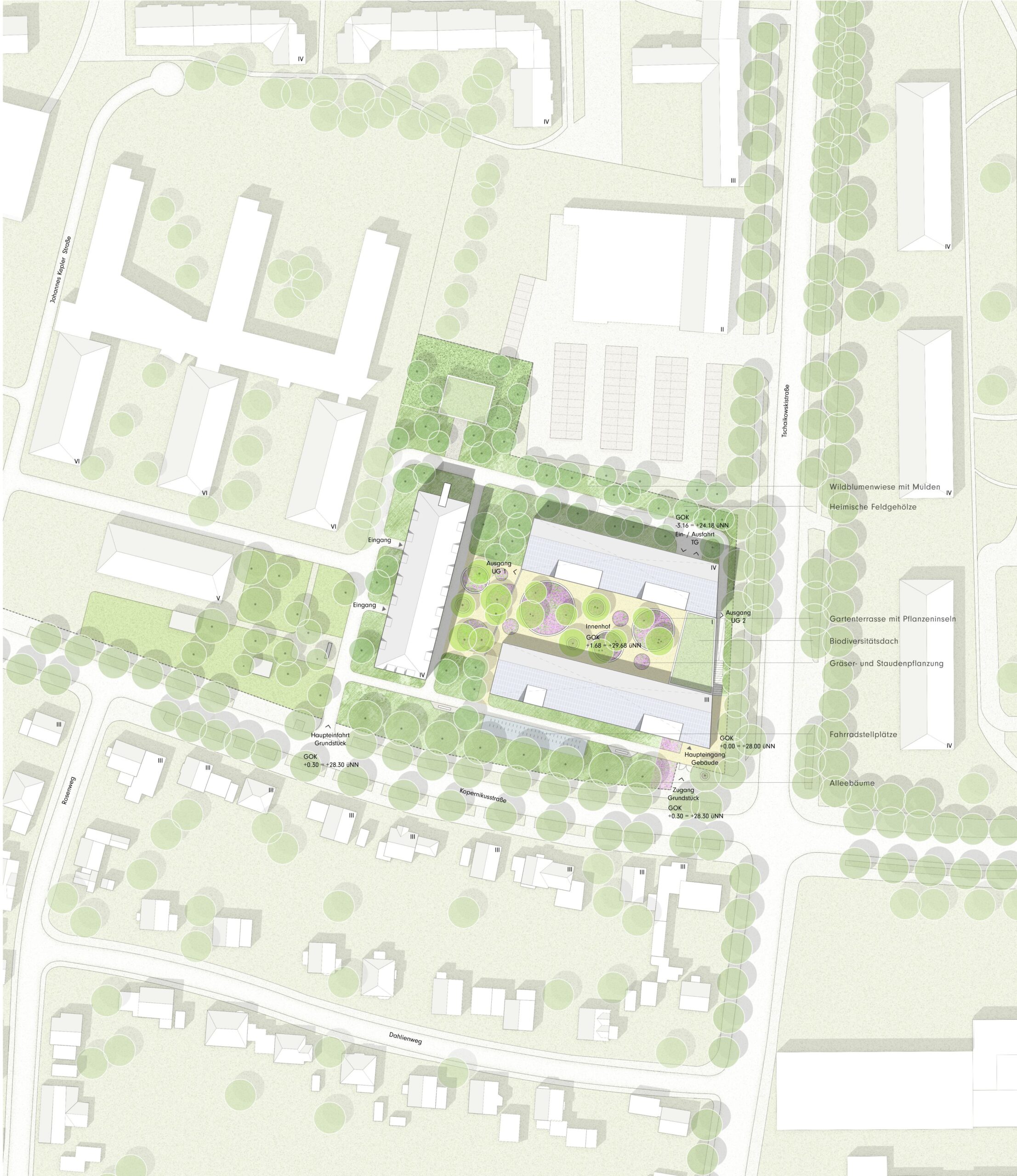
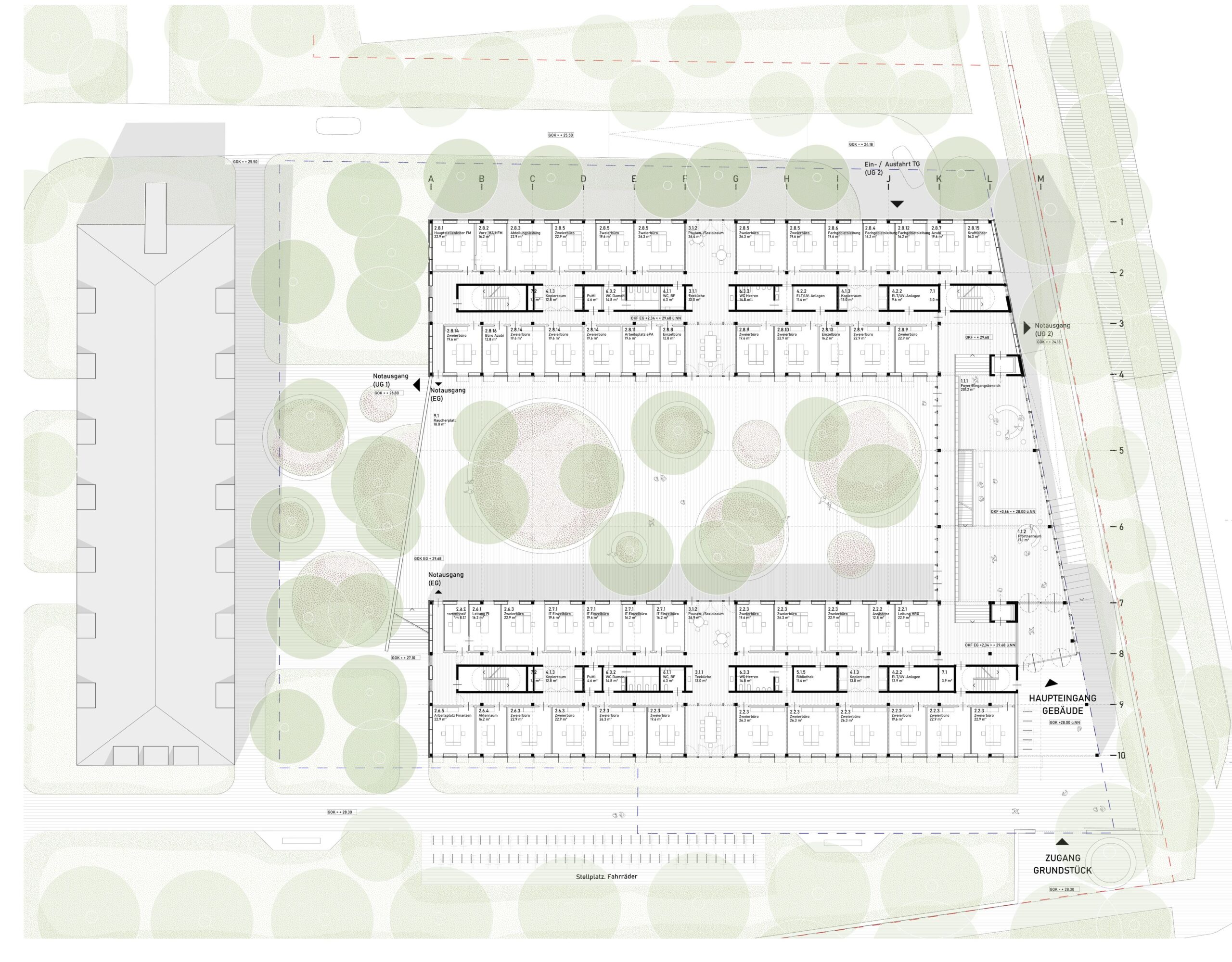
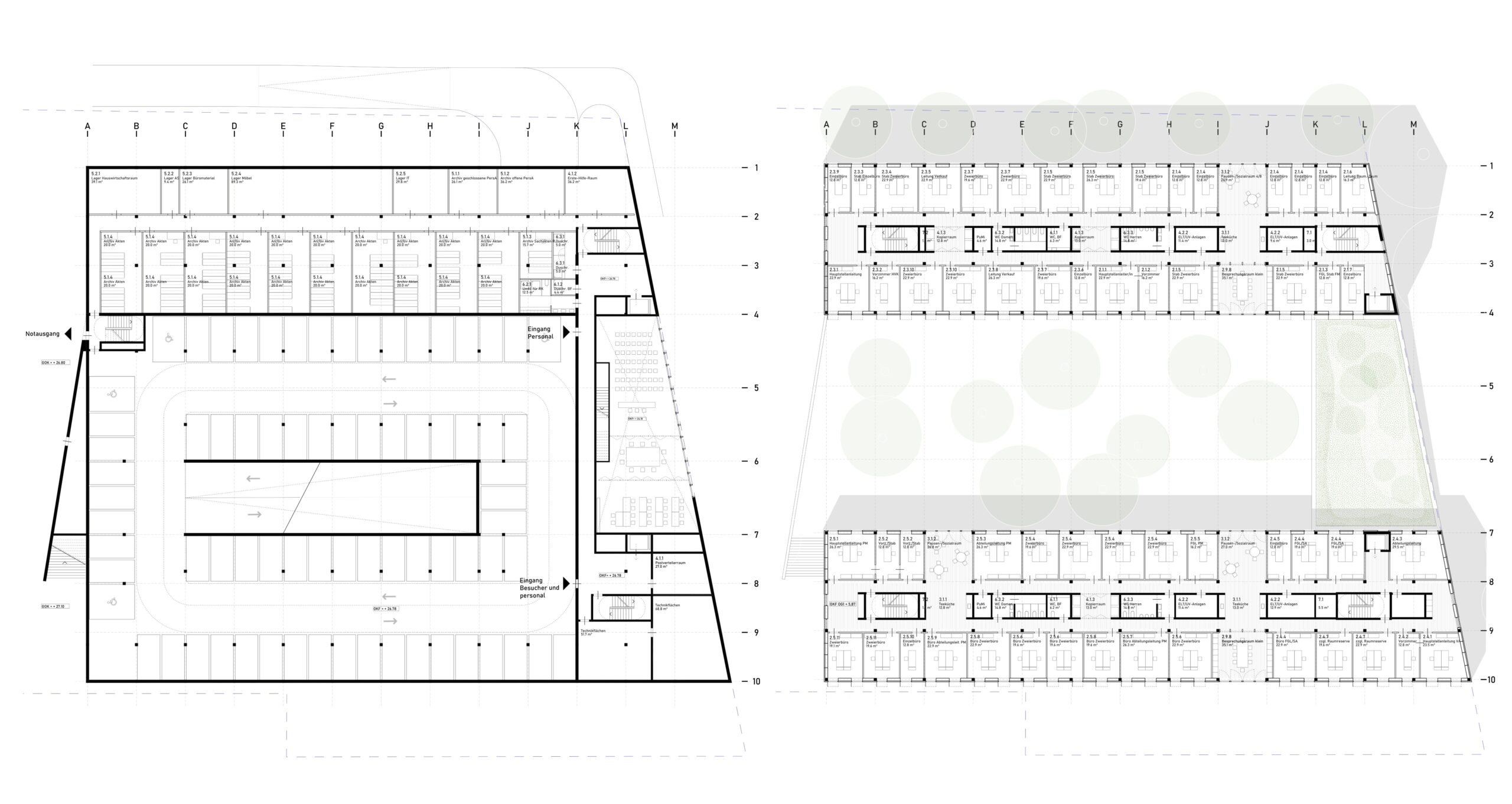
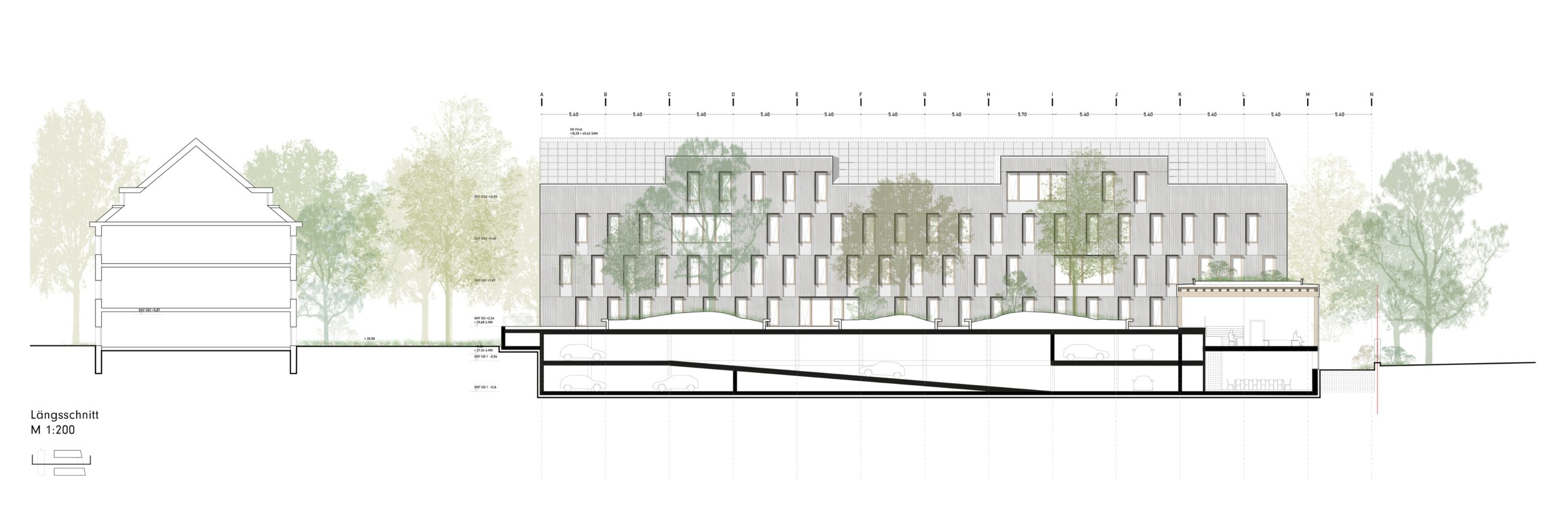
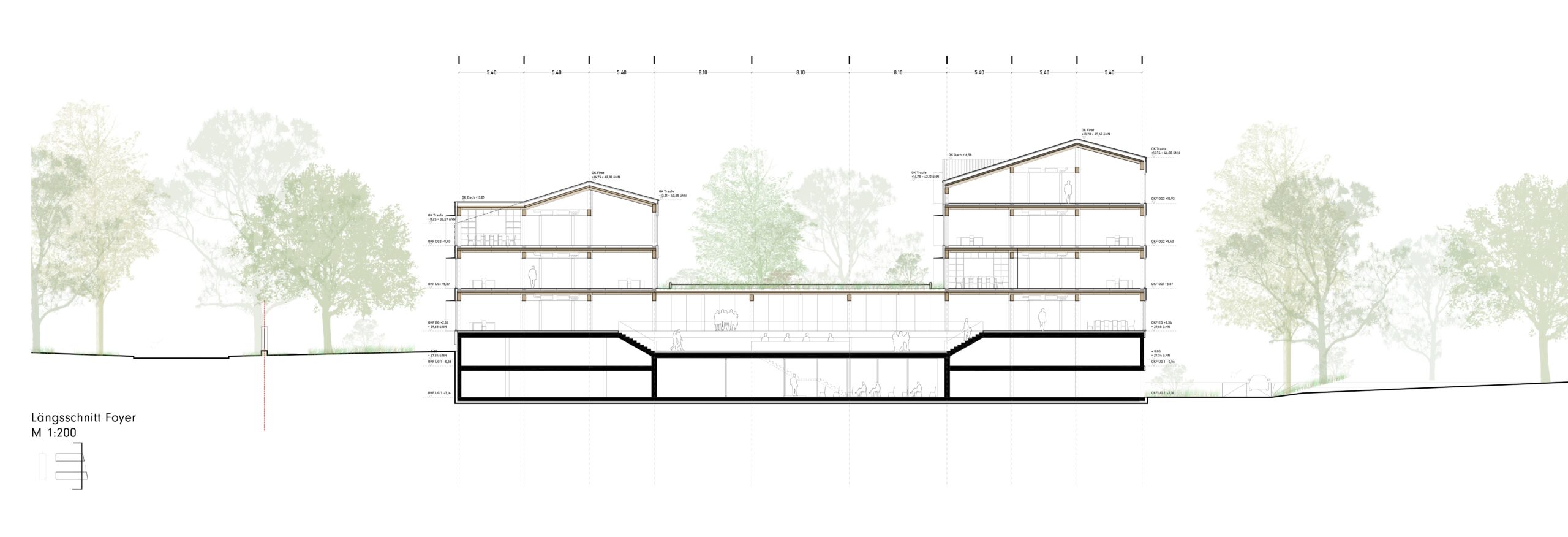
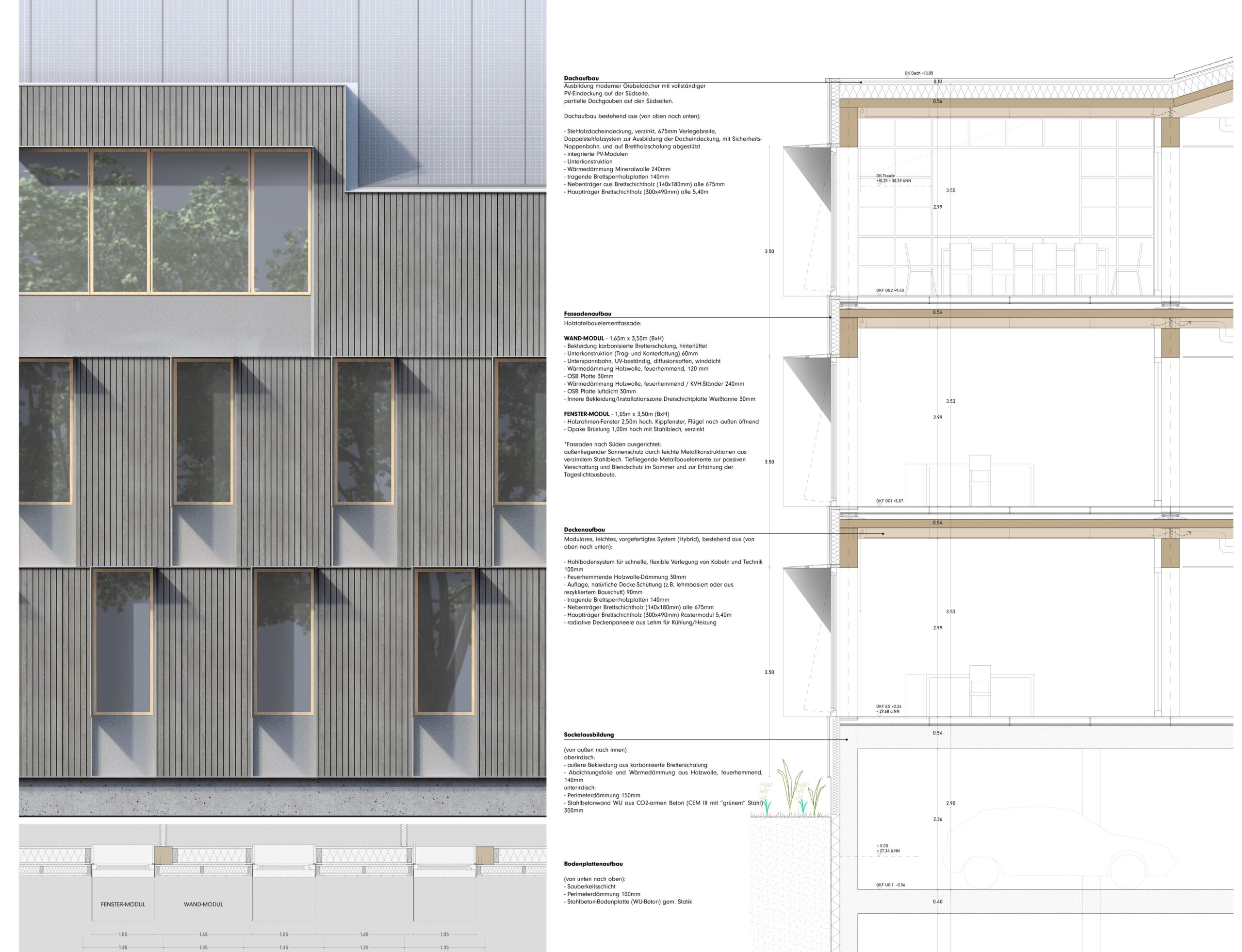
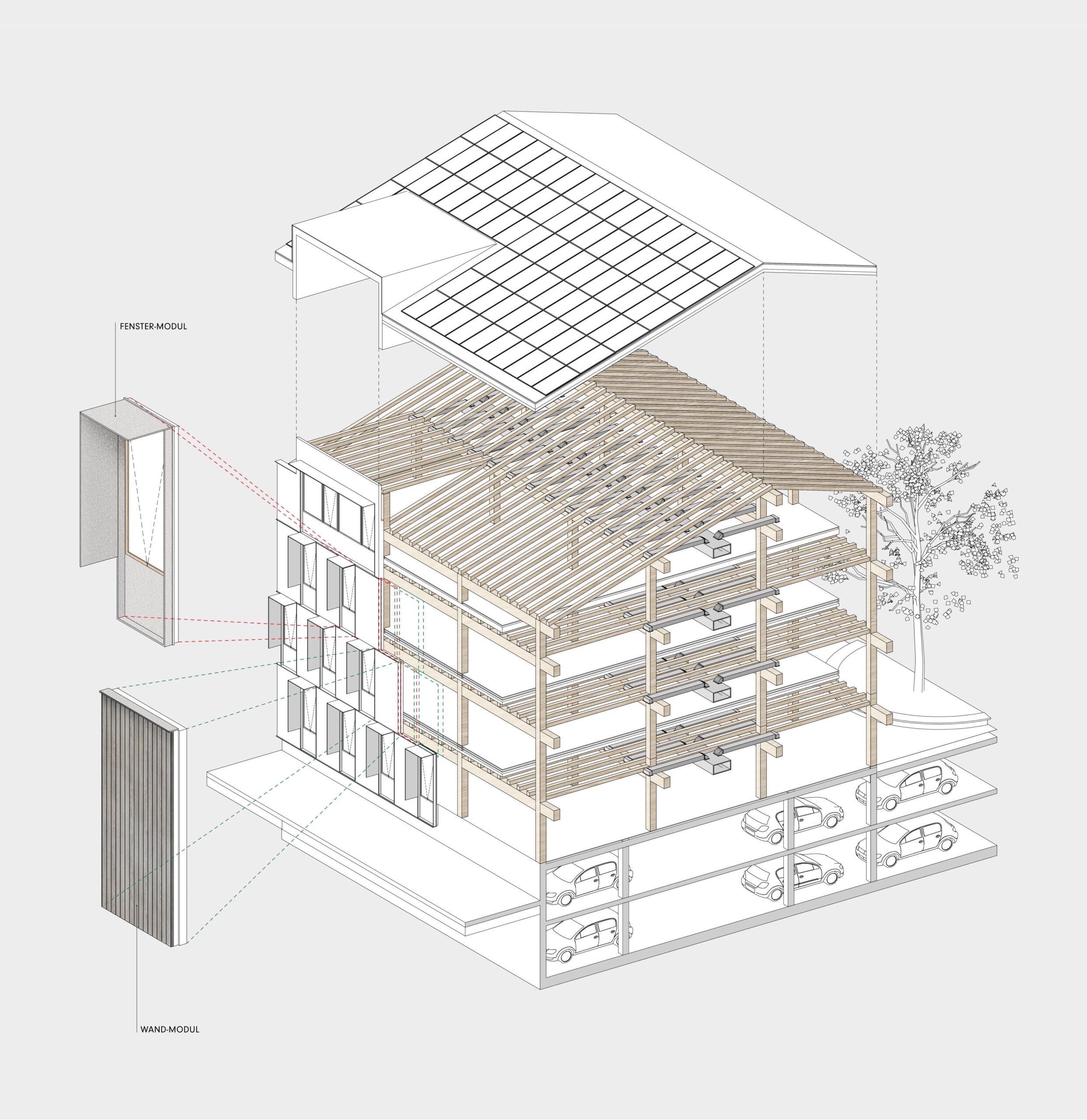
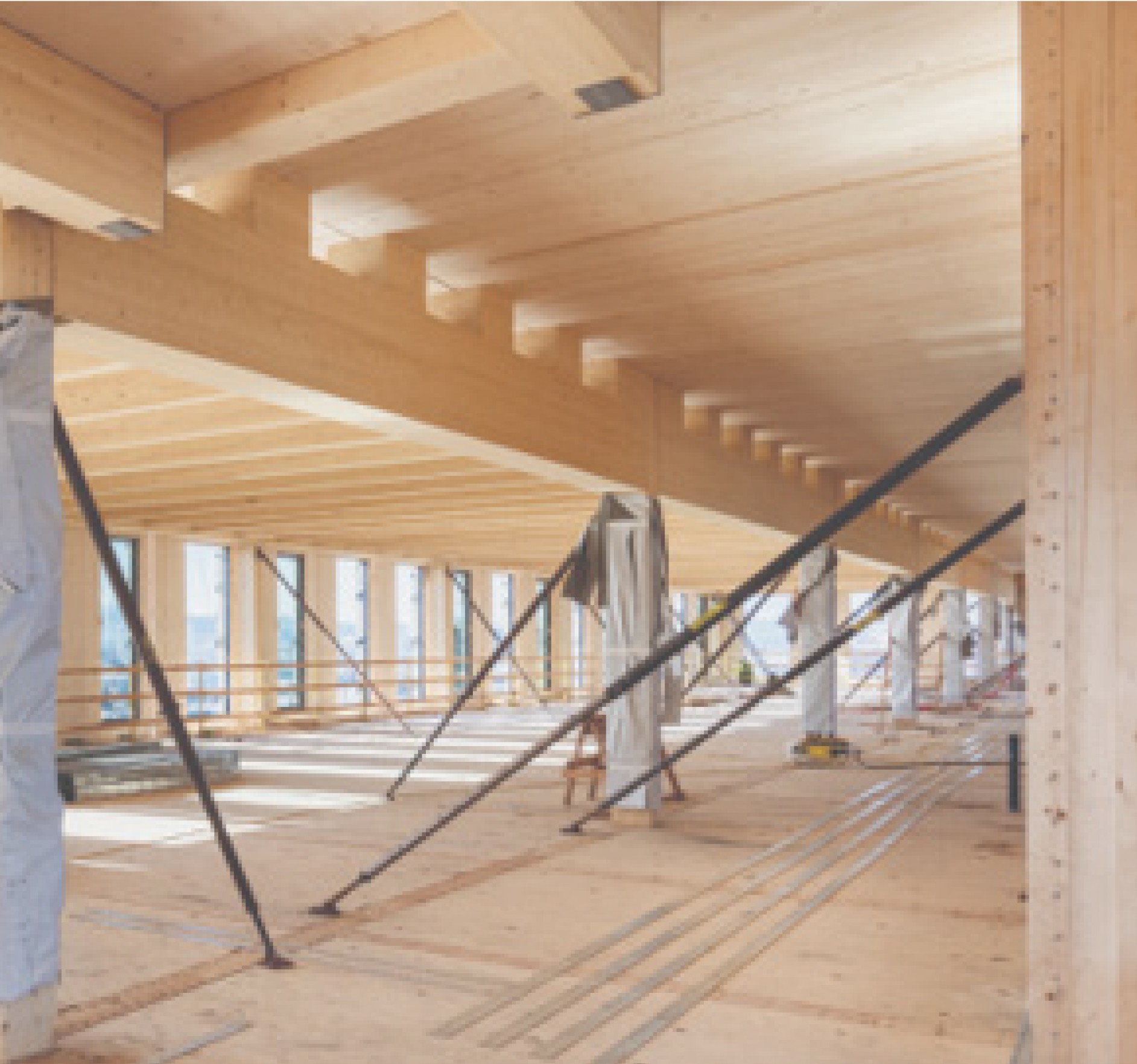
The urban context of a project is defined by its relationship to the surrounding environment, including the scale, density, landscape, and existing built fabric. In this case, the site is characterized by low-density development and a significant presence of trees, creating a setting where new construction must carefully integrate rather than dominate. The architectural response follows this logic by adopting a composition of volumes that reflect the existing urban grain, aligning with the typology and height of neighboring structures. The arrangement of buildings forms a defined inner courtyard, which acts as a central organizing element, enhancing spatial cohesion while mediating between public and private realms. Orientation, topography, and access points are strategically used to reinforce connections to the street and optimize environmental performance, ensuring that the intervention remains sensitive to its physical and social context. Architecturally, the project emphasizes sustainability, flexibility, and user comfort through a clear and rational design approach. The use of modular systems and a consistent structural grid allow for adaptable interior layouts that can evolve over time, while maintaining efficiency in construction and operation. Material choices, particularly the emphasis on timber construction, contribute to a reduced carbon footprint and support a circular lifecycle strategy. The façades, characterized by a balanced rhythm of openings and solid elements, respond both to energy performance requirements and to the local architectural language. Together with passive design strategies, such as optimal orientation, natural ventilation, and integration of renewable energy systems, the architecture achieves a synthesis of environmental responsibility and spatial quality, demonstrating how contemporary design can align with broader ecological and urban considerations.
 Share
Share
 Tweet
Tweet
 Pin it