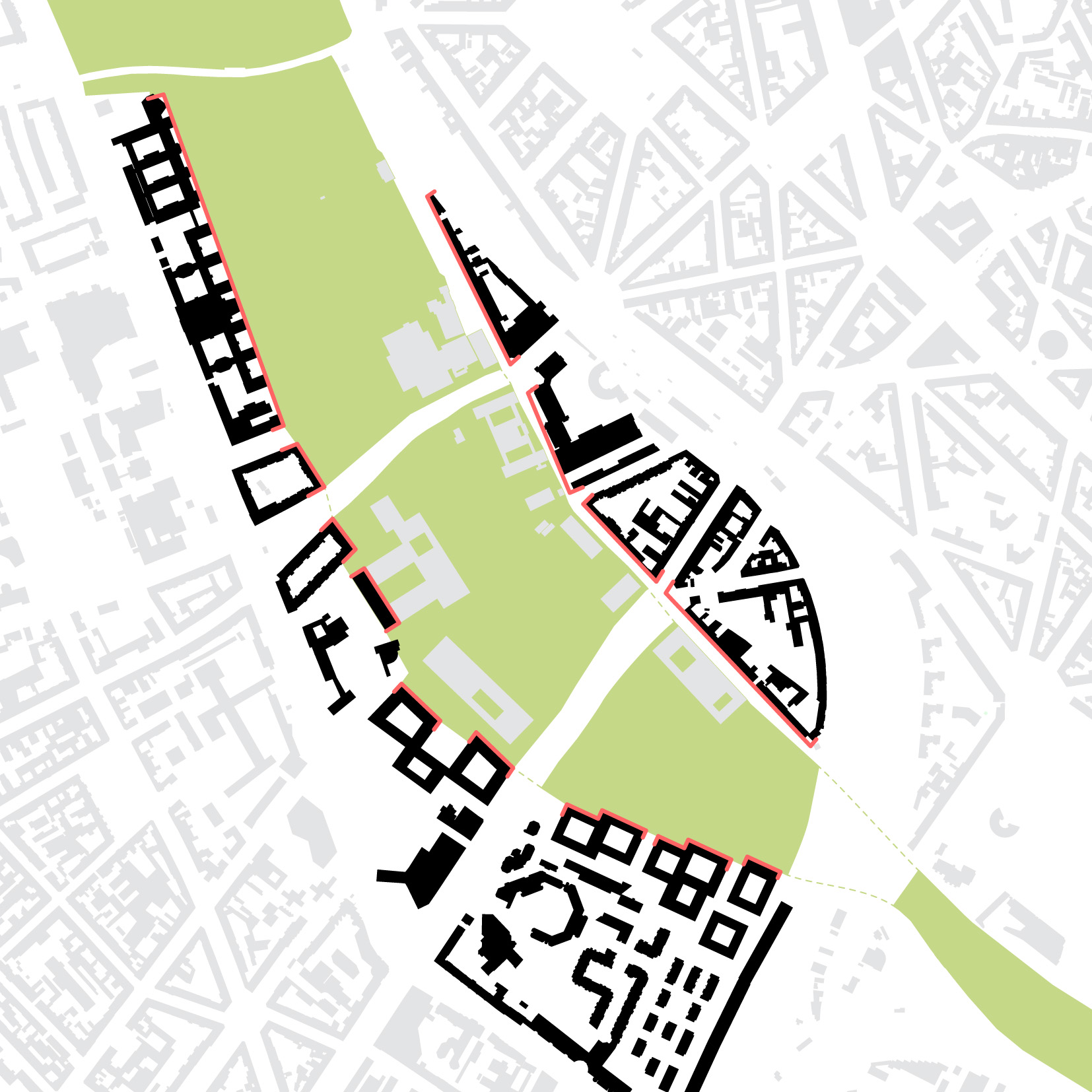

The New Justice Campus in Cologne
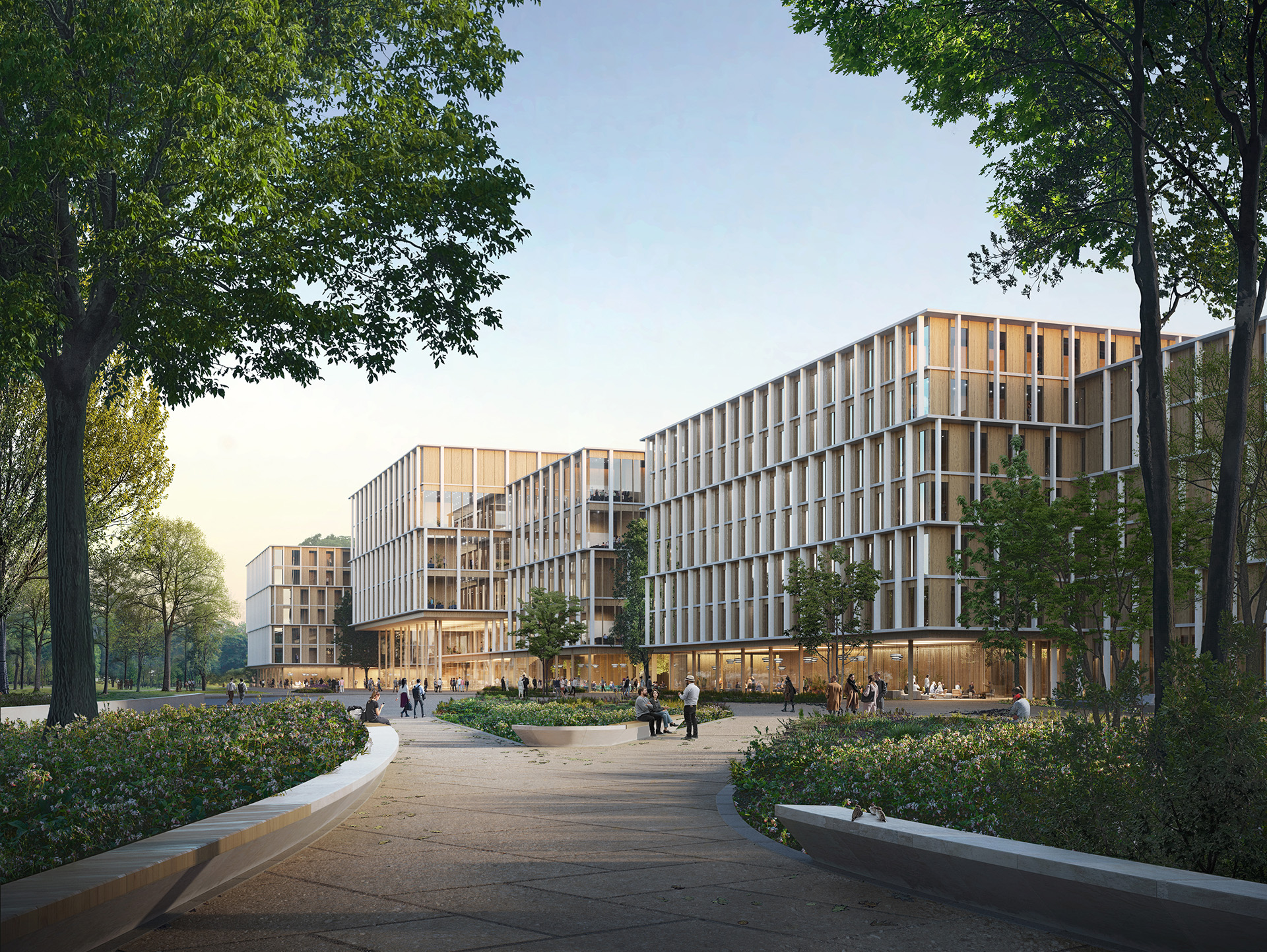
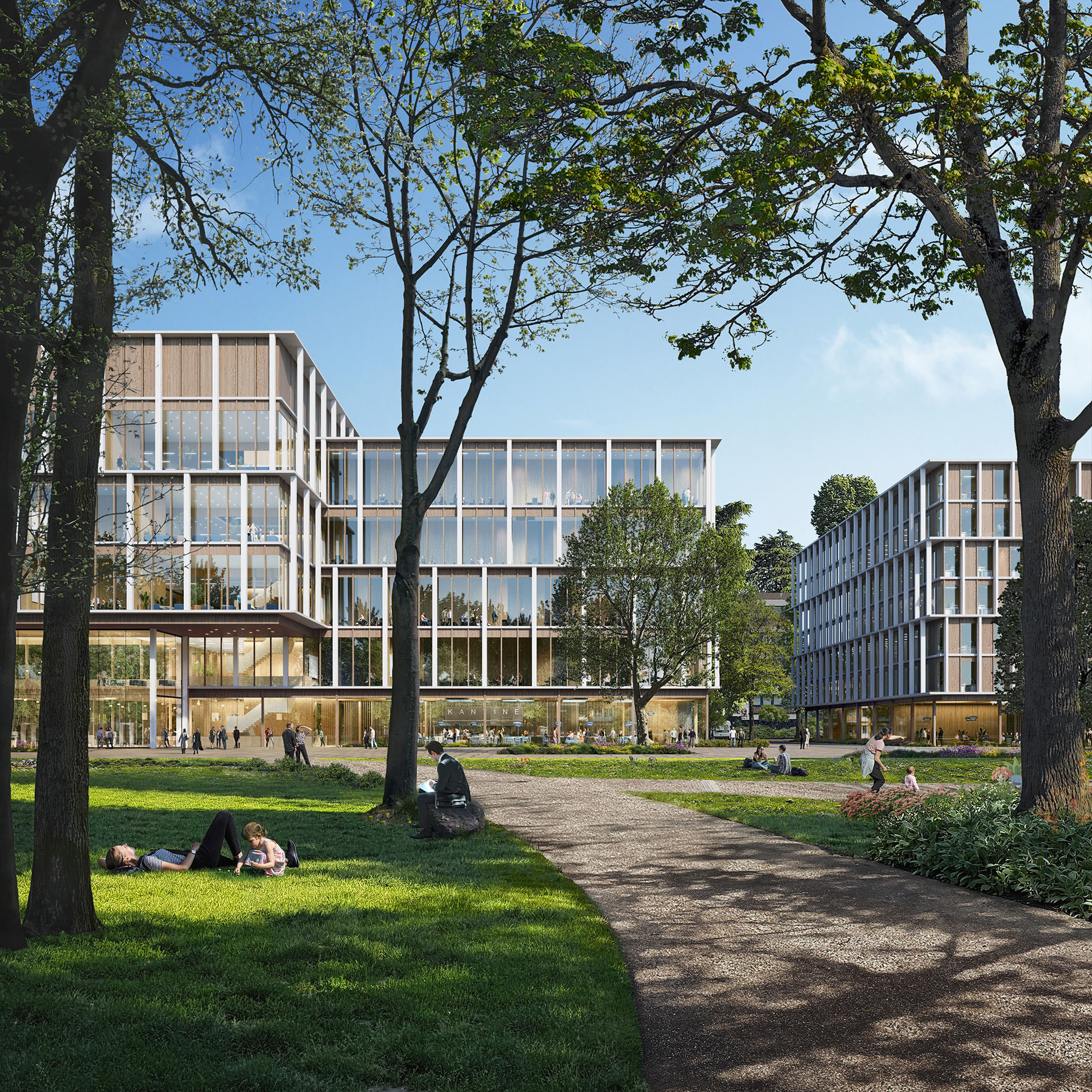
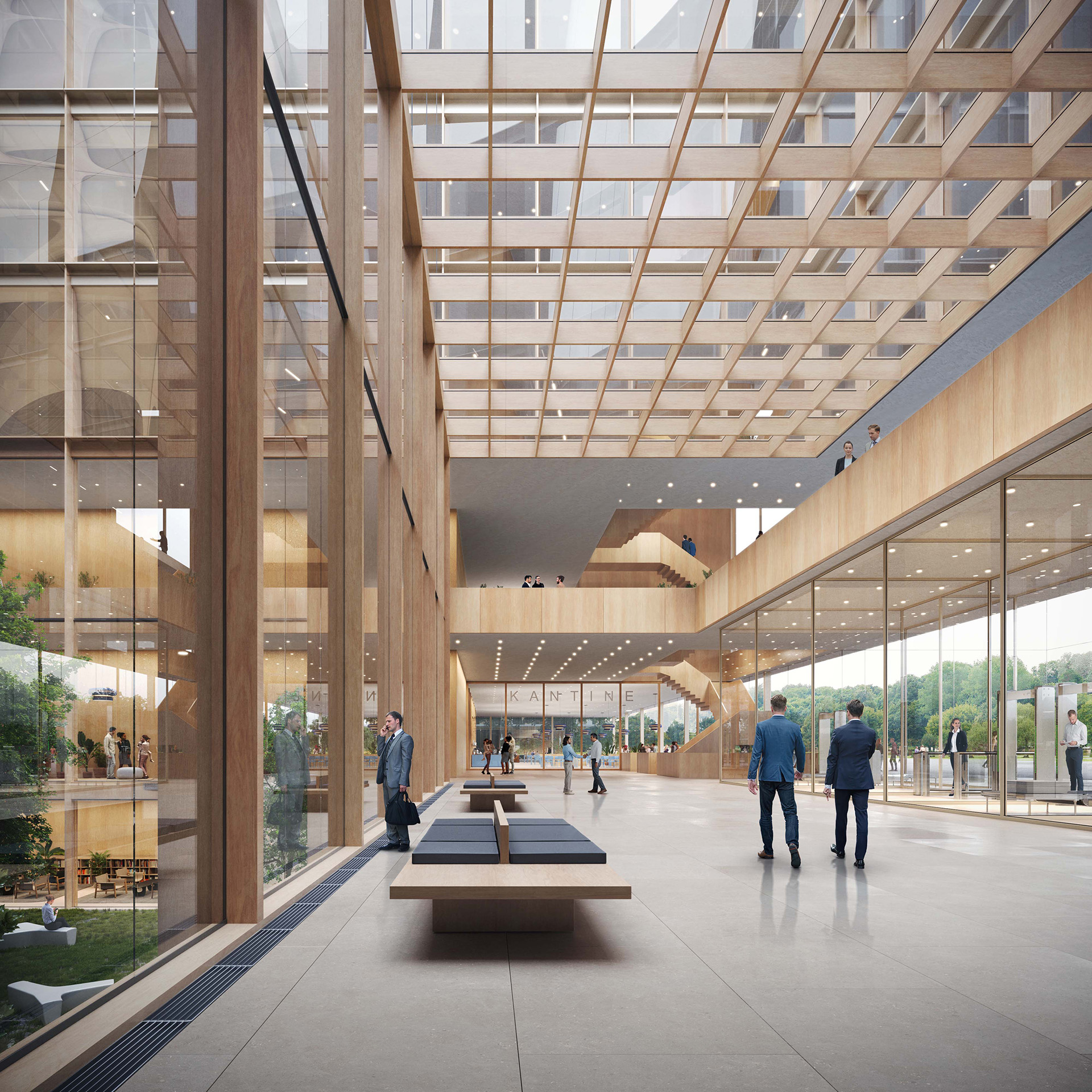
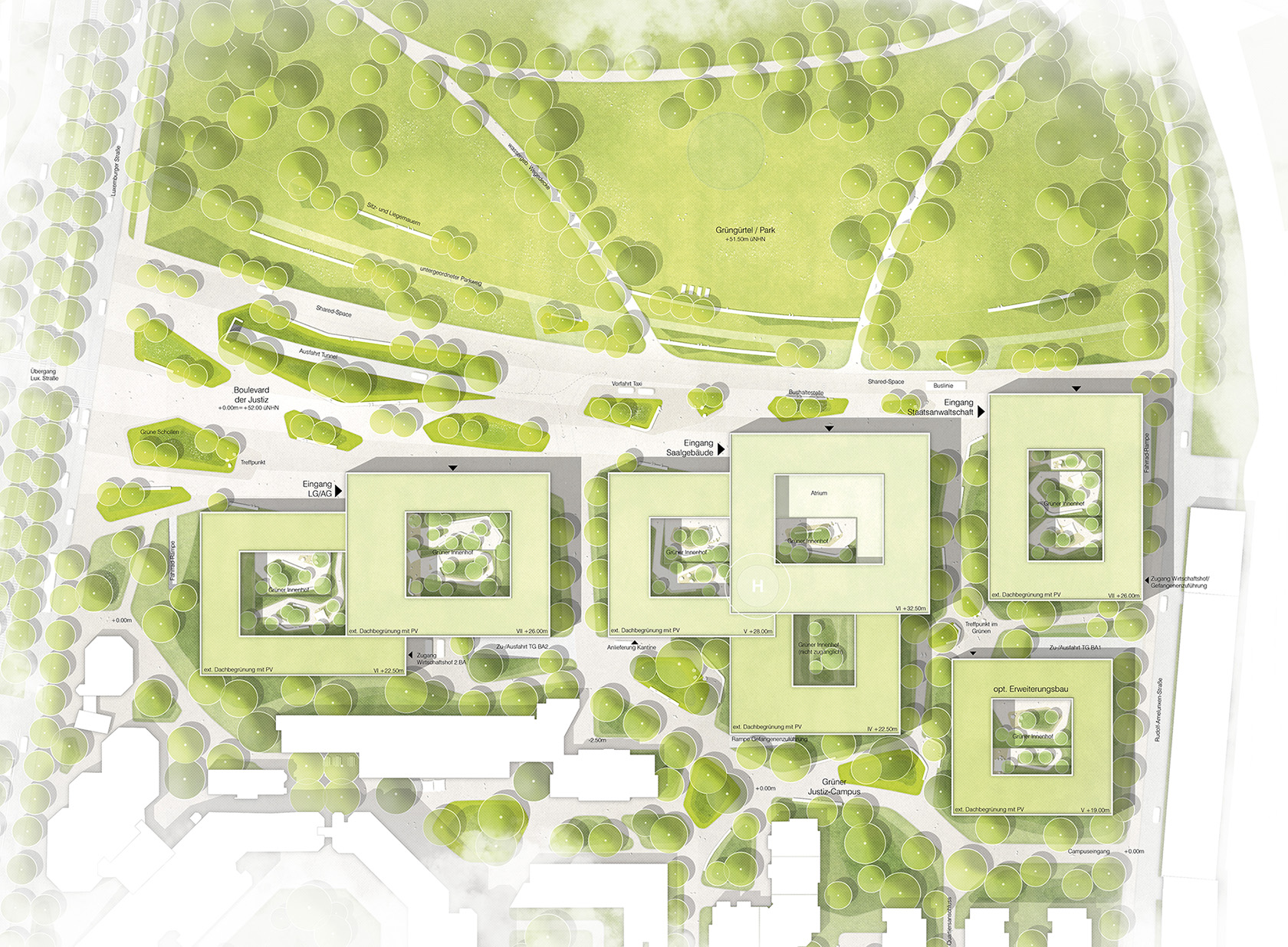
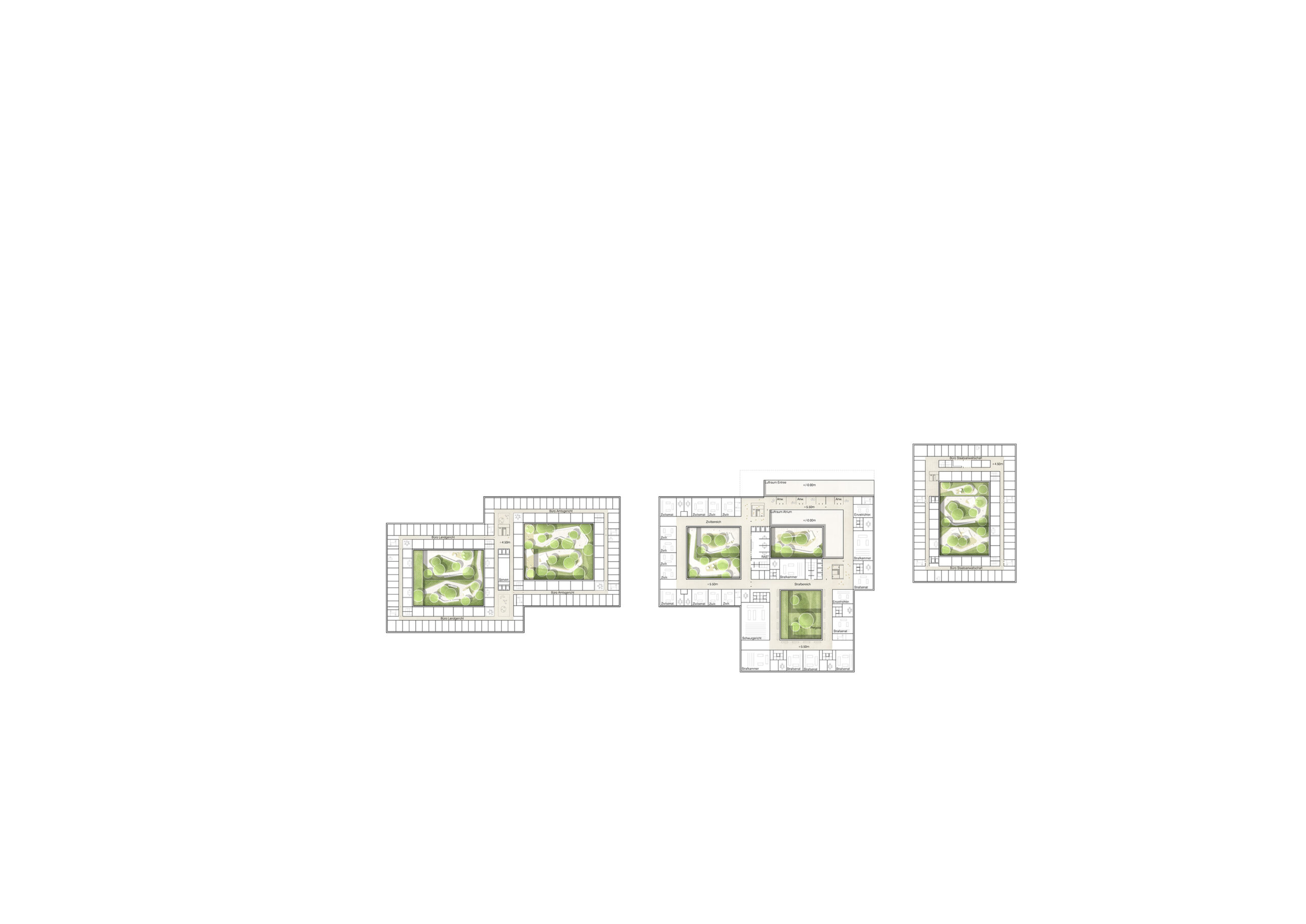
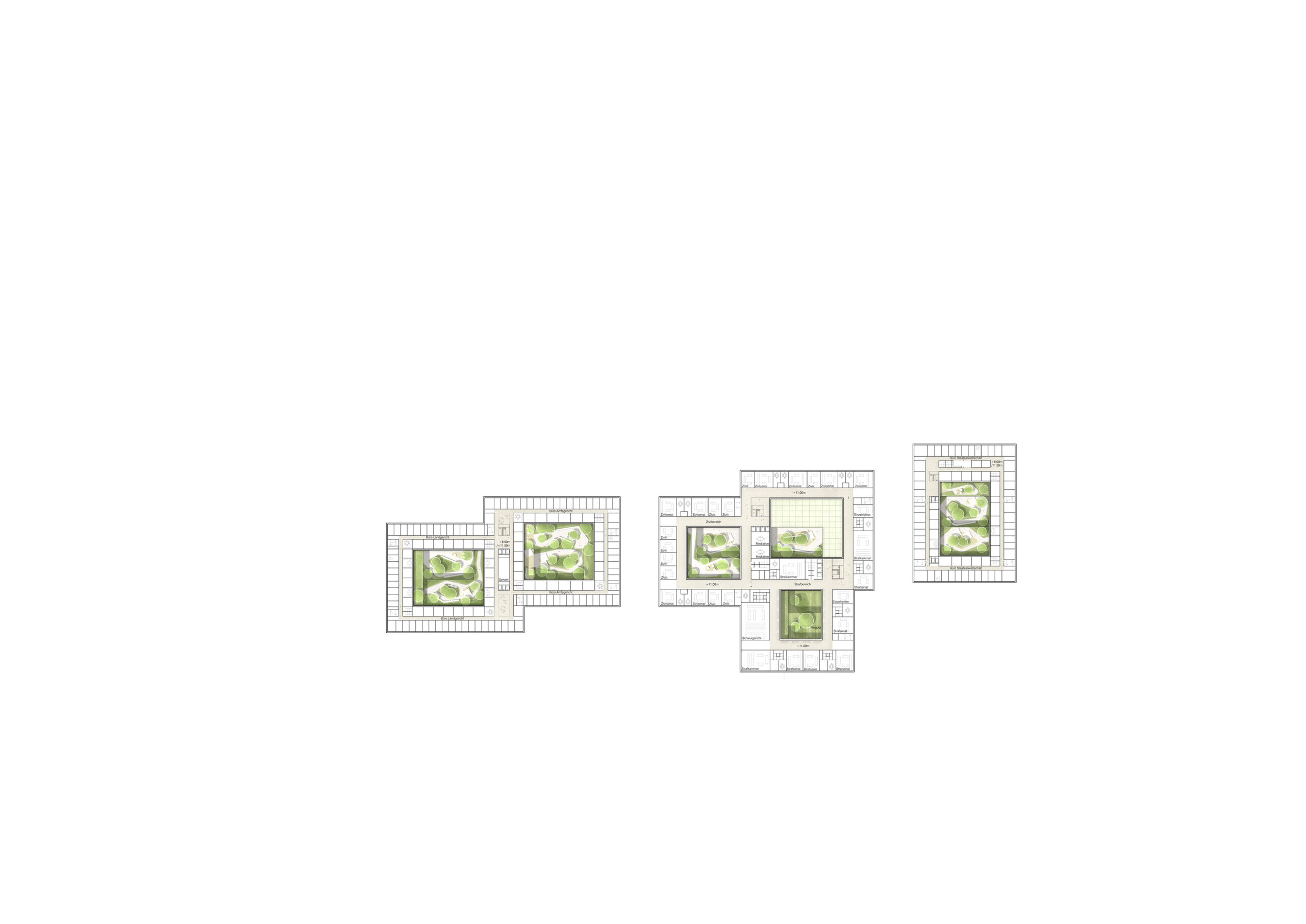
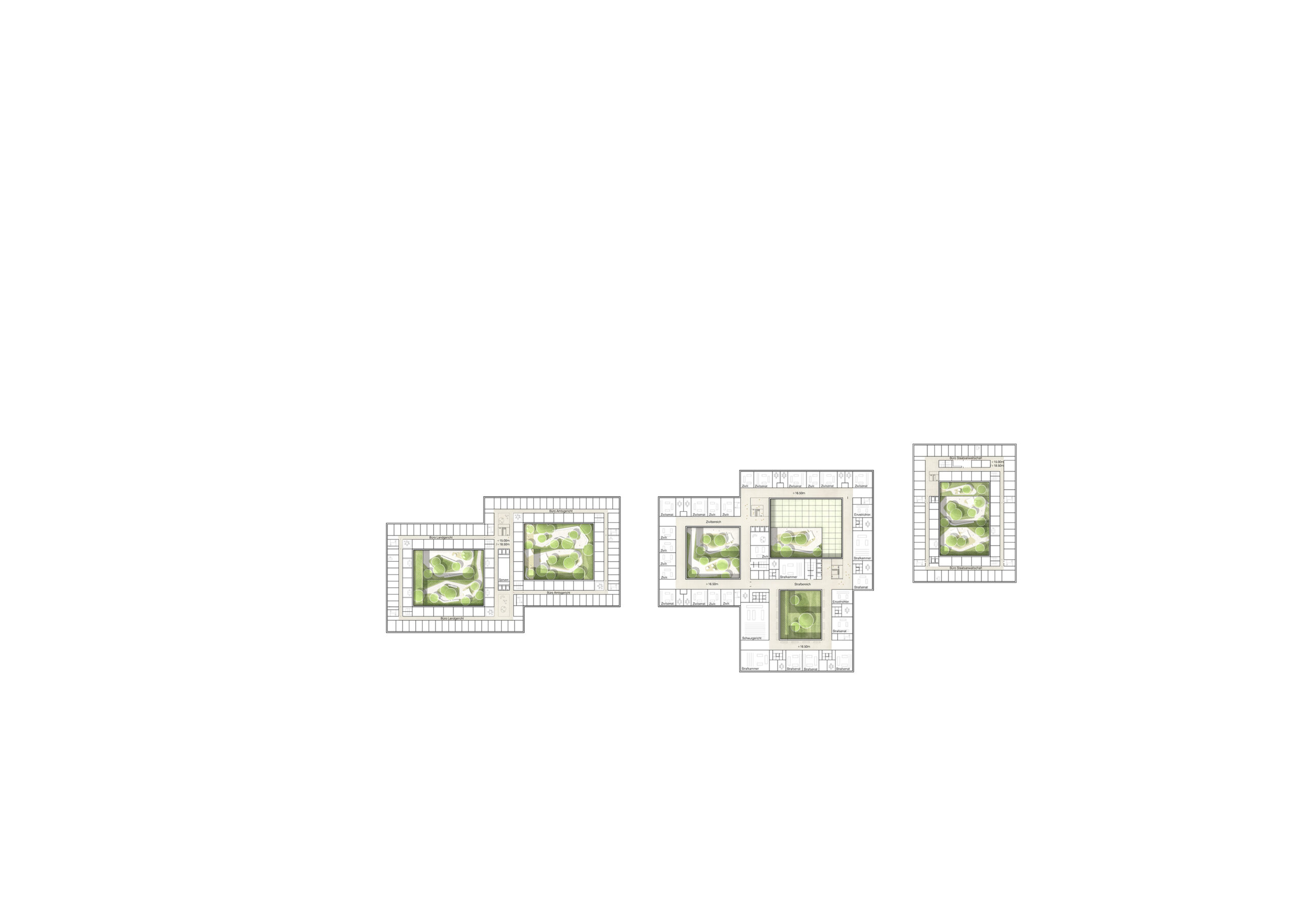
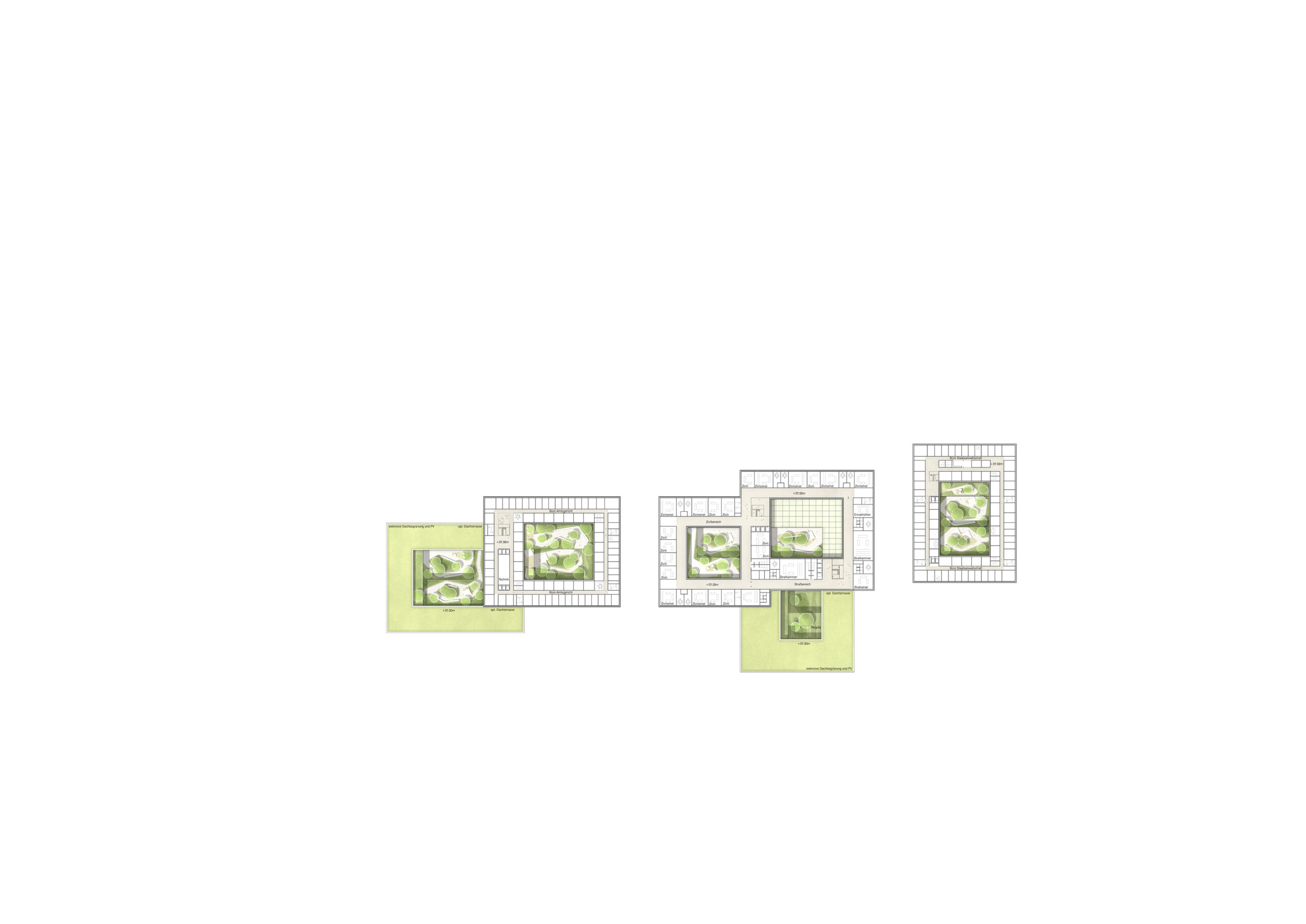
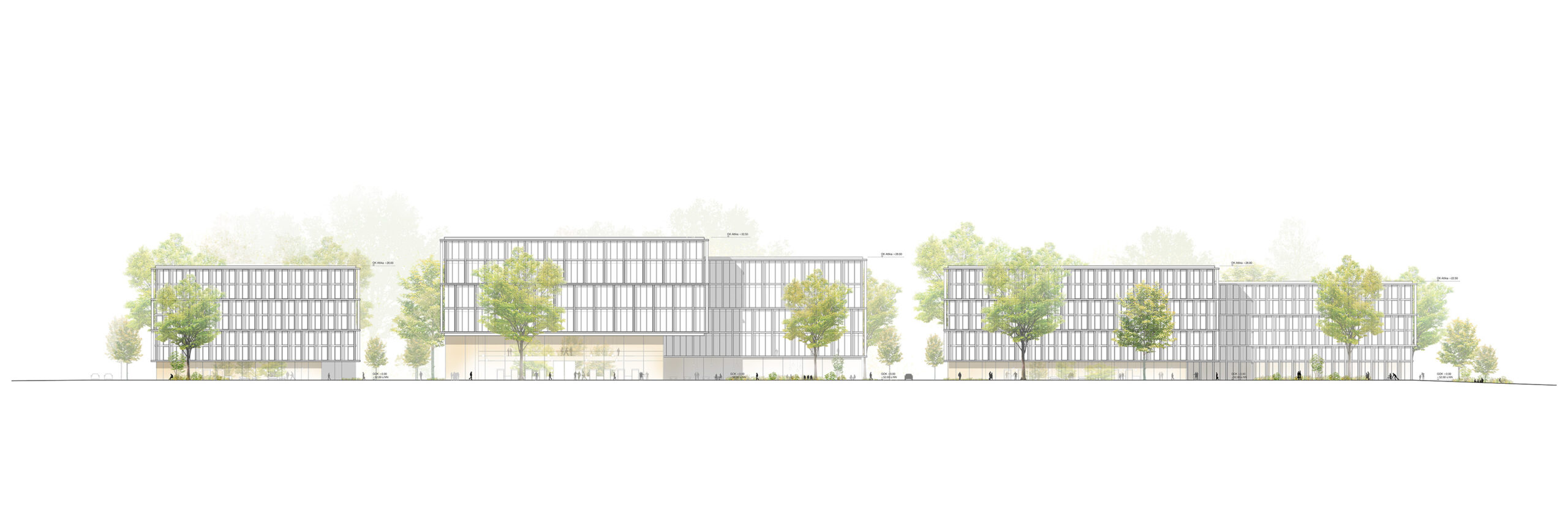
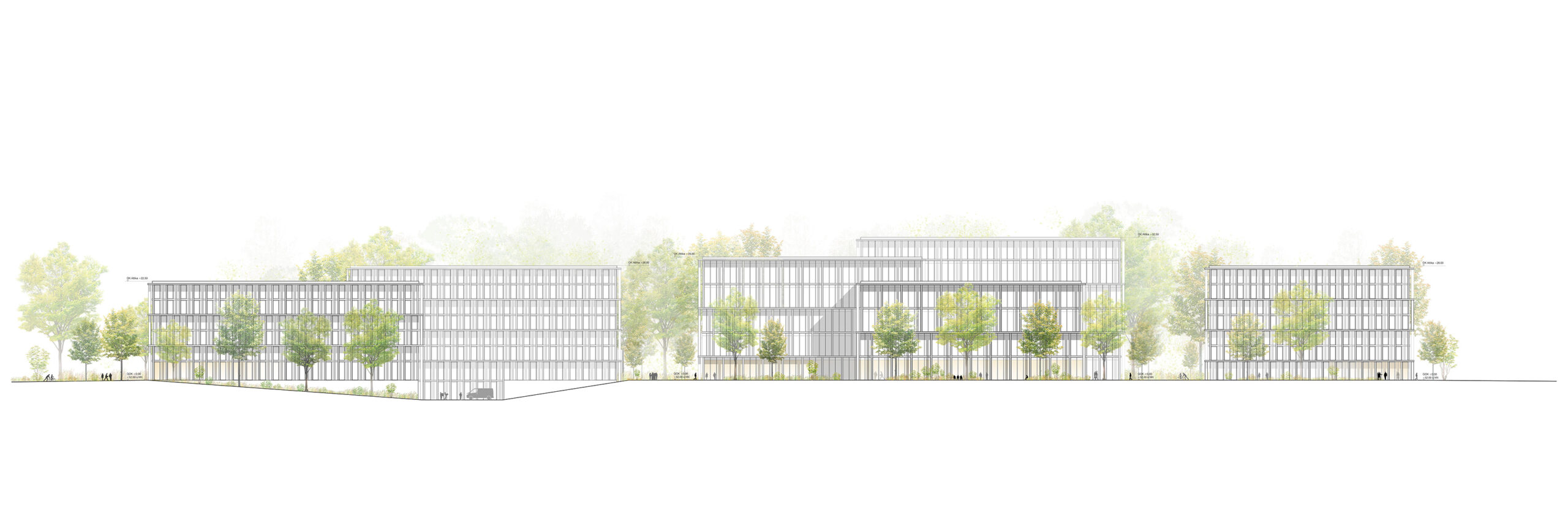
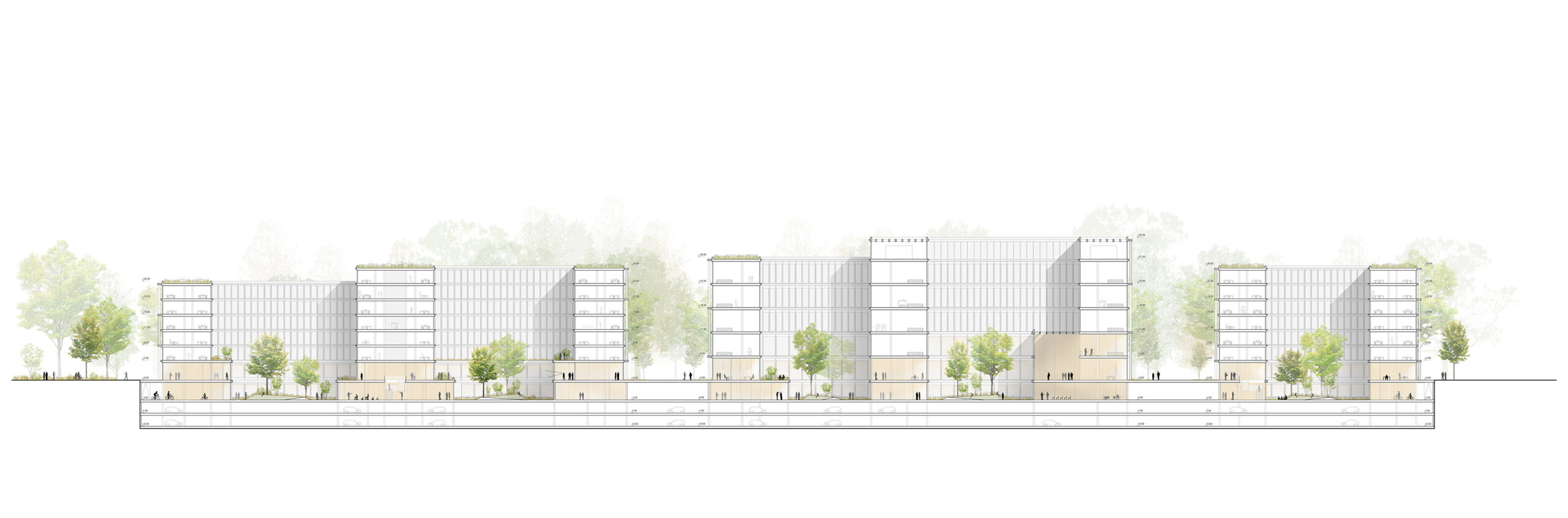
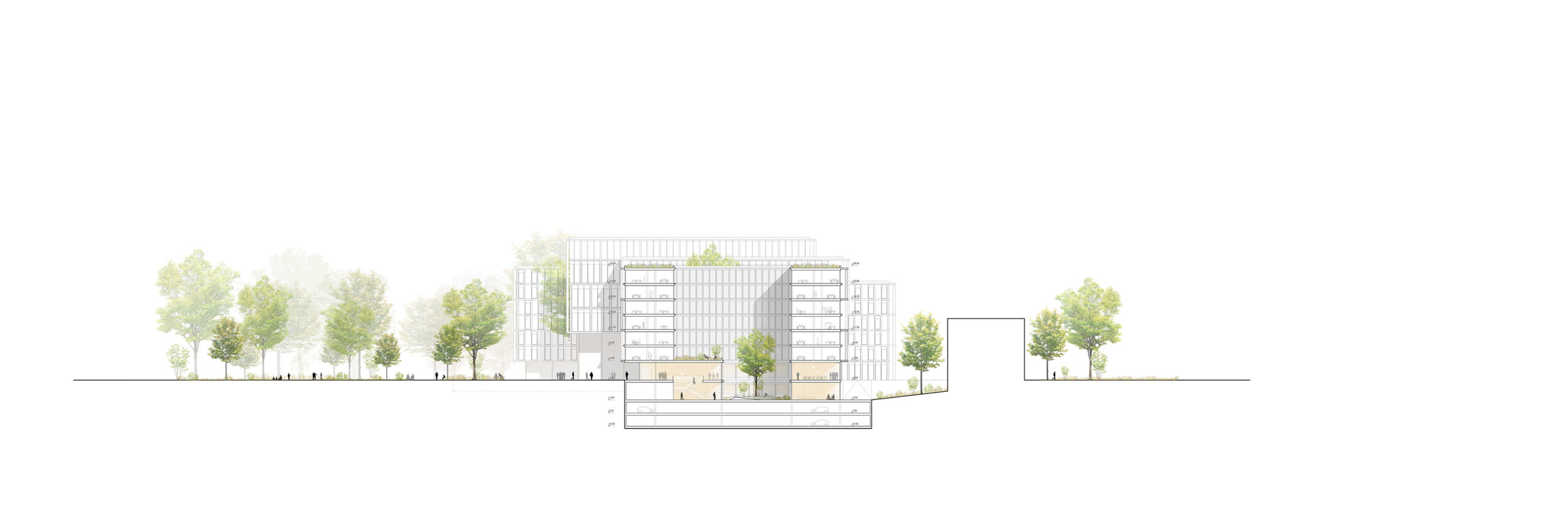
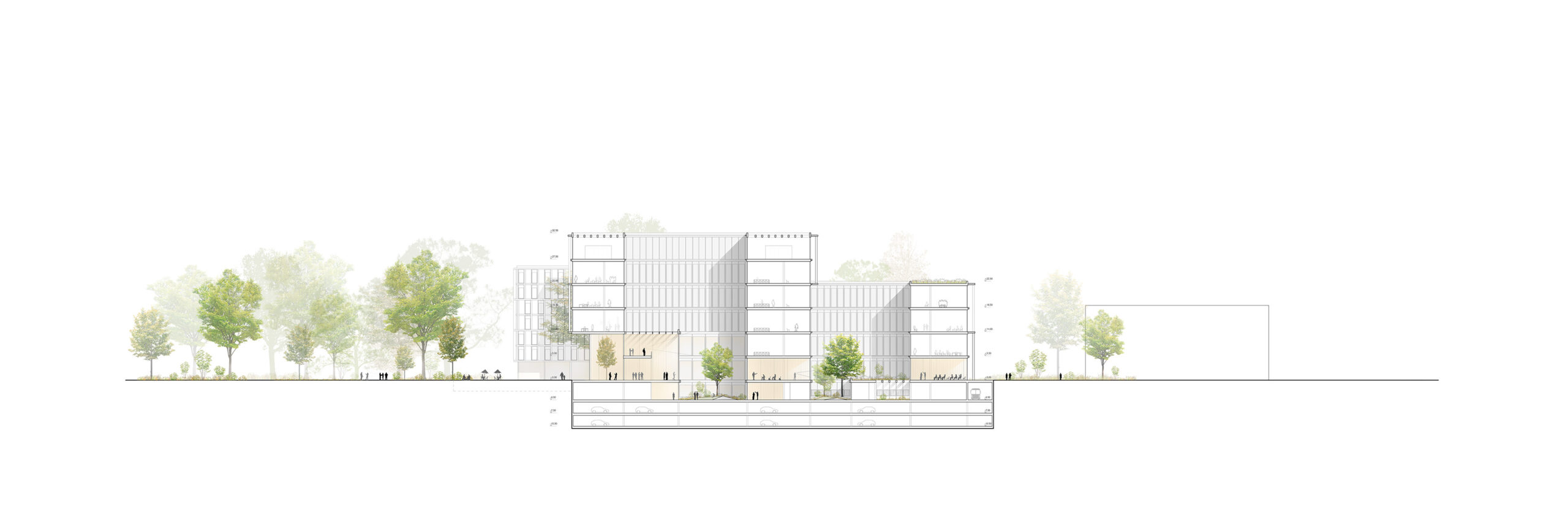
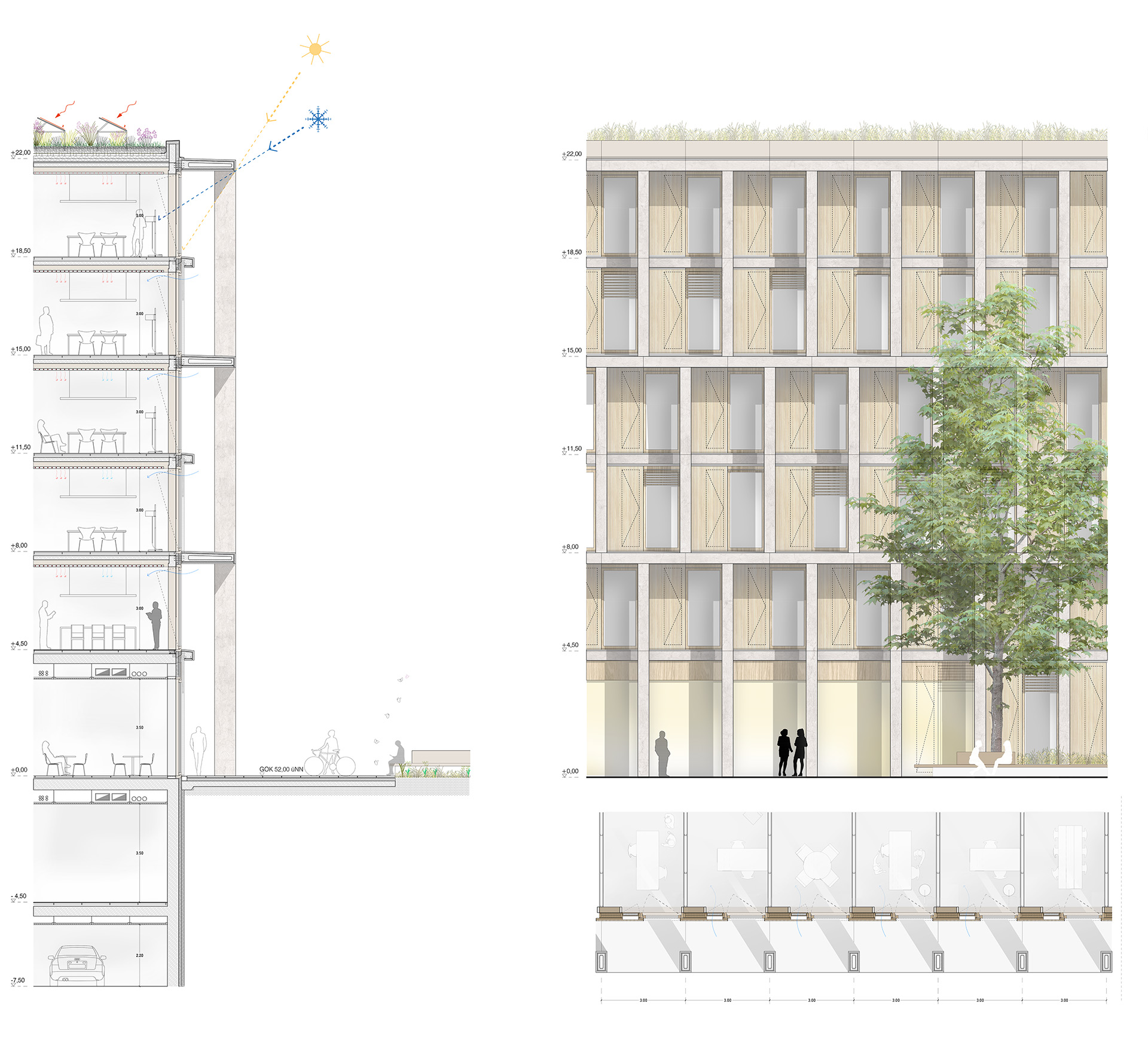
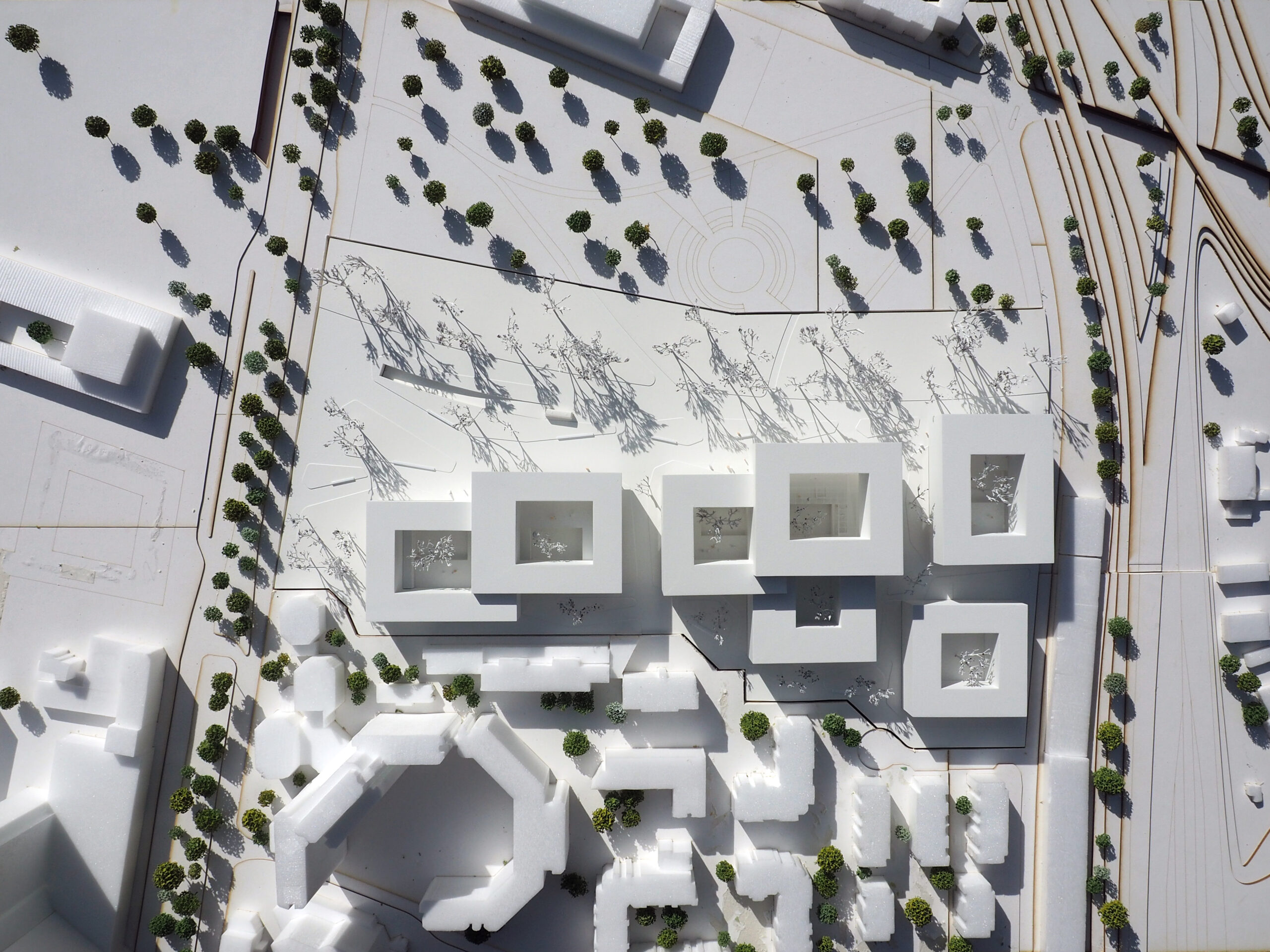
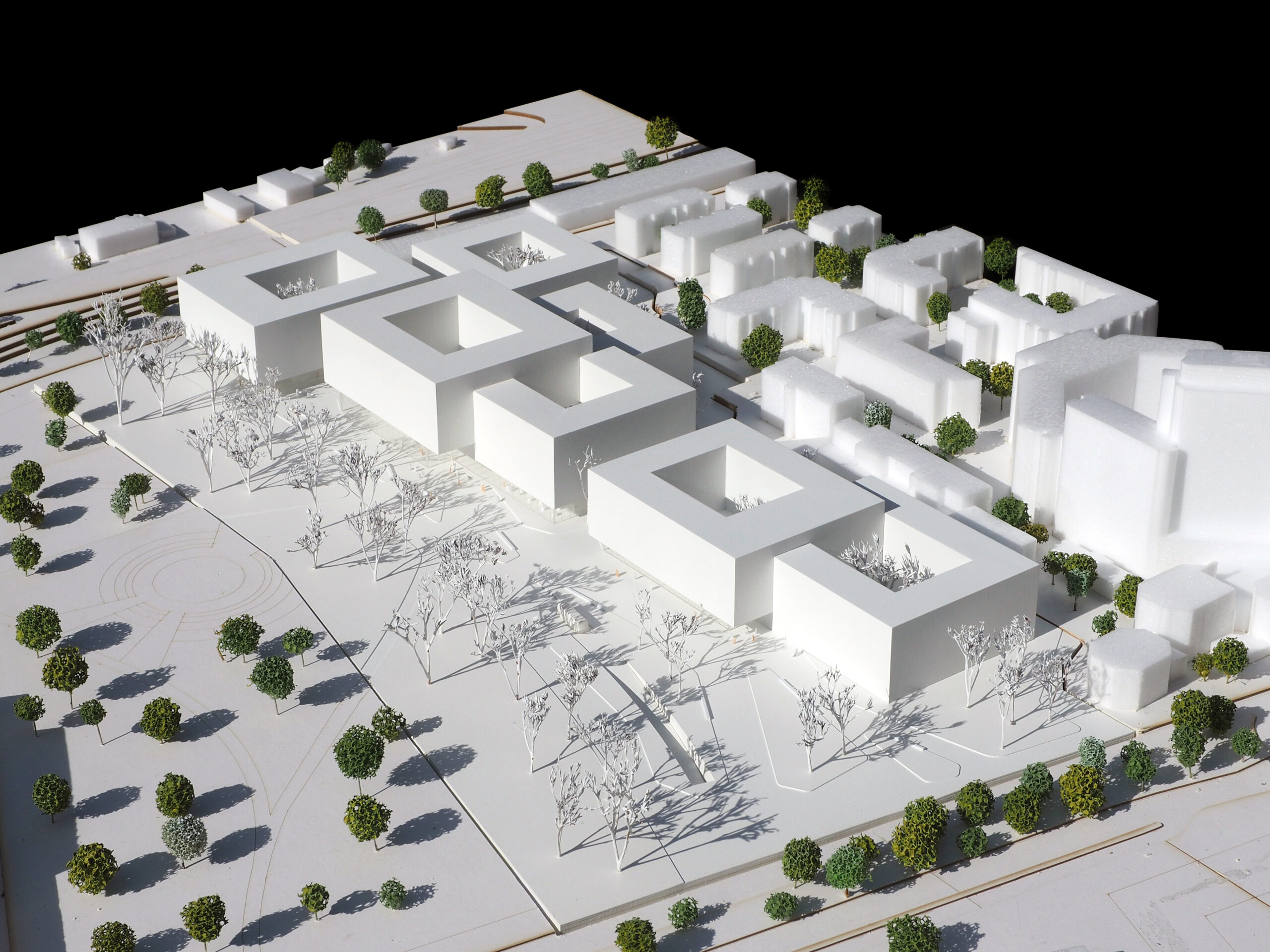
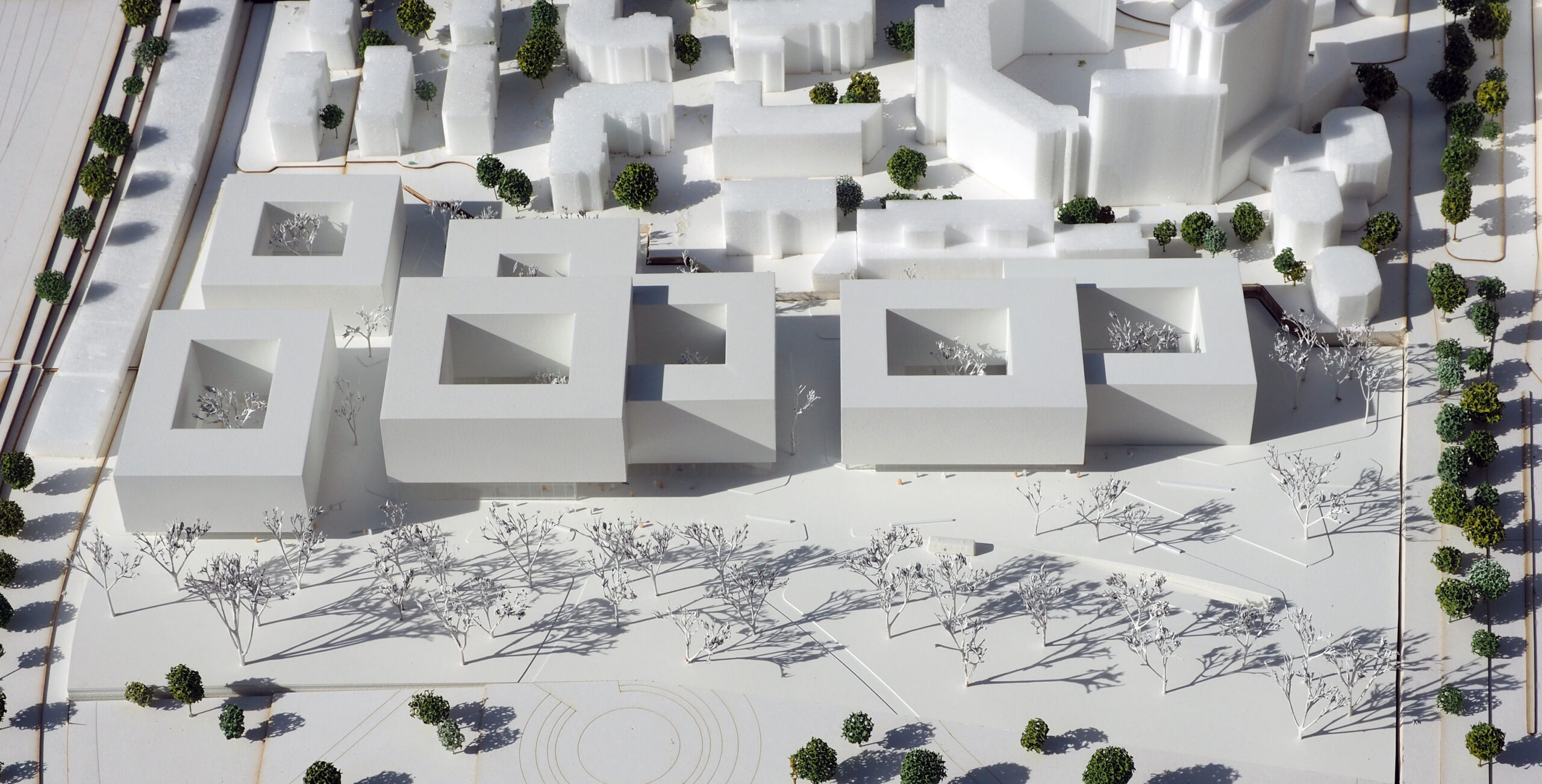
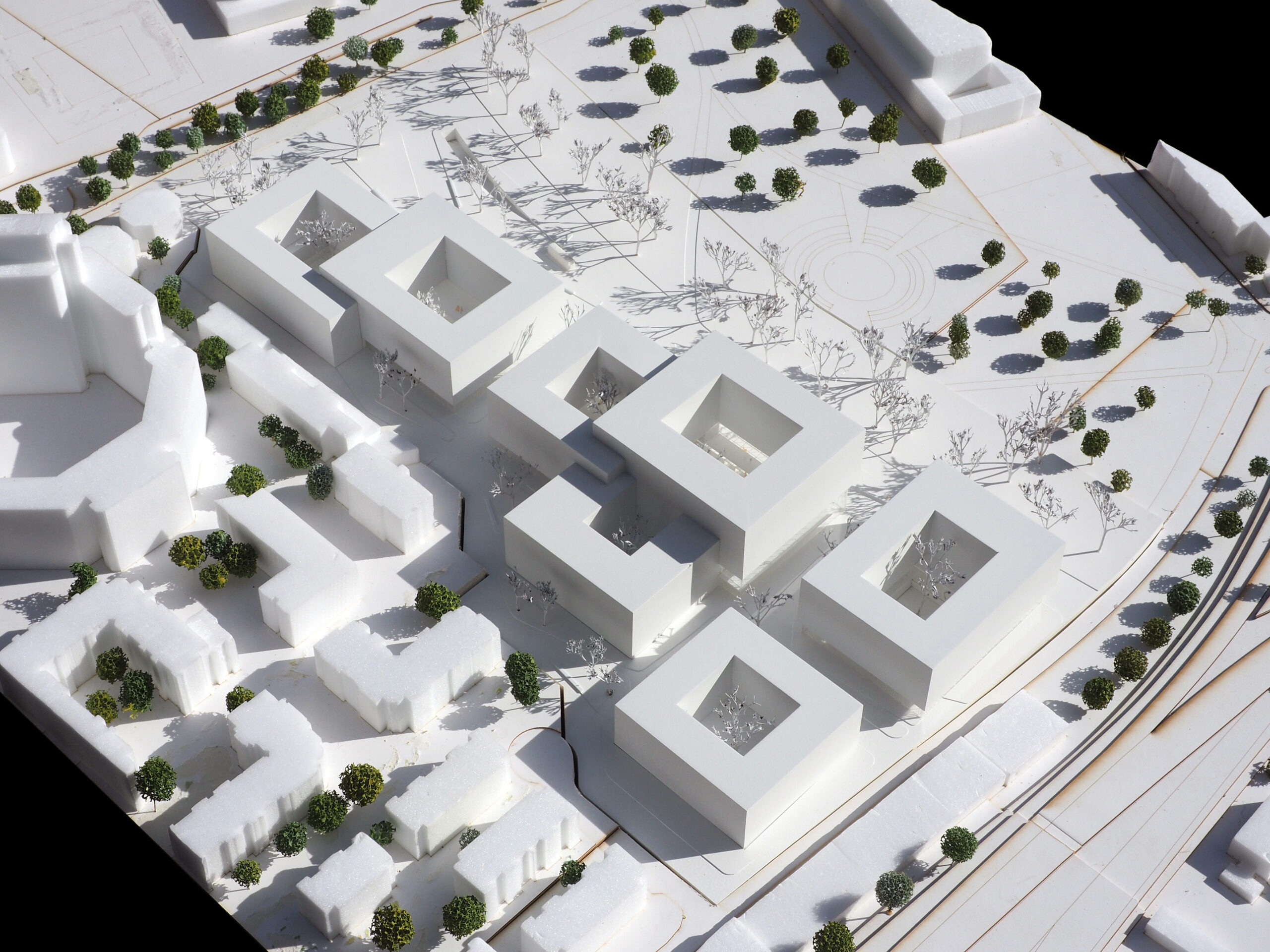
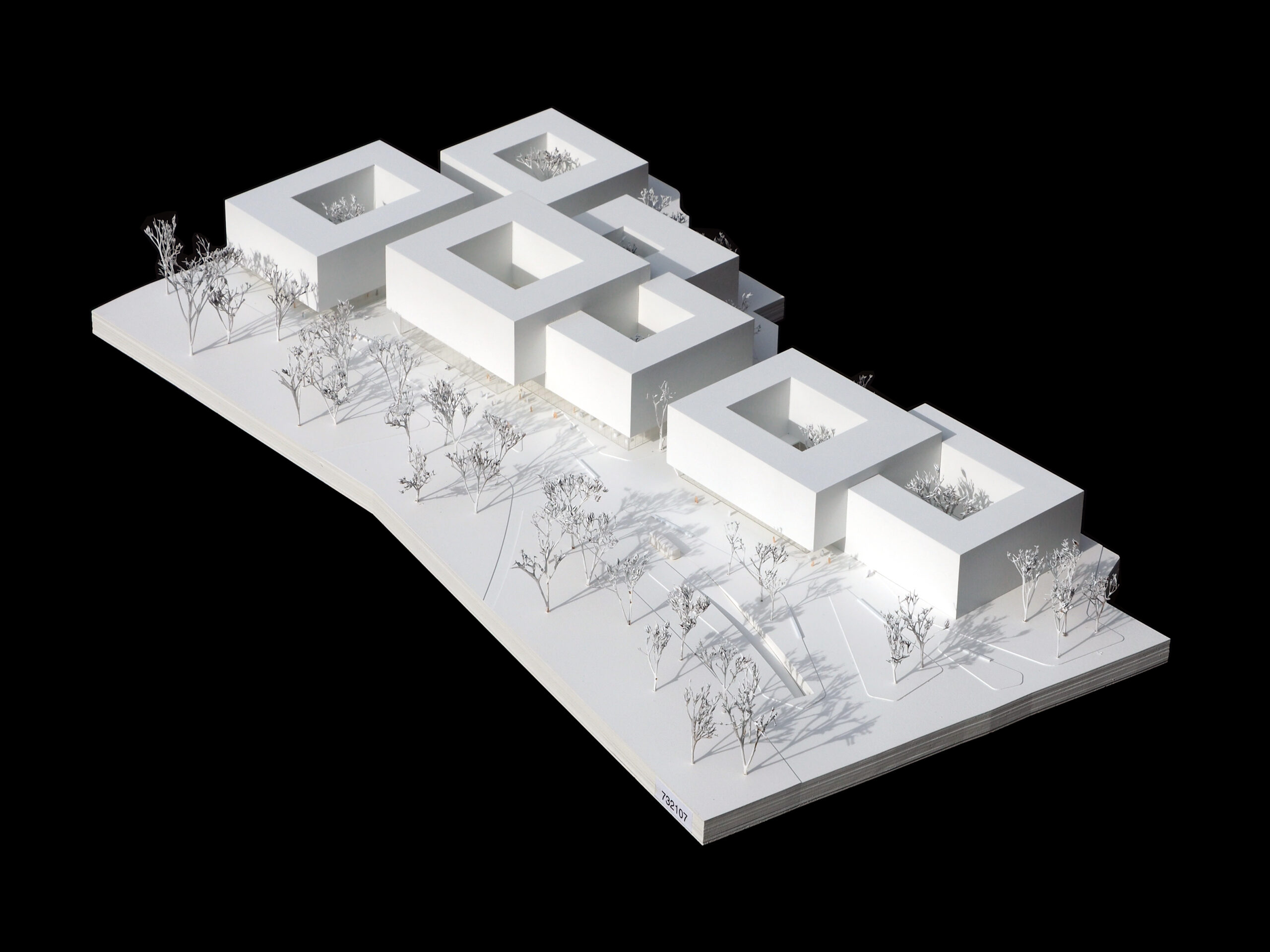
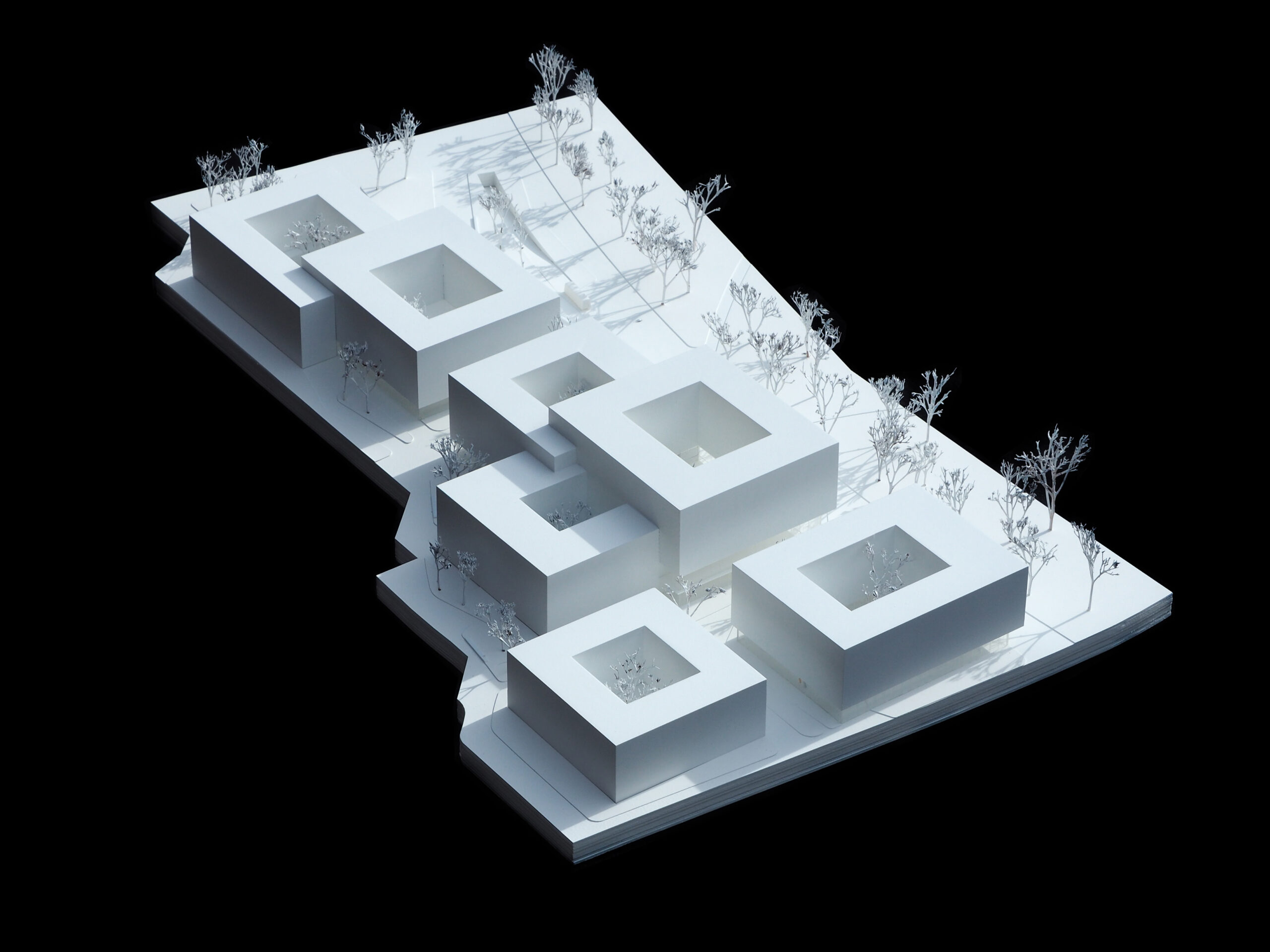
The new Justice Center creates an ensemble of buildings that naturally integrates with the Green Belt and the adjacent southern development, positioning itself as a citizen-oriented campus. The Green Belt’s network of paths weaves between the individual buildings throughout the entire district, thereby also connecting existing structures more closely to the green space. The concept of solitary structures set within a park softens the building mass and reduces potential barriers to entry—inviting the public to approach the Justice Campus from all sides. The functional components—Regional/District Court, Public Prosecutor's Office, and the Courtroom Building—are each housed in separate structures. They feature separate entrances along the 'Boulevard of Justice' and are visible from Luxemburger Straße, ensuring easy orientation for all visitors and staff. The foyers feature expansive glazing opening onto the public space, merging almost seamlessly with the adjacent boulevard. On Level 0, all buildings are connected via a spacious, naturally lit central spine that ensures conflict-free circulation. The campus is designed to expand in up to four construction phases, accommodating a high degree of flexibility in the realization of this complex project.
 Share
Share
 Tweet
Tweet
 Pin it